The RideKC bus system is being redesigned on a high frequency grid.


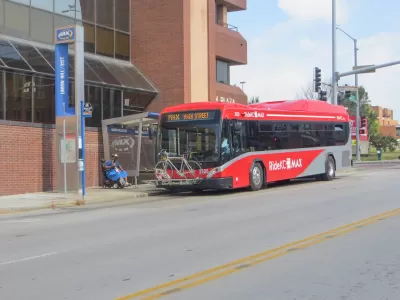
The RideKC Next project released a Draft Network plan and launched a public review process earlier this month.
According to the RideKC website that announces the changes, the new Draft Network will offer the same amount of bus service, but reconfigured onto a high-frequency grid to "connect more people to more opportunity."
According to statistics cited on the same page, the RideKC Draft Network will bring 19 percent more people with a half-mile of a frequent bus route, defined as routes with headways of 15 minutes or better on weekdays and Saturdays, and 20 minutes on Sundays. "In an hour or less, the average KCMO resident could reach 7% more jobs on weekdays, and 22% more jobs on Saturdays on transit," according to the website.
According to the website, summarizes the Draft Network thusly:
The goal of the revised plan is to provide a simpler, easier and more efficient network that connects more people to opportunity. The proposed restructuring seeks to balance ridership and coverage considerations, while accurately reflecting the values of communities in Kansas City. This includes establishing a frequent grid in the core of the transit network, while also providing flexible services that cover larger areas and provide access to the system.
The public meetings for the Draft Network launched earlier this month but are continuing on Zoom or by phone into December. The city hired Jarrett Walker and Associates to design the Draft Network. Jarrett Walker tweeted news about the Draft Network release earlier this month.
Read the full story: RideKC Next

'RideKC Next': High-Frequency Grid and On-Demand Service Coming in 2022
The transit system of the future is coming soon to Kansas City.
Next Up for Bus System Redesign: Norfolk, Virginia
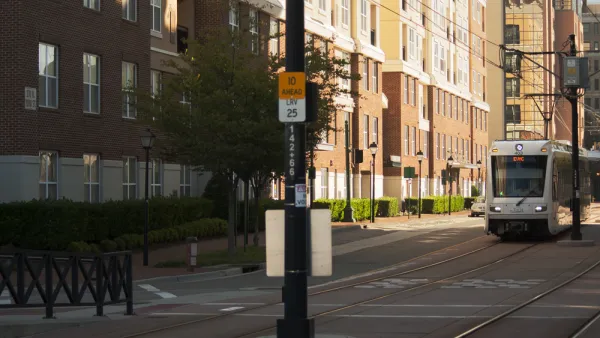
The Norfolk City Council will vote in February on a draft transit system redesign organized around the principle of a high frequency grid, similar to system redesigns in other cities in recent years.
Bus System Redesign Coming to the Cleveland Region
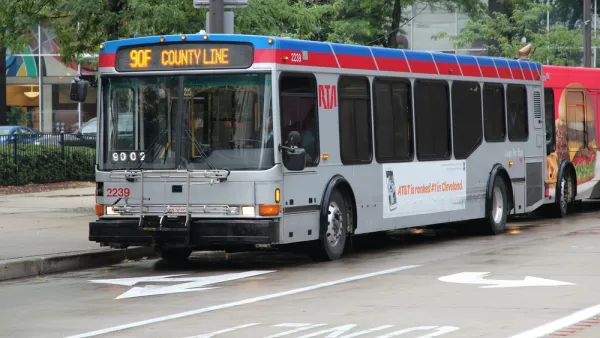
The Greater Cleveland Regional Transit Authority (RTA) revealed a draft system redesign this week.

Desperate measures: Advocates weigh draining Lake Powell to fill Colorado River
Draining the reservoir could reduce evaporation losses by a couple hundred thousand acre-feet.

Eastern Nebraska is running out of electricity
Data centers and electrification are straining eastern Nebraska’s grid, throttling economic development.

Malls are becoming the midtowns of the future
Mall and office park redevelopments are a generational opportunity to create new nodes of urbanity.

NYC breaks ground on anti-flooding infrastructure project
New York City's new system will reduce stormwater flows to local sewers by 90%.

One Kentucky town’s secret to affordable housing
The Smoketown Community Land Trust has already built seven affordable homes for community members.

Houston gains petal-shaped cooling infrastructure to make streets more ‘delightful’
The city has installed the pavilions along 15 blocks in Houston.

FREE Course: Walkable City 1: Why Walkability?
After describing his path towards focusing on walkability as the essence of good planning, Jeff Speck marches through his five principal reasons for making more walkable places.
Reinventing Malls: Planning Alchemy—Turning Gray Fields Into Gold
The course focuses on the opportunities and imperatives that shape reinvention of mall sites.

City of Rosemead
Rutgers University, Edward J. Bloustein School of Planning and Public Policy
One Hundred Miles
University of Michigan School for Environment and Sustainability (SEAS)
Hunter College, City University of New York (CUNY)
The Architects Foundation
City of Cambridge
Montrose County
The Pocatello Development Authority