Smart Growth America and the National Complete Streets Coalition announced a new initiative designed to help cities achieve the potential of a new approach to street design.


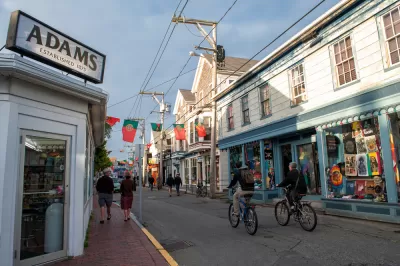
Smart Growth America and the National Complete Streets Coalition have announced 21 participants for the new Active People, Healthy Nation℠ Champions Institute, a new initiative to prepare a hand-picked group of elected officials to advocate for an support safer safe and complete streets.
The inaugural class "will receive comprehensive training to help them become champions in their communities to promote activity-friendly routes to everyday destinations" over the course of six months, according to Smart Growth America.
Here is the list of the firstActive People, Healthy Nation℠ Champions:
- Mayor Jerry Martin — Mayor, Alma, Arkansas
- Mayor Frank Scott, Jr. — Little Rock, Arkansas
- Councilmember Andy Thomson — Boca Raton, Florida
- Councilmember Brandi Gabbard — St. Petersburg, Florida
- Councilmember Carol Myers — Athens, Georgia
- Mayor Allen Haywood — Sparta, Georgia
- Councilmember Nick Palumbo — Savannah, Georgia
- Councilmember Elaine Clegg — Boise, Idaho
- Mayor Gordon W. Petrie — Emmett, Idaho
- Commissioner Tom Burroughs — Wyandotte County, Kansas (Kansas City)
- Councilmember Cassie Armstrong —Louisville, Kentucky
- Councilmember Maggie Duwe — Kirkwood, Missouri
- Mayor Robyn Tannehill — Oxford, Mississippi
- Councilmember Denise Joy — Billings, Montana
- Councilmember Mirtha Becerra — Missoula, Montana
- Councilmember Alexandra Jacobs Wilke — Potsdam, New York
- Councilmember Mitch Gruber — Rochester, New York
- Councilmember Sam Melden — Toledo, Ohio
- Councilmember Allison Terracio – Richland County, South Carolina
- Councilmember Sallie Alcorn — Houston, Texas
- Mayor Steve Williams — Huntington, West Virginia
The article that announces the participants includes more on the benefits of complete streets at a time when fatality rates have spiked even as fewer people stay off the roads during a pandemic. Complete streets address multiple crises at once, according to the article:
Safer streets that anyone can use provide more space for socially distanced and affordable transportation options during and after the COVID-19 pandemic. They can help us reduce emissions and fight climate change by making it possible for more people to walk, bike, or take transit. They can save thousands of lives each year by reducing the growing number of people who are struck and killed while walking on dangerous roads. And they can help us create more equitable public spaces by ensuring that people of all ages and abilities can access our streets.
Read the full story: 21 elected officials selected to champion Active People, Healthy Nation in communities across the country
The Best of the Best Complete Streets Policies
Complete streets policies are keeping planners busy across the country. An annual report features the best of the best when it comes to transforming city streets for the safety and activity of all users.
San Diego budget axes multimodal team at DOT
The budget scales back funding for some bike lane and traffic safety projects that are already in the works.
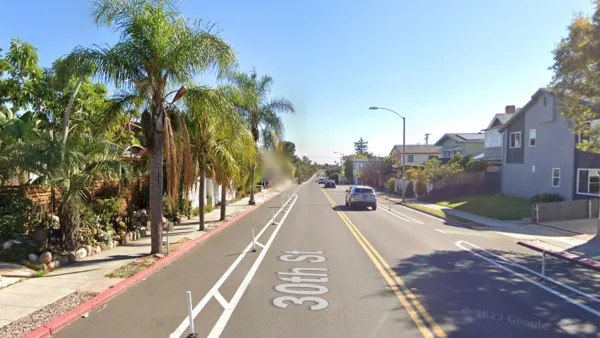
After San Diego Installed a Protected Bike Lane, Ridership More Than Doubled — and Hasn’t Stopped Growing.
“When people feel safe, they ride.”

Planetizen Federal Action Tracker
A weekly monitor of how Trump’s orders and actions are impacting planners and planning in America.

California plans to bury El Niño’s downpour
If the state plays its cards right, it may be able to store a billion acre-feet of El Niño’s water in aquifers.

Desperate measures: Advocates weigh draining Lake Powell to fill Colorado River
Draining the reservoir could reduce evaporation losses by a couple hundred thousand acre-feet.

US buildings threatened, destroyed by fires set to triple by 2060
Researchers found a high fire risk for socioeconomically vulnerable neighborhoods in the American West.

LA residents may be allowed to paint their own crosswalks
Councilwoman Katy Yaroslavsky put out a motion instructing the Los Angeles Department of Public Transportation to study the feasibility of allowing volunteers to paint crosswalks.

Dallas moves to overhaul its zoning code
The city's zoning reform will allow more multi-family and mixed-use developments.

FREE Course: Walkable City 1: Why Walkability?
After describing his path towards focusing on walkability as the essence of good planning, Jeff Speck marches through his five principal reasons for making more walkable places.
Reinventing Malls: Planning Alchemy—Turning Gray Fields Into Gold
The course focuses on the opportunities and imperatives that shape reinvention of mall sites.

City of Rosemead
Rutgers University, Edward J. Bloustein School of Planning and Public Policy
One Hundred Miles
Hunter College, City University of New York (CUNY)
The Architects Foundation
University of Cincinnati Online
City of Cambridge
Montrose County
The Pocatello Development Authority