In China, economic stimulus means high-speed rail spending—and lots of it.


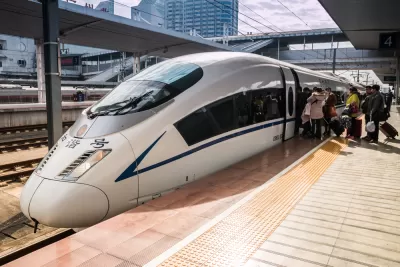
"China Railway Group yesterday published plans to increase the country’s high-speed rail network from 36,000km to 70,000km over the next 15 years, and its total length of track from 141,400km to 200,000km," according to an article published by Global Construction Review.
"Beijing sees the investment as a way to stimulate demand in the wake of the Covid-19 pandemic and the continuing trade war with the US," according to the article. "It also wants to create a more integrated national market and distribute the benefits of economic growth more evenly across the country."
Once the planned rail expansions are built out, every Chinese city with a population greater than 200,000 will be on a rail line, according to the article, "and those with more than 500,000 people will have access to a service travelling at over 250km/h."
More details on the economic situation to be addressed by the high-speed rail plans are included in source article, along with the country's history of investment in high-speed rail.
Read the full story: China plans to double high-speed rail network by 2035

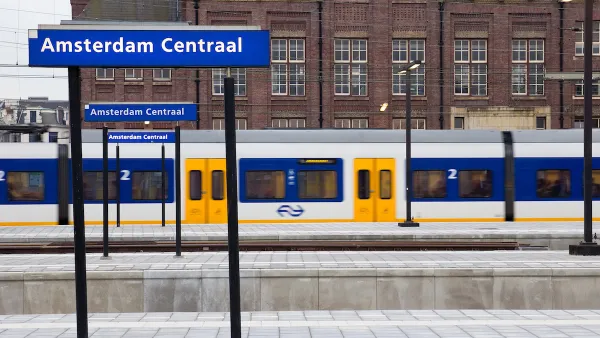
Eurostar Temporarily Closing Two High-Speed Rail Routes
Eurostar is temporarily closing routes from London to Disneyland Paris and London to Amsterdam.
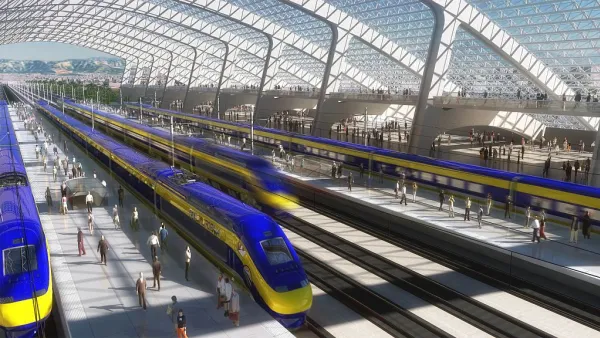
Price Tag Increases Again on High Speed Rail in California
With costs rising from $40 billion to $105 billion, the California High-Speed Rail project is still moving slowly along, though with a heftier price tag.

Contracts Signed, Funding Still TBD: Texas Central High-Speed Rail Moves Forward
Texas Central has its construction contracts and a court decision in its favor, but significant obstacles remain for the high-speed rail project connecting Houston and Dallas to get underway.

Planetizen Federal Action Tracker
A weekly monitor of how Trump’s orders and actions are impacting planners and planning in America.

The state-sanctioned urbicide of Austin
People don’t kill cities. Freeways do.

Colorado’s Largest Data Center Could Rise Next to Homes — Without a Public Hearing
The proposed campus would consume 11 times the power of Denver International Airport; as it has across the country, opposition mounts.

Nation's most wind-powered state turns to coal as data centers increase energy demand
For the first time in decades, Iowa has increased its generation of coal power.

NYC cools commuters with city's first rain garden above a bus stop
New York City officials say the plants in the rain garden can absorb 16 gallons of rainwater during heavy storms.

Brightline West’s future may rely on $6 billion federal loan
The company has until Nov. 2 to make a $400 million equity investment into its proposed high-speed rail line.

FREE Course: Walkable City 1: Why Walkability?
After describing his path towards focusing on walkability as the essence of good planning, Jeff Speck marches through his five principal reasons for making more walkable places.
Reinventing Malls: Planning Alchemy—Turning Gray Fields Into Gold
The course focuses on the opportunities and imperatives that shape reinvention of mall sites.

Greater Baltimore Committee
Eagle County Government
Harvard University Graduate School of Design
The Architects Foundation
University of Cincinnati Online
The Pocatello Development Authority
The Urban Renewal Agency of the City of Pocatello
Journal of the American Planning Association