After several failed attempts, Massachusetts Legislature is close to a breakthrough on the Housing Choice initiative proposed by Governor Baker as a tool for generating a lot of new housing supply in the state.


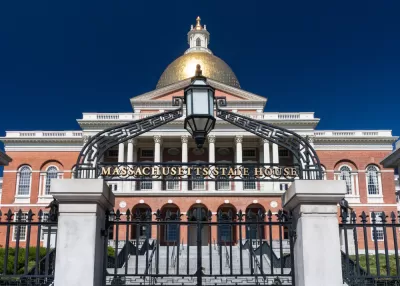
The Boston Globe Editorial Board writes in support of a proposed law in the Massachusetts State House that would "weaken the ability of communities to exclude newcomers seems to be on the cusp of passage [paywall]."
"By seeing that effort through to completion in this session, Massachusetts lawmakers can both make the Commonwealth fairer to all its residents and take a timely stand against the president’s latest appeal to racism," according to the editorial.
The law in question is called the Housing Choice initiative, and it has persisted through several iterations after coming up short in 2018 and 2019. Massachusetts Governor Charlie Baker has supported the initiative from the outset, and has shifted his support in recent months to include discussion of the economic and racial outcomes of the pandemic supplying additional necessity for the initiative. The Metropolitan Area Planning Council, the regional planning organization for the larger Boston area has also voiced support for Housing Choice as well as other attempts at statewide planning and zoning reform in Massachusetts.
As for the state of Housing Choice in this current, expected-for-approval, iteration, the editorial provides this status update: "Both the House and Senate have passed versions of the bill as part of larger legislative packages; now a conference committee just needs to hash out the final legislation. It falls well short of what housing advocates once wished for, and indeed makes only one change. But it’s a big one: The bill would make it easier for towns and cities to relax their zoning restrictions by requiring only a simple majority in their local governing bodies instead of a two-thirds supermajority."
The editorial was published at the end of July, and so far the Massachusetts Legislature has yet to take the final steps to approve Housing Choice, but when and if they do, it would add another massive step away from the planning status quo in the United States, joining the decision by the city of Portland, Oregon to adopt the Residential Infill Program this week as the most recent legislative actions in support of planning innovation. The editorial sets the Housing Choice initiative in context of President Trump's recent leverage of the Obama-era Affirmatively Furthering Fair Housing rule as a campaign issue in this election year.
FULL STORY: As Trump stokes suburban fears, Mass. lawmakers chart a better path


'Housing Choice' Approved in Massachusetts
The Housing Choice initiative, one of the country's most sweeping planning and development reforms to date, was included in a large economic development package approved by the Massachusetts Legislature earlier this week.

How Massachusetts Got its Historic Planning Reform Moment
As reported earlier this month, the Massachusetts Legislature is poised to approve historic statewide land use reforms that would preempt local control of residential development. Here's a detailed account of how the state arrived at this moment.
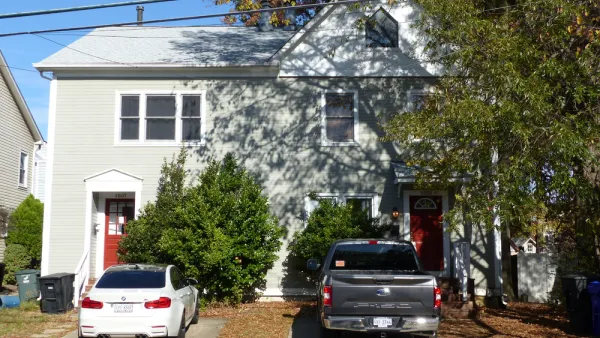
Missing Middle Housing Study Launches in Arlington County, Virginia
Missing Middle Housing, the kinds of additional density that can be added with limited construction on a footprint the size of traditional single-family homes, is gaining momentum in the D.C. region.

Planetizen Federal Action Tracker
A weekly monitor of how Trump’s orders and actions are impacting planners and planning in America.

The state-sanctioned urbicide of Austin
People don’t kill cities. Freeways do.

US to reduce Colorado River water deliveries to Mexico
A new Colorado Treaty amendment reduces Mexico’s Colorado River water allocation by 250,000 acre feet.

5 New England states march closer to 800 megawatt wind energy project
Securing federal approval for the project may be complicated under the Trump administration, which has historically been hostile towards domestic wind power.

Baltimore to break ground on $50 million Transit Priority Project
The project will bring faster bus trips, safer streets and better bike connections to Baltimore.

Airbnb launches $250 million 'last-dollar financing' housing accelerator, makes first investment in Austin
The company will put $6.4 million towards affordable housing development in Texas’ capital.

FREE Course: Walkable City 1: Why Walkability?
After describing his path towards focusing on walkability as the essence of good planning, Jeff Speck marches through his five principal reasons for making more walkable places.
Reinventing Malls: Planning Alchemy—Turning Gray Fields Into Gold
The course focuses on the opportunities and imperatives that shape reinvention of mall sites.

Eagle County Government
Harvard University Graduate School of Design
Nashville Planning Department
The Architects Foundation
University of Cincinnati Online
The Pocatello Development Authority
The Urban Renewal Agency of the City of Pocatello
Journal of the American Planning Association