As reported earlier this month, the Massachusetts Legislature is poised to approve historic statewide land use reforms that would preempt local control of residential development. Here's a detailed account of how the state arrived at this moment.



"Massachusetts is expected to soon pass a bill that will include a housing choice provision that can help cities and suburbs build housing and end exclusionary zoning," according to an article by Randy Shaw, picking up on news shared on Planetizen earlier this month. The new legislation is the third iteration of the "Housing Choice" first proposed by Governor Charlie Baker in 2017. "Housing advocates have fought hard for the measure, which enables city councils to pass rezoning changes by a simple majority vote rather than a two-thirds supermajority vote," explains Shaw.
The bill approved by the Massachusetts Senate in July, titled An Act Enabling Partnerships for Growth, includes housing choice provisions, according to Shaw, and advocates believe the bill is close enough to the House version of the bill that passage is all but assured, although approval might wait until September. In the meantime, Shaw mines the experience of getting this historic legislation to the finish line for lessons that can be applied nationally.
With more details included in the source article, Shaw offers these three lessons:
- Voters are pro-housing. Compare this to the recent political machinations of the Trump administration, which is pinning its electoral strategy on messages designed to provoke fear about the potential of liberal housing policies to change suburban communities.
- Activists must end state barriers. Shaw gives credit to the advocacy organizations that have spurred the legislation in Massachusetts, while also crediting predecessor legislation in Oregon, California, New York, and Connecticut. More action should follow, according o Shaw. "State laws in Colorado, Illinois, Texas, Washington, and other states block cities from enacting essential affordability measures. The passage of housing choice legislation should encourage activists to keep battling at the state level to win real change."
- Governor support is ket to passing housing choice. Compare the experience of Massachusetts, with support from Governor Baker, to the history of failed up zoning bills in California, which failed at the finish line without support from Governor Gavin Newsom. "New York Gov. Andrew Cuomo also fails to walk the talk on housing. You’d never think that he was a great former HUD secretary after his failure to prioritize new housing production as governor," writes Shaw.
FULL STORY: Massachusetts Strikes a Blow Against Exclusionary Zoning


'Housing Choice' Approved in Massachusetts
The Housing Choice initiative, one of the country's most sweeping planning and development reforms to date, was included in a large economic development package approved by the Massachusetts Legislature earlier this week.
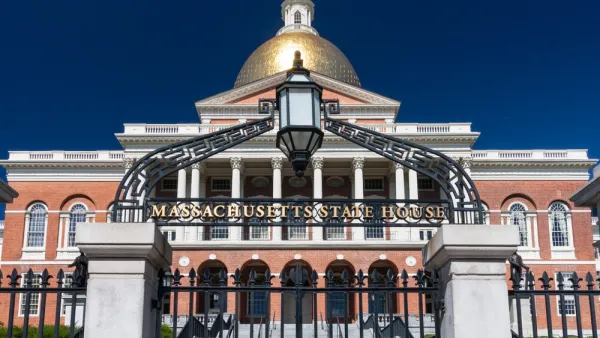
'Housing Choice' Ready to Overcome the Planning Status Quo in Massachusetts
After several failed attempts, Massachusetts Legislature is close to a breakthrough on the Housing Choice initiative proposed by Governor Baker as a tool for generating a lot of new housing supply in the state.
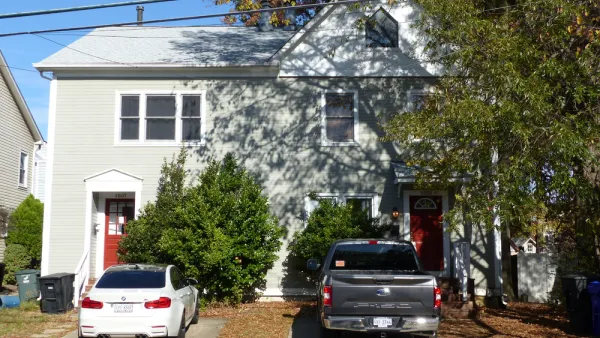
Missing Middle Housing Study Launches in Arlington County, Virginia
Missing Middle Housing, the kinds of additional density that can be added with limited construction on a footprint the size of traditional single-family homes, is gaining momentum in the D.C. region.

The state-sanctioned urbicide of Austin
People don’t kill cities. Freeways do.

US to reduce Colorado River water deliveries to Mexico
A new Colorado Treaty amendment reduces Mexico’s Colorado River water allocation by 250,000 acre feet.

New Jersey’s second-largest city bans standalone data centers
Jersey City will continue to allow co-location facilities, such as those meant for research institutions that store their own data.

Amtrak not solely to blame for New Jersey commuter rail's unreliability, report finds
A new study from the Garden State Initiative found that NJ Transit’s budget grew 20% across a 4 year period, but reliability declined significantly over the same period.

EPA erases limits on planet-warming pollution from power plants
Under Monday’s plan, power plants would still have some limits on how much mercury, arsenic and other contaminants they can emit.

Phoenix announces new on-demand transit service, more frequent RAPID buses
Both new services will launch in October, and are part of Phoenix's Project Effective Access Solutions for Easing Congestion.

FREE Course: Walkable City 1: Why Walkability?
After describing his path towards focusing on walkability as the essence of good planning, Jeff Speck marches through his five principal reasons for making more walkable places.
Reinventing Malls: Planning Alchemy—Turning Gray Fields Into Gold
The course focuses on the opportunities and imperatives that shape reinvention of mall sites.

Eagle County Government
Harvard University Graduate School of Design
Nashville Planning Department
The Architects Foundation
University of Cincinnati Online
The Pocatello Development Authority
The Urban Renewal Agency of the City of Pocatello
Journal of the American Planning Association