A tide that began to rise in 2019 hasn't receded, according to local sources along Lake Michigan.


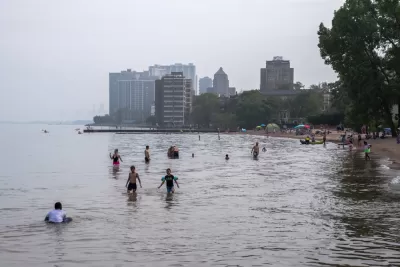
Keith Matheny reports from the shores of Lake Michigan, where homeowners are watching the waters rise at an alarming rate, encroaching on property and requiring some homeowners to demolish their homes and relocate.
"Though the high water that was coming in 2020 could be seen as far back as last fall, when the typical annual receding never happened, and many were better prepared for what was coming than last year, high water impacts this spring and summer have been just as widespread and severe as 2019, if not worse," reports Matheny, citing state authorities from three states.
"Lake elevation records continue to be broken, a trend that will continue at least on connected Lakes Michigan and Huron into fall."
It isn't just private property owners facing the consequences of rising waters. The Michigan Department of Transportation has spent $5 million on emergency repairs related to high water this spring and summer.
Matheny provides dispatches from Lathe, in Ottawa County Michigan and Detroit to illustrate the widespread effect of the rising waters—in a dry year, no less. Long-term fixes for MDOT to address long-term high water would require more like $100 million, according to Brad Wieferich, director of MDOT's Bureau of Development, who is cited in the article.
FULL STORY: Record-high Michigan water levels are a nightmare for homeowners, state

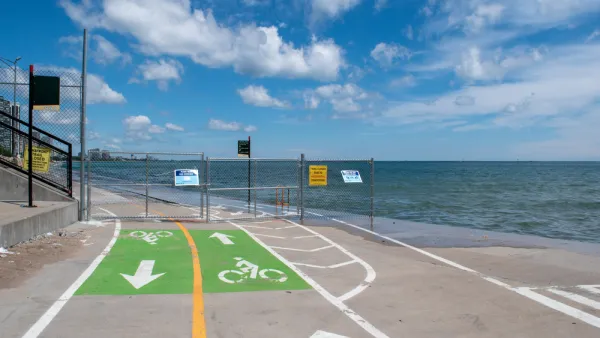
Lessons From the Viral Video of Lake Michigan Taking Out a Bike Commuter
Climate change will only increase the frequency of incidents like the one captured by a television news station in Chicago earlier this week.
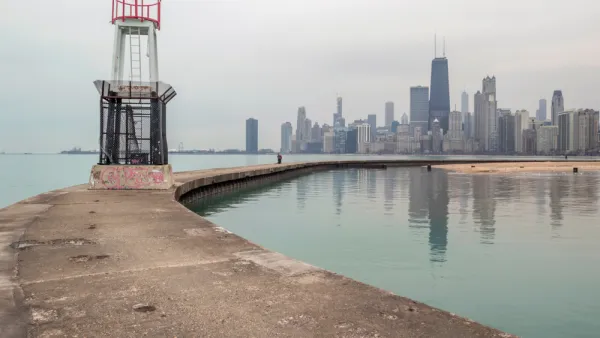
Lake Michigan Wreaking Havoc on Chicago This Summer
Lake Michigan has reached historic levels this summer. Properties on the Far North Side are most at risk. Swimmers have already been called back from the shore.

Lower Manhattan Climate Resilience Plan Released
The Financial District and Seaport Climate Resilience Master Plan will extend the shoreline in Lower Manhattan by up to 200 feet.

The state-sanctioned urbicide of Austin
People don’t kill cities. Freeways do.

US to reduce Colorado River water deliveries to Mexico
A new Colorado Treaty amendment reduces Mexico’s Colorado River water allocation by 250,000 acre feet.

New Jersey’s second-largest city bans standalone data centers
Jersey City will continue to allow co-location facilities, such as those meant for research institutions that store their own data.

Amtrak not solely to blame for New Jersey commuter rail's unreliability, report finds
A new study from the Garden State Initiative found that NJ Transit’s budget grew 20% across a 4 year period, but reliability declined significantly over the same period.

EPA erases limits on planet-warming pollution from power plants
Under Monday’s plan, power plants would still have some limits on how much mercury, arsenic and other contaminants they can emit.

Phoenix announces new on-demand transit service, more frequent RAPID buses
Both new services will launch in October, and are part of Phoenix's Project Effective Access Solutions for Easing Congestion.

FREE Course: Walkable City 1: Why Walkability?
After describing his path towards focusing on walkability as the essence of good planning, Jeff Speck marches through his five principal reasons for making more walkable places.
Reinventing Malls: Planning Alchemy—Turning Gray Fields Into Gold
The course focuses on the opportunities and imperatives that shape reinvention of mall sites.

Eagle County Government
Harvard University Graduate School of Design
Nashville Planning Department
The Architects Foundation
University of Cincinnati Online
The Pocatello Development Authority
The Urban Renewal Agency of the City of Pocatello
Journal of the American Planning Association