It has been over 25 years since urban planning professor Anastasia Loukaitou-Sideris discussed the idea of "mobile parks" to meet recreational needs. The idea is still relevant today.


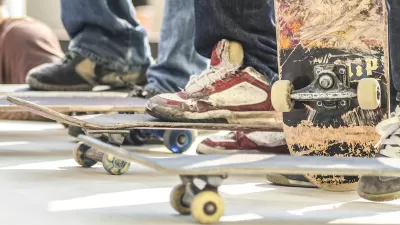
It takes time and money to acquire land and build new parks. In fact, it typically takes years before new parks can be provided due to financial, bureaucratic and political issues, and other constraints. Mobile recreation may sound strange at first, but it may be an appropriate strategy to meet the urgent need for additional recreational opportunities in underresourced areas. The typical mobile recreation approach involves recreation staff going to parking lots or other underutilized spaces in park-poor neighborhoods and bringing along play resources like basketball hoops, soccer goals, skate ramps and their associated protective gear.
During the current pandemic, extra precautions need to be taken with shared equipment, but staff can also provide non-contact programming, such as hopscotch, and free giveaways, like jump ropes. This article explains how Los Angeles County, El Cajon (California), and Lewisville (Texas) have established and used mobile recreation programs to creatively meet park needs, especially for communities that are lacking in parkland.
FULL STORY: Mobile Recreation for Fun, Health and Wellness

Advancing Diversity, Equity and Inclusion for Parks and Recreation
A newly released report by the National Recreation and Park Association (NRPA) reveals the state of diversity, equity, and inclusion (DEI) activities at park agencies across the U.S.
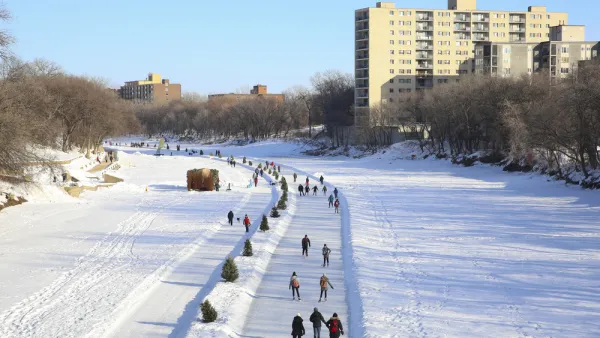
Serpentine Maze: Pop-Up Parks in the Pandemic
If the combined effects of winter's cold and the pandemic has you bummed, check out this community-building exercise in the frozen North.
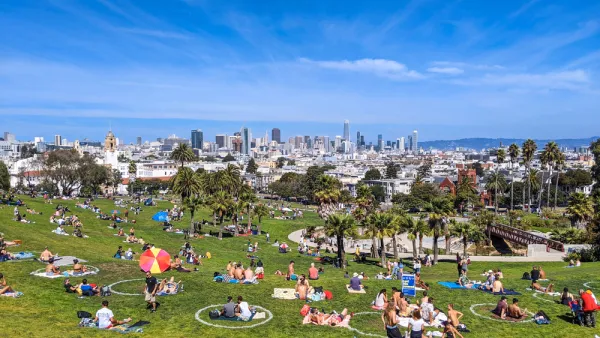
Reimagined Public Spaces and Programming During the Pandemic
Public spaces have become more important than ever. Here are five case studies of innovative and safely designed programming that engages people of all ages and backgrounds.

Planetizen Federal Action Tracker
A weekly monitor of how Trump’s orders and actions are impacting planners and planning in America.

The state-sanctioned urbicide of Austin
People don’t kill cities. Freeways do.

US to reduce Colorado River water deliveries to Mexico
A new Colorado Treaty amendment reduces Mexico’s Colorado River water allocation by 250,000 acre feet.

LA Metro’s ultimatum: no extra buses for LA28 if federal funding isn’t imminently secured
If Metro does not provide additional buses, LA28 organizers will have to find a new way to manage Olympic traffic. LA28’s budget does not include a line item for transit.

Colorado’s Largest Data Center Could Rise Next to Homes — Without a Public Hearing
The proposed campus would consume 11 times the power of Denver International Airport; as it has across the country, opposition mounts.

5 New England states march closer to 800 megawatt wind energy project
Securing federal approval for the project may be complicated under the Trump administration, which has historically been hostile towards domestic wind power.

FREE Course: Walkable City 1: Why Walkability?
After describing his path towards focusing on walkability as the essence of good planning, Jeff Speck marches through his five principal reasons for making more walkable places.
Reinventing Malls: Planning Alchemy—Turning Gray Fields Into Gold
The course focuses on the opportunities and imperatives that shape reinvention of mall sites.

Eagle County Government
Harvard University Graduate School of Design
Nashville Planning Department
The Architects Foundation
University of Cincinnati Online
The Pocatello Development Authority
The Urban Renewal Agency of the City of Pocatello
Journal of the American Planning Association