The new slow streets program in Dallas uses community input to create locations for slow streets, each designed to encourage physical activity while maintaining safe distance.


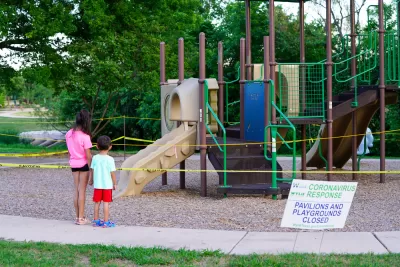
"If you would like to shut down your street to make it safer and to give you and your neighbors a [sic] some additional public recreation space, all you have to do is ask," reports Peter Simek.
"The city of Dallas has partnered with Better Block, Bike DFW, Amanda Popken Development, and a Coalition for a New Dallas (yes, that coalition) to launch the Dallas Slow Streets pilot program," explains Simek. "The initial program is open to 10 streets in 10 Dallas neighborhoods, and they will be chosen on a first-come, first-served basis. To be considered you have to prove that you have the support of 25 percent of your neighbors. "
The pilot program took some time in developing. A Dallas Morning News editorial, for instance, called on the city to increase the ratio of neighborhood support to 50 percent. Simek also notes that a proposal earlier in the pandemic to close Seventh St. in Oak Cliff to automobile traffic created controversy online.
Read the full story: You Can Now Ask the City To Shut Down Your Street

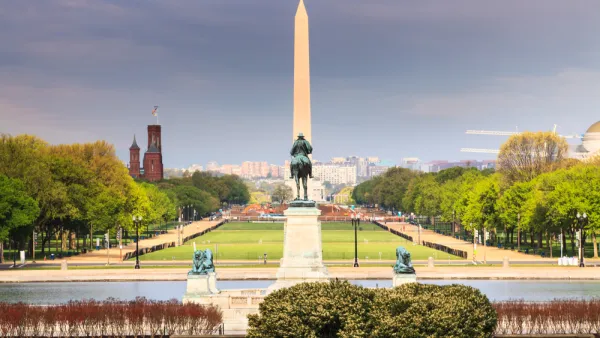
Slow Streets Are Coming to D.C.
Seven streets in Washington, D.C. will have speed limit reduced to 15 miles per hour following a District-wide 20 miles per hour local road speed limit set at the end of May.
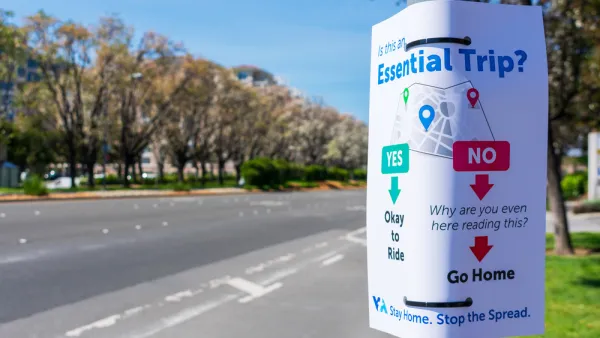
Did the CDC Toll the Death Knell for Public Transit?
It's official—the nation's leading public health agency would prefer that Americans drive alone to work to reduce exposure to the coronavirus. New CDC guidance call for government to subsidize drive-alone and single ride-share commutes.
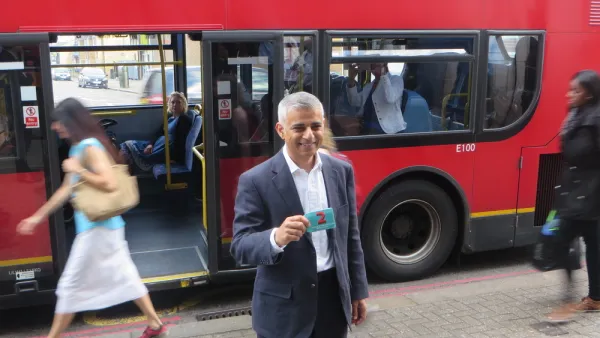
London Doubles Down on Vehicle Restrictions
A plan to completely overhaul the streets of London will require a "monumental" effort by all residents of the city, according to the mayor of London.

Planetizen Federal Action Tracker
A weekly monitor of how Trump’s orders and actions are impacting planners and planning in America.

California plans to bury El Niño’s downpour
If the state plays its cards right, it may be able to store a billion acre-feet of El Niño’s water in aquifers.

Chicago breaks ground on $3 billion megadevelopment
The new neighborhood, titled Foundry Park, will one day host 3,700 residences.

Satanic place names
From streams and lakes to valleys and canyons, I mapped more than 1,000 places named after the Devil.

California High-Speed Rail Authority CEO resigns after $600,000 scandal
Under Ian Choudri, the authority used taxpayer dollars to fund first class flights and trips to nightclubs.

Want to study the Missouri River? Soon, you may need unanimous approval from 10 states
Legislation would require 10 governors’ permission to study or build projects moving water outside the basin.

FREE Course: Walkable City 1: Why Walkability?
After describing his path towards focusing on walkability as the essence of good planning, Jeff Speck marches through his five principal reasons for making more walkable places.
Reinventing Malls: Planning Alchemy—Turning Gray Fields Into Gold
The course focuses on the opportunities and imperatives that shape reinvention of mall sites.

City of Rosemead
Rutgers University, Edward J. Bloustein School of Planning and Public Policy
One Hundred Miles
Hunter College, City University of New York (CUNY)
The Architects Foundation
University of Cincinnati Online
City of Cambridge
Montrose County
The Pocatello Development Authority