Age segregation has contributed to the tragic outbreaks of Covid-19 in nursing homes all over the country, but racial data adds another layer of tragic consequences of the pandemic.


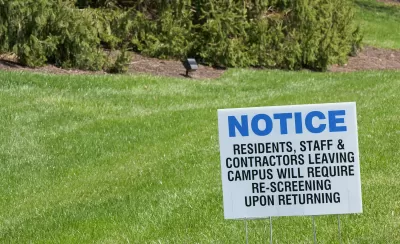
A journalistic collaboration by reporters from The New York Times, The Baltimore Sun, KPCC/LAist, and The Southern Illinoisan explores the racial divide apparent in Covid-19 rates in nursing homes around the country.
The coronavirus pandemic has devastated the nation’s nursing homes, sickening staff members, ravaging residents and contributing to at least 20 percent of the nation’s Covid-19 death toll. The impact has been felt in cities and suburbs, in large facilities and small, in poorly rated homes and in those with stellar marks.
But Covid-19 has been particularly virulent toward African-Americans and Latinos: Nursing homes where those groups make up a significant portion of the residents — no matter their location, no matter their size, no matter their government rating — have been twice as likely to get hit by the coronavirus as those where the population is overwhelmingly white.
Anecdotes, data, and infographics present the evidence of yet another stark racial divide in the Covid-19 pandemic, but the article also notes that the disparities in outbreaks are still confusing and hard to explain. The journalists working on this story interviewed residents of nursing homes in Maryland, California, and Illinois to reveal more about racial disparities of outbreaks in nursing homes around the country.
Additional reading: "Pandemic and the Ills of Age Segregation," (Planetizen, April 26)
FULL STORY: The Striking Racial Divide in How Covid-19 Has Hit Nursing Homes

Pandemic and the Ills of Age Segregation
Older generations have increasingly segregated over the past century-plus of U.S. history, and the pandemic is only one more example of why that's a problem for young and old.

Dispute Over Siting of Coronavirus Quarantine Facility in Washington State
The Seattle area is ground zero for the coronavirus in the U.S., where 10 of the 11 deaths as of March 5 have occurred. King County's decision to purchase a motel in Kent for use as a quarantine facility is being met with protests by city officials.
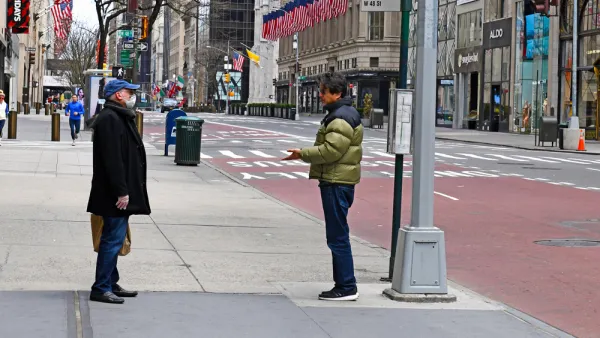
Friday Eye Candy: Covid-19, Then and Now
The New York Times compared images from readers portraying similar scenes in 2020 and 2022.

Planetizen Federal Action Tracker
A weekly monitor of how Trump’s orders and actions are impacting planners and planning in America.

The state-sanctioned urbicide of Austin
People don’t kill cities. Freeways do.

US to reduce Colorado River water deliveries to Mexico
A new Colorado Treaty amendment reduces Mexico’s Colorado River water allocation by 250,000 acre feet.

Baltimore to break ground on $50 million Transit Priority Project
The project will bring faster bus trips, safer streets and better bike connections to Baltimore.

Airbnb launches $250 million 'last-dollar financing' housing accelerator, makes first investment in Austin
The company will put $6.4 million towards affordable housing development in Texas’ capital.

Guerilla urbanists are building DIY bus stop benches in Chicago
A before-and-after of one of the bus stops with a new bench. The new benches are not officially sanctioned or permitted, but the residents who placed them hope they will be the start of a network of DIY benches across the city.

FREE Course: Walkable City 1: Why Walkability?
After describing his path towards focusing on walkability as the essence of good planning, Jeff Speck marches through his five principal reasons for making more walkable places.
Reinventing Malls: Planning Alchemy—Turning Gray Fields Into Gold
The course focuses on the opportunities and imperatives that shape reinvention of mall sites.

Eagle County Government
Harvard University Graduate School of Design
Nashville Planning Department
The Architects Foundation
University of Cincinnati Online
The Pocatello Development Authority
The Urban Renewal Agency of the City of Pocatello
Journal of the American Planning Association