As the city of Edmonton waits to hear about funding prospects, Mayor Don Iveson deliberates parking buses over the summer to make up for revenue loss.


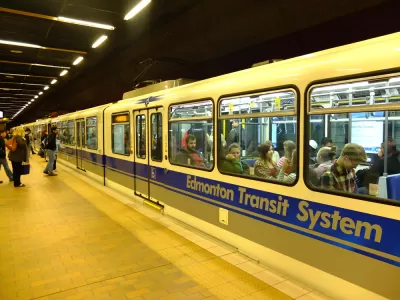
Public transit in Edmonton is a precarious situation. According to Edmonton Mayor Don Iveson, the city simply does not have the revenue required to keep the buses and light rail transit services running as usual. With ridership falling between 70% and 80%, Iveson "said the city has to look at all options to save money in the economic fallout from the COVID-19 pandemic," reports Natasha Riebe. Since the onset of the pandemic, Edmonton has taken a hit of about $10 million a month in transit revenue alone.
One option on the table: canceling service for the summer to ensure the budget to run public transit during winter months when weather conditions worsen. Iveson, among other transit advocates, would prefer to increase service, arguing that parking buses would have devastating consequences for the city and people of Edmonton.
Transit services have been free since mid-March in part to prevent the spread of the virus through paper tickets. The city is considering an electronic fare payment system as a safer alternative.
For now, Iverson is waiting on a response from the provincial government after the Federation of Canadian Municipalities requested a collective $10 billion in funding through September, about a quarter of which would be used to recoup losses related to transit revenue.
FULL STORY: Edmonton could shut down public transit for the summer, mayor says

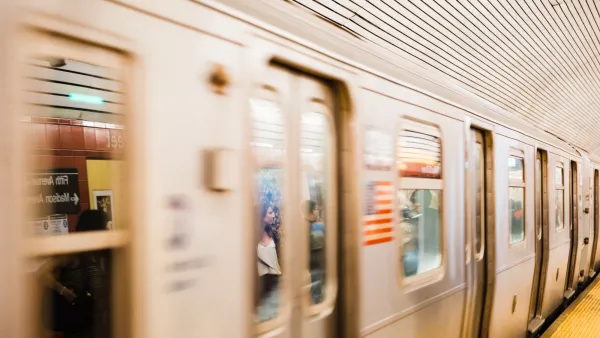
Destroyed Subway Car Windows Contribute to MTA Budget Deficit
As the Metropolitan Transportation Authority grapples with a $16 billion deficit, smashed train windows are adding to the cost.
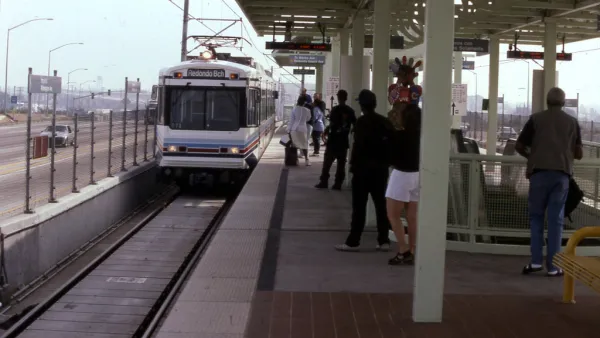
For the Coronavirus Pandemic, Public Transit Is the Move
Now is the time to invest in public transit as the correct coronavirus pandemic transportation solution.
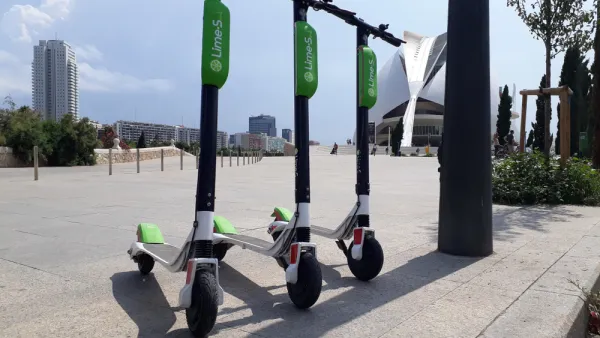
Micromobility Makes a Comeback
Decreased public transit ridership is bringing some transit agencies to consider partnerships with micromobility corporations.

Planetizen Federal Action Tracker
A weekly monitor of how Trump’s orders and actions are impacting planners and planning in America.

The state-sanctioned urbicide of Austin
People don’t kill cities. Freeways do.

US to reduce Colorado River water deliveries to Mexico
A new Colorado Treaty amendment reduces Mexico’s Colorado River water allocation by 250,000 acre feet.

Guerilla urbanists are building DIY bus stop benches in Chicago
A before-and-after of one of the bus stops with a new bench. The new benches are not officially sanctioned or permitted, but the residents who placed them hope they will be the start of a network of DIY benches across the city.

Mamdani overhauls NYC's Vision Zero plan with 100 new policy goals
The overhaul aims to reduce traffic deaths and make streets safer for pedestrians, cyclists and drivers through lower speed limits, new safety infrastructure and more.

Amtrak not solely to blame for New Jersey commuter rail's unreliability, report finds
A new study from the Garden State Initiative found that NJ Transit’s budget grew 20% across a 4 year period, but reliability declined significantly over the same period.

FREE Course: Walkable City 1: Why Walkability?
After describing his path towards focusing on walkability as the essence of good planning, Jeff Speck marches through his five principal reasons for making more walkable places.
Reinventing Malls: Planning Alchemy—Turning Gray Fields Into Gold
The course focuses on the opportunities and imperatives that shape reinvention of mall sites.

Eagle County Government
Harvard University Graduate School of Design
Nashville Planning Department
The Architects Foundation
University of Cincinnati Online
The Pocatello Development Authority
The Urban Renewal Agency of the City of Pocatello
Journal of the American Planning Association