Transit officials quickly rescinded a decision to halt public transit service in the city of Petersburg.


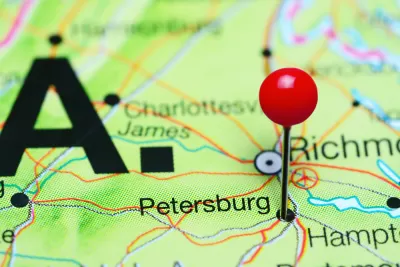
Wyatt Gordon reports on the ongoing effort at Petersburg Area Transit (PAT) to balance transit service with safety in the Tri-Cities region near Richmond in Virginia. PAT held the distinction of being the first transit agency in the nation to shut down service entirely, but the suspension of service only lasted a day.
"Despite taking a number of precautions that have become industry best practices during this pandemic such as eliminating fares, switching to backdoor boarding only, and separating bus operators from the public with plexiglass, PAT’s General Manager, Charles Koonce, still made the drastic decision to stop serving all riders as of last April 1 at 4:30 pm save for 12 people who rely on paratransit," reports Gordon.
Gordon provides a lot more detail on the thought process behind the decision to shut down the transit system, as well as the fallout from the decision for riders relying on the system for mobility.
Eventually, according to Gordon, state officials intervened and service reopened just 36 hours after it had been shut down.
Read the full story: Bus service for one city in Virginia was completely shuttered for a day. Here’s what happened.

What Is the Future for Transit After COVID? - A Debate
Critic Randal O'Toole and advocate Todd Litman debate how communities should plan for public transit in the post pandemic future. Should it contract or expand?
Falling Transit Ridership 'Disastrous' for Greenhouse Gas Reductions
With ridership at record lows and agencies struggling to stay afloat, public transit around the world will need robust investment to recover after the pandemic.
'Never Let a Good Crisis Go to Waste' and Planning in the Pandemic
The latest in a series of compendia collecting news and commentary focusing on the complexities of the COVID-19 pandemic's effect on communities.

Planetizen Federal Action Tracker
A weekly monitor of how Trump’s orders and actions are impacting planners and planning in America.

The state-sanctioned urbicide of Austin
People don’t kill cities. Freeways do.

Colorado’s Largest Data Center Could Rise Next to Homes — Without a Public Hearing
The proposed campus would consume 11 times the power of Denver International Airport; as it has across the country, opposition mounts.

Nation's most wind-powered state turns to coal as data centers increase energy demand
For the first time in decades, Iowa has increased its generation of coal power.

NYC cools commuters with city's first rain garden above a bus stop
New York City officials say the plants in the rain garden can absorb 16 gallons of rainwater during heavy storms.

Brightline West’s future may rely on $6 billion federal loan
The company has until Nov. 2 to make a $400 million equity investment into its proposed high-speed rail line.

FREE Course: Walkable City 1: Why Walkability?
After describing his path towards focusing on walkability as the essence of good planning, Jeff Speck marches through his five principal reasons for making more walkable places.
Reinventing Malls: Planning Alchemy—Turning Gray Fields Into Gold
The course focuses on the opportunities and imperatives that shape reinvention of mall sites.

Greater Baltimore Committee
Eagle County Government
Harvard University Graduate School of Design
The Architects Foundation
University of Cincinnati Online
The Pocatello Development Authority
The Urban Renewal Agency of the City of Pocatello
Journal of the American Planning Association