A county commissioner is asking for a study of fare-free transit programs in Kansas City and Salt Lake City to inform the potential implementation fo a similar program in the South Florida county.


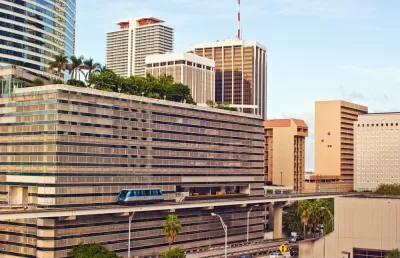
Miami-Dade County Commissioner Xavier Suarex has begun advocating for free transit, according to an article by Jesse Scheckner, following in the footsteps of Kansas City.
“It is time for Miami-Dade County to come into the 21st Century and provide fare-free public transportation,” Mr. Suarez said in a Dec. 15 press note. “Given the fact that total revenues from buses and Metrorail barely exceed $100 million, which is less than 2% of the operating budget for the county, the time has come to induce the use of mass transit by any and all means.”
Suarez has requested that the county attorney’s office and Transportation Planning Organization (TPO) draft resolutions that would enable studies of the idea, as exemplified by Kansas City an Salt lake City, reports Scheckner.
A separate article by Sandy Smith connects the Miami discussion to the precedent set by Kansas City to ask whether fare-free transit could become a national movement. The answer is not clear, but most of the cities that currently offer free transit are much smaller than Miami-Dade County, Kansas City, and Salt Lake City.
FULL STORY: All-free Miami-Dade transit is answer, Xavier Suarez says


Fisticuffs: The argument AGAINST fare-free transit
If a terrible bus becomes free, will it truly free you?
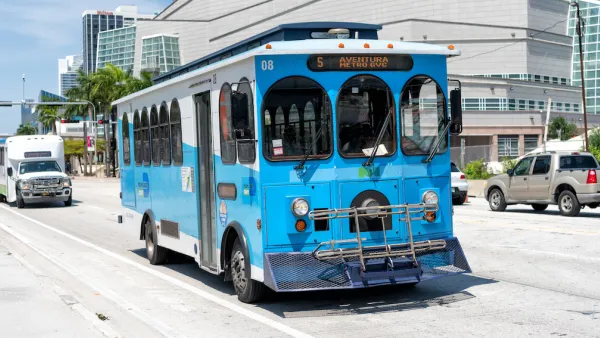
Miami-Dade County Suspends Transit Fares for Rest of 2023
Starting November 13, bus and rail rides will be free as the county rolls out its ‘Better Bus’ system redesign.

Rhode Island Ends Free Transit Program
The state’s public transit agency cited cost overruns and a looming ‘fiscal cliff.’

Planetizen Federal Action Tracker
A weekly monitor of how Trump’s orders and actions are impacting planners and planning in America.

The state-sanctioned urbicide of Austin
People don’t kill cities. Freeways do.

US to reduce Colorado River water deliveries to Mexico
A new Colorado Treaty amendment reduces Mexico’s Colorado River water allocation by 250,000 acre feet.

5 New England states march closer to 800 megawatt wind energy project
Securing federal approval for the project may be complicated under the Trump administration, which has historically been hostile towards domestic wind power.

Baltimore to break ground on $50 million Transit Priority Project
The project will bring faster bus trips, safer streets and better bike connections to Baltimore.

Airbnb launches $250 million 'last-dollar financing' housing accelerator, makes first investment in Austin
The company will put $6.4 million towards affordable housing development in Texas’ capital.

FREE Course: Walkable City 1: Why Walkability?
After describing his path towards focusing on walkability as the essence of good planning, Jeff Speck marches through his five principal reasons for making more walkable places.
Reinventing Malls: Planning Alchemy—Turning Gray Fields Into Gold
The course focuses on the opportunities and imperatives that shape reinvention of mall sites.

Eagle County Government
Harvard University Graduate School of Design
Nashville Planning Department
The Architects Foundation
University of Cincinnati Online
The Pocatello Development Authority
The Urban Renewal Agency of the City of Pocatello
Journal of the American Planning Association