A closely watched court case related to how cities deal with homeless people sleeping in public, Martin v. Boise, will not get hearing with the U.S. Supreme Court.


"The Supreme Court refused Monday to hear a major case on homelessness, letting stand a ruling that protects homeless people’s right to sleep on the sidewalk or in public parks if no other shelter is available," reports David G. Savage.
The case, Martin v. Boise, has been closely scrutinized as it moved through the appeals process and toward a potential Supreme Court hearing. Without chance of an appeal before the Supreme Court, the ruling of a 9th Circuit Court of Appeals judge will stand.
"The outcome is a significant victory for homeless activists and a setback for city officials in California and other western states who argued the appeals court ruling undercut their authority to regulate encampments on the sidewalks," according to Savage.
FULL STORY: Supreme Court lets stand ruling that protects homeless who sleep on sidewalk

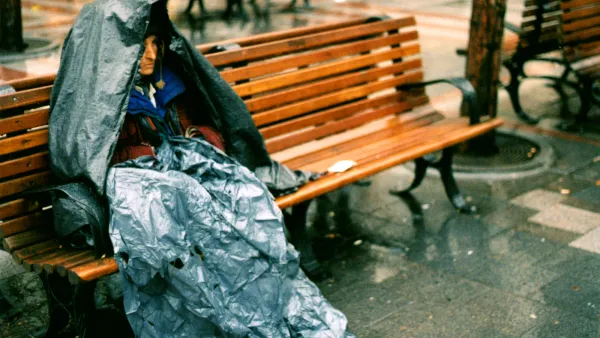
Supreme Court Could Decide on Homeless Public Sleeping
The Supreme Court will be considering for the first time whether the Constitution gives homeless people a right to sleep on the sidewalk.
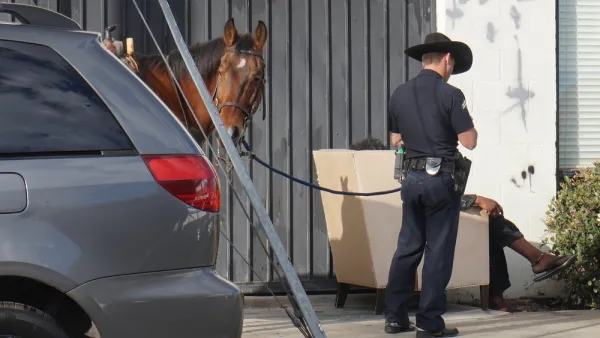
Court: It's Cruel and Unusual Punishment to Ban Homeless From Sleeping on Streets
A 2009 law that banned sleeping in public spaces has been ruled unconstitutional by a federal appeals court.
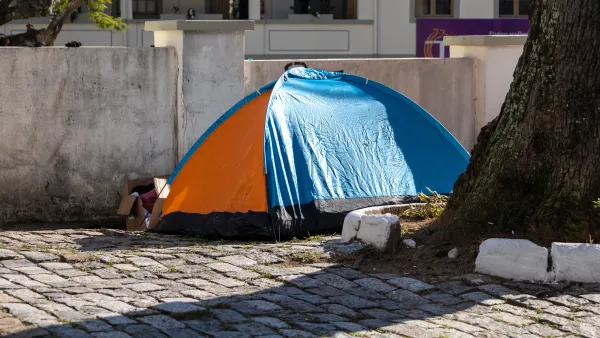
U.S. Supreme Court Upholds Camping Bans, but Challenges of Addressing Homelessness Remain
In Grants Pass v. Johnson, the Supreme Court upheld an Oregon city’s ban on camping in public places, paving the way for similar bans in cities across the country but doing nothing to solve the cause of homelessness.

Planetizen Federal Action Tracker
A weekly monitor of how Trump’s orders and actions are impacting planners and planning in America.

The state-sanctioned urbicide of Austin
People don’t kill cities. Freeways do.

US to reduce Colorado River water deliveries to Mexico
A new Colorado Treaty amendment reduces Mexico’s Colorado River water allocation by 250,000 acre feet.

Baltimore to break ground on $50 million Transit Priority Project
The project will bring faster bus trips, safer streets and better bike connections to Baltimore.

Airbnb launches $250 million 'last-dollar financing' housing accelerator, makes first investment in Austin
The company will put $6.4 million towards affordable housing development in Texas’ capital.

Guerilla urbanists are building DIY bus stop benches in Chicago
A before-and-after of one of the bus stops with a new bench. The new benches are not officially sanctioned or permitted, but the residents who placed them hope they will be the start of a network of DIY benches across the city.

FREE Course: Walkable City 1: Why Walkability?
After describing his path towards focusing on walkability as the essence of good planning, Jeff Speck marches through his five principal reasons for making more walkable places.
Reinventing Malls: Planning Alchemy—Turning Gray Fields Into Gold
The course focuses on the opportunities and imperatives that shape reinvention of mall sites.

Eagle County Government
Harvard University Graduate School of Design
Nashville Planning Department
The Architects Foundation
University of Cincinnati Online
The Pocatello Development Authority
The Urban Renewal Agency of the City of Pocatello
Journal of the American Planning Association