From 190 acres to 12 acres, that's the reduction in scale announced this week by representatives of Sidewalk Labs of its plan for Quayside on the waterfront in Toronto.


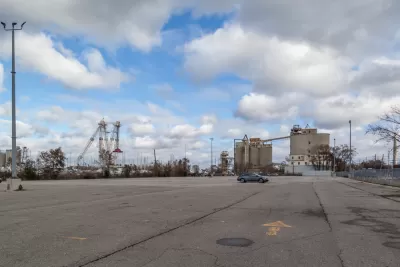
"Google sister company Sidewalk Labs has agreed to scale back and refine its approach to a controversial hi-tech neighbourhood it has proposed for a swath of Toronto’s prime waterfront land," reports Tara Deschamps.
"Instead of developing 190 acres of property, as it announced in June, Sidewalk agreed on Thursday to scale back its plan to the 12 acres it first envisioned in its response to a request for proposals two years ago."
Any future expansion of the experiment would require the company to go through a formal process again, according to Deschamps.
After revealing the master plan for the project in June, Sidewalk Labs received its first feedback from the public on that master plan in July, where concerns about the scale of the project were among the opinions expressed.
[Update: additional coverage from Natalie Wong focuses on the major hurdle toward approval cleared by the project with this news. Sidewalk Labs has also published a blog post to explain the current status of the project.]
FULL STORY: Google sister company agrees to scale back controversial Toronto project


Tech and the Post-Pandemic City
To steer American cities into the future, public and private sectors—and citizens—must work together to build broad, lasting support around complicated issues such as transparency and data privacy.
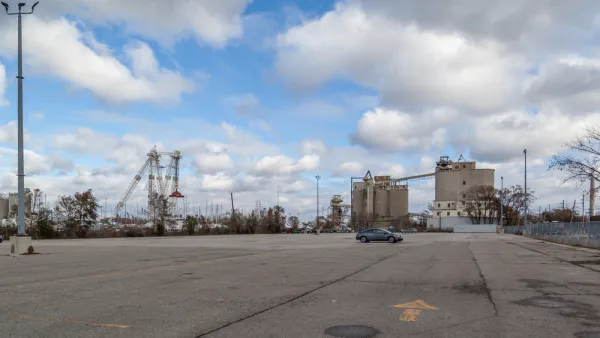
Waterfront Toronto Greenlights Most of Sidewalk Labs' Quayside Master Plan
An evaluation committee made up of Waterfront Toronto staff has given a green light for the Sidewalk Labs master plan for Toronto to proceed to the next stages of planning.
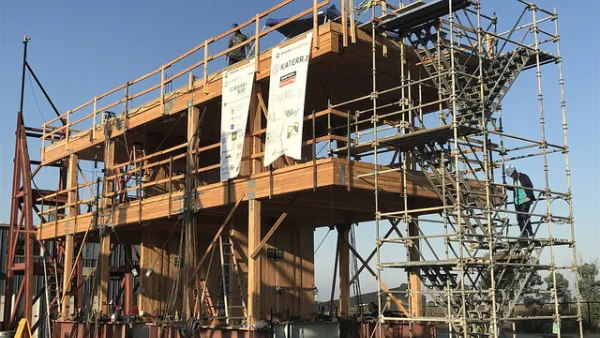
Demystifying Mass Timber
Quayside, Sidewalk Labs' smart city in Toronto, calls for ten tall buildings made entirely of wood. Here's why proponents think mass timber is a good idea, and what obstacles stand in its way.

Planetizen Federal Action Tracker
A weekly monitor of how Trump’s orders and actions are impacting planners and planning in America.

The state-sanctioned urbicide of Austin
People don’t kill cities. Freeways do.

US to reduce Colorado River water deliveries to Mexico
A new Colorado Treaty amendment reduces Mexico’s Colorado River water allocation by 250,000 acre feet.

5 New England states march closer to 800 megawatt wind energy project
Securing federal approval for the project may be complicated under the Trump administration, which has historically been hostile towards domestic wind power.

Baltimore to break ground on $50 million Transit Priority Project
The project will bring faster bus trips, safer streets and better bike connections to Baltimore.

Airbnb launches $250 million 'last-dollar financing' housing accelerator, makes first investment in Austin
The company will put $6.4 million towards affordable housing development in Texas’ capital.

FREE Course: Walkable City 1: Why Walkability?
After describing his path towards focusing on walkability as the essence of good planning, Jeff Speck marches through his five principal reasons for making more walkable places.
Reinventing Malls: Planning Alchemy—Turning Gray Fields Into Gold
The course focuses on the opportunities and imperatives that shape reinvention of mall sites.

Eagle County Government
Harvard University Graduate School of Design
Nashville Planning Department
The Architects Foundation
University of Cincinnati Online
The Pocatello Development Authority
The Urban Renewal Agency of the City of Pocatello
Journal of the American Planning Association