The Los Angeles City Planning Commission has approved a new Advisory Notice regarding above grade parking, in the hopes of limiting the massive parking podiums proliferating around the city.


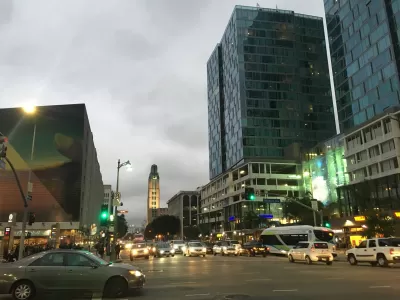
Parking podiums—several stories of parking garage located above ground level—are a recurring controversy of new development in Los Angeles. In 2016, the Los Angeles Department of City Planning started to take action to curb the building typology. The challenges persists, and the City Planning Commission is the latest to weigh in on the issue.
"The advisory notice urges project applicants to minimize the amount of parking provided using zoning tools such as the Transit Oriented Communities Guidelines and other methods such as automated parking to reduce the amount of physical space required. Additionally, the notice suggests that all parking should be located below ground," reports Steven Sharp.
"For projects that do require above-grade parking, the garage levels should be fully integrated into its design, and therefore not recognizable as parking during daytime or nighttime hours," adds Sharp.
The expected effect of the Advisory Notice is unclear, according to Sharp, but additional measures to curb the parking podium epidemic could come through the city's forthcoming zoning code update.
Read the full story: L.A. Planning Department Tries Again to Limit Parking Podiums
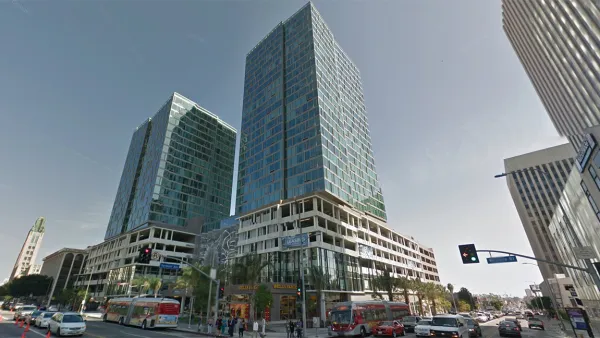
Los Angeles Planners Have Had It Up to Here With Parking Podiums
Above-grade parking garages, also called parking podiums, have become a standard typology across Los Angeles. From Koreatown to Downtown, new residential buildings are separated from the street by several floors of space devoted to parking.
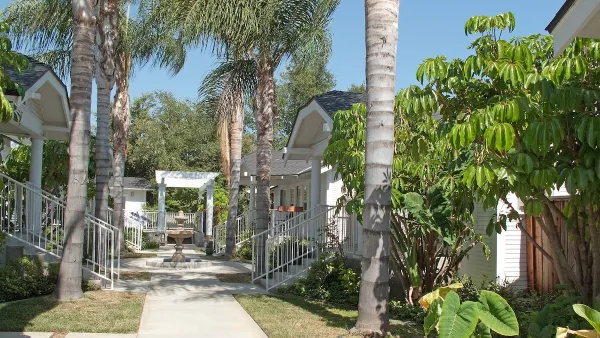
LA Parking Reform is Bearing Fruit
Changes to minimum parking requirements near transit lines are spurring more residential development with little or no on-site parking.

L.A. Reimagines Parking for New Uses
In famously car-centric Los Angeles, developers and city officials are changing the way they view parking space, opting instead to allocate the space to more effective uses.

Planetizen Federal Action Tracker
A weekly monitor of how Trump’s orders and actions are impacting planners and planning in America.

California plans to bury El Niño’s downpour
If the state plays its cards right, it may be able to store a billion acre-feet of El Niño’s water in aquifers.

Desperate measures: Advocates weigh draining Lake Powell to fill Colorado River
Draining the reservoir could reduce evaporation losses by a couple hundred thousand acre-feet.

Los Angeles just elected an urban planner as its mayor
Transportation analysts are optimistic that Raman will be more aggressive in addressing transit issues than Bass.

Mamdani’s pied-à-terre tax survives legal challenge
A panel of judges found that the plaintiffs failed to demonstrate injury as a result of New York City's implementation of the tax.

Eastern Nebraska is running out of electricity
Data centers and electrification are straining eastern Nebraska’s grid, throttling economic development.

FREE Course: Walkable City 1: Why Walkability?
After describing his path towards focusing on walkability as the essence of good planning, Jeff Speck marches through his five principal reasons for making more walkable places.
Reinventing Malls: Planning Alchemy—Turning Gray Fields Into Gold
The course focuses on the opportunities and imperatives that shape reinvention of mall sites.

City of Rosemead
Rutgers University, Edward J. Bloustein School of Planning and Public Policy
One Hundred Miles
University of Michigan School for Environment and Sustainability (SEAS)
Hunter College, City University of New York (CUNY)
The Architects Foundation
City of Cambridge
Montrose County
The Pocatello Development Authority