The Trump administration is exploring ways to outsource operations at national parks to private businesses. Lobbyists for private businesses welcome the invitation.


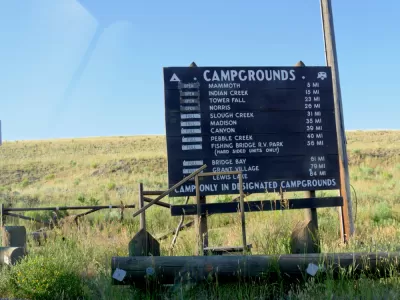
"The Trump administration is moving forward with an ambitious plan to give private businesses greater access to national parks, according to a memorandum written by an advisory council for the Department of the Interior," reports Alexander Nazaryan.
Interior Secretary David Bernhardt makes the case for allowing more private business to run concessions in national parks by pointing to the $12 billion in deferred maintenance at national parks. "Private businesses — including concessionaires and tour guides — already operate in many national parks," according to Nazaryan.
"The Sept. 24 memorandum, which was written for the Department of the Interior’s Subcommittee on Recreation Enhancement Through Reorganization, says that privatization should begin as a pilot program 'in park units with low levels of visitor services.' But eventually that program would be exported to other agencies within the Interior Department that manage public lands, including the Bureau of Land Management and the Fish and Wildlife Service."
More details on the memo (including the author of the memo, who is not an Interior official, but the president of American Recreation Coalition, a lobbyist for the increased use of private companies in national parks) are included in the article.
The National Parks system has been the focus of antagonism throughout the Trump administration. The previous secretary of the Interior attempted to triple admissions fees at some national parks. The Trump administration also raided national parks funding to pay for the "Salute to America" parade and rally earlier this year. The disconnect between the Trump administration and parks supporters also provoked mass resignations from the National Park Service advisory board in 2018.
FULL STORY: Campgrounds in national parks set to be privatized in new Trump plan

Veterans and Gold Star Families Can Now Visit National Parks for Free
A small token of gratitude to the veterans who fought to protect the freedoms of the United States, and the families who sacrificed everything.

Department of Interior Plans to Open 1 Million Acres in California to Fracking
The Bakersfield Office of the Bureau of Land Management released an environmental study that is the basis for undoing a 2013 de facto moratorium on fracking on federal lands in California. The Supplemental EIS triggers a 45-day public comment period.
New Secretary Confirmed at the U.S. Department of the Interior
The politics of the Department of the Interior under the Trump administration aren't likely to change, but new Secretary David Bernhardt is distinguishable from his predecessor thanks to a long history of oil industry lobbying.

Planetizen Federal Action Tracker
A weekly monitor of how Trump’s orders and actions are impacting planners and planning in America.

The state-sanctioned urbicide of Austin
People don’t kill cities. Freeways do.

US to reduce Colorado River water deliveries to Mexico
A new Colorado Treaty amendment reduces Mexico’s Colorado River water allocation by 250,000 acre feet.

5 New England states march closer to 800 megawatt wind energy project
Securing federal approval for the project may be complicated under the Trump administration, which has historically been hostile towards domestic wind power.

Baltimore to break ground on $50 million Transit Priority Project
The project will bring faster bus trips, safer streets and better bike connections to Baltimore.

Airbnb launches $250 million 'last-dollar financing' housing accelerator, makes first investment in Austin
The company will put $6.4 million towards affordable housing development in Texas’ capital.

FREE Course: Walkable City 1: Why Walkability?
After describing his path towards focusing on walkability as the essence of good planning, Jeff Speck marches through his five principal reasons for making more walkable places.
Reinventing Malls: Planning Alchemy—Turning Gray Fields Into Gold
The course focuses on the opportunities and imperatives that shape reinvention of mall sites.

Eagle County Government
Harvard University Graduate School of Design
Nashville Planning Department
The Architects Foundation
University of Cincinnati Online
The Pocatello Development Authority
The Urban Renewal Agency of the City of Pocatello
Journal of the American Planning Association