San Francisco International Airport lies on 5,171-acres of land on eight miles of shoreline along the west side of the San Francisco Bay. Protecting the property from sea-level rise is becoming a more challenging, and expensive, task.


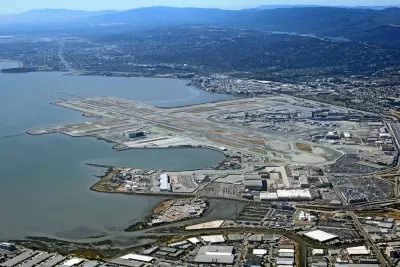
"New sea-level rise projections have increased tenfold the cost to protect the San Francisco International Airport from flooding," reports Joshua Sabatini.
Since 2015, the San Francisco Board of Supervisors has increased the budget for SFO's shoreline protection program from $58 million to $587.1 million. Interest to pay off the bonds that will fund the project will bring the total cost of the project to $1.5 billion.
"City officials attributed the increase to new sea-level rise estimates and guidelines issued by the State of California in a March 2018 report called 'Sea-Level Rise Guidance,'" according to Sabatini. As the budget has risen, so has the expected encroachment of water onto the shoreline surrounding the airport—from 11 inches to 36 inches.
The extra money will fund projects like the construction of a new shoreline protection system around the perimeter of the airport. The system will include "7.6 miles of new sheet pile walls at most of the reaches; new concrete walls at the San Bruno Channel and Millbrae Channel; and 2.7 miles of concrete wall on the Airport front side along Highway 101," according to the "Sea-Level Rise Guidance" report.
FULL STORY: Costs soar for shoreline protections as SFO plans for rising seas

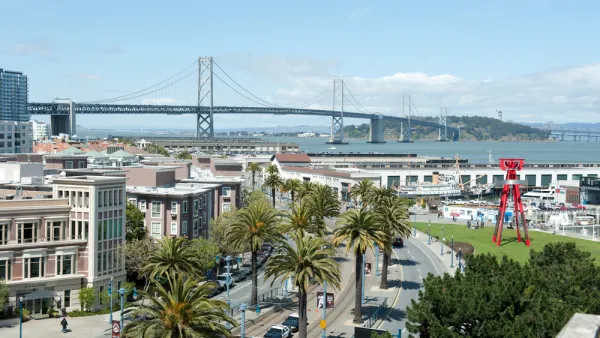
San Francisco's Mission Bay Provides a Case Study for Sea-Level Rise
The San Francisco Chronicle's John King continues his ongoing, in-depth coverage of sea-level rise and its potential impacts on local and regional concerns in the San Francisco Bay Area.
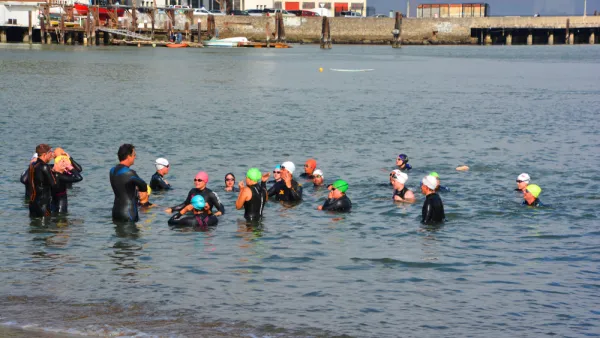
Proposed Pool Would Make an Olympic-Sized Play Area in the San Francisco Bay
The San Francisco Bay is usually an undesirable place to swim, except for a hearty few. A development proposal seeking assistance at the state level would add a pool to the Bay’s waters to make the idea of going for a swim more appealing.
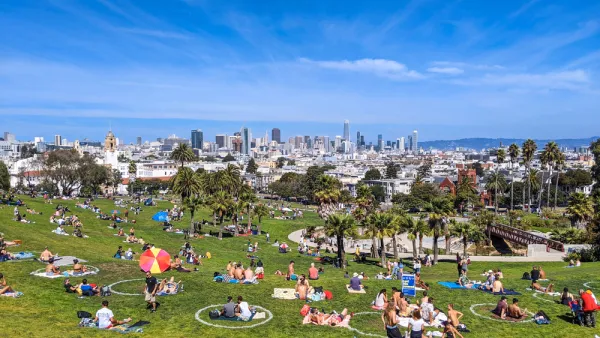
Austin Scores Highest on Pandemic Recovery; Bay Area and Baltimore Lowest
The Bay Area Council and CBRE created an economic tracker to measure how well the nation's 25 largest metropolitan areas have recovered from the public health restrictions imposed on their regions at the onset of the pandemic.

Planetizen Federal Action Tracker
A weekly monitor of how Trump’s orders and actions are impacting planners and planning in America.

The state-sanctioned urbicide of Austin
People don’t kill cities. Freeways do.

US to reduce Colorado River water deliveries to Mexico
A new Colorado Treaty amendment reduces Mexico’s Colorado River water allocation by 250,000 acre feet.

5 New England states march closer to 800 megawatt wind energy project
Securing federal approval for the project may be complicated under the Trump administration, which has historically been hostile towards domestic wind power.

Baltimore to break ground on $50 million Transit Priority Project
The project will bring faster bus trips, safer streets and better bike connections to Baltimore.

Airbnb launches $250 million 'last-dollar financing' housing accelerator, makes first investment in Austin
The company will put $6.4 million towards affordable housing development in Texas’ capital.

FREE Course: Walkable City 1: Why Walkability?
After describing his path towards focusing on walkability as the essence of good planning, Jeff Speck marches through his five principal reasons for making more walkable places.
Reinventing Malls: Planning Alchemy—Turning Gray Fields Into Gold
The course focuses on the opportunities and imperatives that shape reinvention of mall sites.

Eagle County Government
Harvard University Graduate School of Design
Nashville Planning Department
The Architects Foundation
University of Cincinnati Online
The Pocatello Development Authority
The Urban Renewal Agency of the City of Pocatello
Journal of the American Planning Association