Part of the Houston-area Grand Parkway would pass through a tallgrass prairie reserve, and opponents say it would destroy the grasslands and bird habitat.


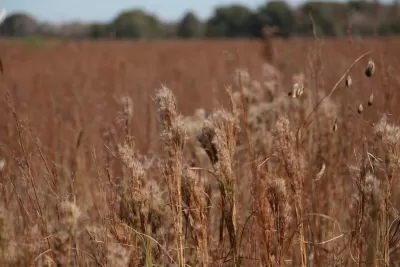
Angie Schmitt writes about a segment of the Grand Parkway project that would cut through the Katy Prairie, a 1,000 square-mile natural area west of Houston, and bring with it traffic and sprawl.
"Development of this pristine land isn’t just collateral damage — it’s the point of the project. Project sponsors make no bones about it: The 15.2-mile Grand Parkway segment through Katy Prairie is a $462 million development project as much as it is a transportation project," says Schmitt.
Environmental groups are trying to stop the project and protect the prairie land. They argue that, in addition to the threat to wildlife, destroying the area’s wetlands would increase flooding risks.
"The Sierra Club and other local environmental groups have proposed a series of alternatives. The Sierra Club, for example, would support making the whole structure a bridge or widening existing arterial roads that connect I-10 and US-290," notes Schmitt.
Read the full story: Third Houston Outerbelt Would Turn Prairies Into Texas Toast

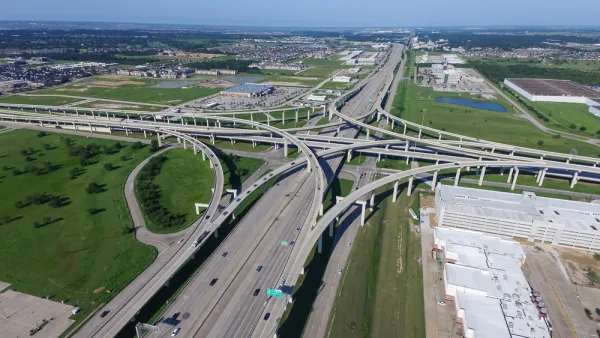
Freeway Intersection at the Heart of Intense Debate in Fort Bend County
The location of a proposed crossing in the fast-growing southwest Houston suburbs could have a significant impact on the area's development.
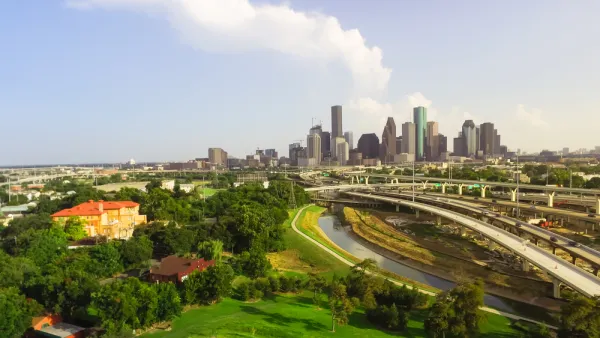
Challenges in Rebuilding Houston Extend Beyond Development
Michael Kimmelman, architecture critic of The New York Times, looks beyond sprawl and development issues that challenge Houston in its rebuilding efforts. An anti-urban, anti-regulation bias from the statehouse isn't helping matters.
New, 44-Mile Section of Houston's Grand Parkway Ready for Construction
When the newest section is complete, the Grand Parkway will connect I-69 southwest of Sugar Land, Cinco Ranch and Cypress, unincorporated Harris County and Spring, and Harris, Montgomery, Liberty, and Chambers counties.

Planetizen Federal Action Tracker
A weekly monitor of how Trump’s orders and actions are impacting planners and planning in America.

California plans to bury El Niño’s downpour
If the state plays its cards right, it may be able to store a billion acre-feet of El Niño’s water in aquifers.

Desperate measures: Advocates weigh draining Lake Powell to fill Colorado River
Draining the reservoir could reduce evaporation losses by a couple hundred thousand acre-feet.

California city breaks ground on transit connector
The project includes three mobility hubs and a pedestrian bridge.

After public outcry, Massachusetts city releases housing development tracker
Cambridge’s tracker currently shows 250 housing projects in various stages of development.

40 years after approval, Chicago breaks ground on new park
The park honors Jean Baptiste Point du Sable, the city’s first permanent non-native settler.

FREE Course: Walkable City 1: Why Walkability?
After describing his path towards focusing on walkability as the essence of good planning, Jeff Speck marches through his five principal reasons for making more walkable places.
Reinventing Malls: Planning Alchemy—Turning Gray Fields Into Gold
The course focuses on the opportunities and imperatives that shape reinvention of mall sites.

City of Rosemead
Rutgers University, Edward J. Bloustein School of Planning and Public Policy
One Hundred Miles
Hunter College, City University of New York (CUNY)
The Architects Foundation
University of Cincinnati Online
City of Cambridge
Montrose County
The Pocatello Development Authority