Many gardeners in Florida celebrated this week, as Senate Bill 82 went into effect, by planting fruits and vegetables in their yards, legally, whether their city liked it or not.



Laurel Wamsley reports on Florida's Senate Bill 82, which "nullifies local bans on vegetable gardens at residential properties."
The law went into effect on Monday, thanks to a longtime legal battle by homeowners Tom Carroll and Hermine Ricketts, who live in Miami Shores, Florida. That city had a zoning law that forced the couple to tear up a garden.
Wamsley focuses on the efforts of Ricketts, especially, in pushing for the state preemption of local zoning laws that ban gardens.
A separate article by Samantha J. Gross, written in May when the law was approved by the Florida Legislature, provides more of the political history and details of the new state law.
As for the great tug-of-war between state preemption and local control inextricable from the law, Gross provides this context: "While other concerns over too much preemption came up in committee, the bill specifies that the language does not apply to other regulations like limits on water use during droughts, regulated fertilizer use or the control of invasive species."
Read the full story: After 6-Year Battle, Florida Couple Wins The Right To Plant Veggies In Front Yard

Residential Zoning Changes Make Room for Chickens
Yes in my backyard—for chickens.
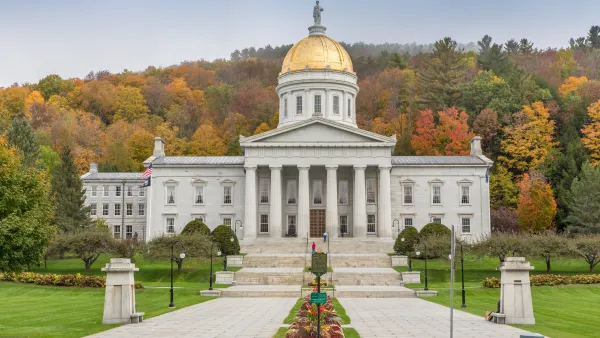
Vermont Next State in Line to End Single-Family Zoning, Ease Parking Requirements
Both houses in the Vermont Legislature have approved legislation to preempt local land use regulations by rescinding single-family zoning and easing parking requirements throughout the state.

Landmark Land Use Bill Fails in Colorado Legislature
Colorado Governor Jared Polis’s effort to allow for more housing construction by preempting local control of zoning failed to achieve the required level of political support in the state legislature.

Planetizen Federal Action Tracker
A weekly monitor of how Trump’s orders and actions are impacting planners and planning in America.

California plans to bury El Niño’s downpour
If the state plays its cards right, it may be able to store a billion acre-feet of El Niño’s water in aquifers.

Desperate measures: Advocates weigh draining Lake Powell to fill Colorado River
Draining the reservoir could reduce evaporation losses by a couple hundred thousand acre-feet.

Mamdani’s pied-à-terre tax survives legal challenge
A panel of judges found that the plaintiffs failed to demonstrate injury as a result of New York City's implementation of the tax.

Eastern Nebraska is running out of electricity
Data centers and electrification are straining eastern Nebraska’s grid, throttling economic development.

Seattle passes record-breaking transit services expansion
Proposition 1 will double the city’s transit tax to add 95,000 more bus trips and preserve 180,000 bus trips annually.

FREE Course: Walkable City 1: Why Walkability?
After describing his path towards focusing on walkability as the essence of good planning, Jeff Speck marches through his five principal reasons for making more walkable places.
Reinventing Malls: Planning Alchemy—Turning Gray Fields Into Gold
The course focuses on the opportunities and imperatives that shape reinvention of mall sites.

City of Rosemead
Rutgers University, Edward J. Bloustein School of Planning and Public Policy
One Hundred Miles
University of Michigan School for Environment and Sustainability (SEAS)
Hunter College, City University of New York (CUNY)
The Architects Foundation
City of Cambridge
Montrose County
The Pocatello Development Authority