The Google-owned company has the data to connect commuters to possible carpool buddies, Whether Waze can stem the long-term decline in carpooling remains to be seen.


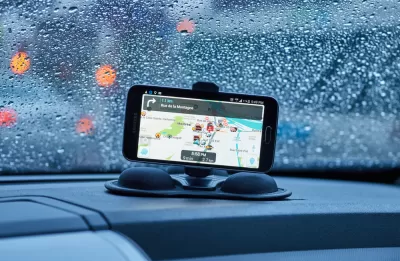
Waze Carpool, a spinoff of the Google-owned direction company, Waze, is a kind of Tinder for carpooling. It uses data from its navigation app to pair commuters who have similar trips with each other. "Waze sees carpooling as a natural extension of its crowd-powered navigation app, which integrates information on traffic and road conditions from users into its directions," Andrew Small writes for CityLab.
Carpooling has a number of benefits for cities in that it can reduce total emissions and congestion. Waze could use the good press, as it has drawn criticism for increasing traffic on once-quiet streets. Waze Carpool, which launched last year, has to contend with a decades-long trend away from carpooling. Carpooling was more common when the suburbs were less built out and gas was more expensive. Now the percentage of Americans who own cars and the number of Vehicle Miles Traveled (VMT) have steadily increased, so the task of inspiring more Americans to carpool is a big one.
FULL STORY: Can Waze Convince Commuters to Carpool Again?

Difficult Data to Understand: City Drivers Logging More Miles, Rural Drivers Fewer
As America's VMT returns to record highs, more of the miles are coming from cities than ever before.
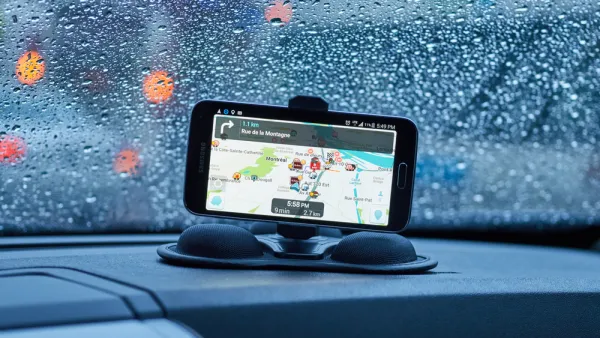
Waze Launches New Carpooling Feature
A carpooling feature in the Waze app, tested in the San Francisco Bay Area and Israel, will soon be available around the country.
Transit Use Thrives on Destination Density
If jobs, services, and other urban amenities are concentrated downtown, suburbanites can use transit to get there quickly without a car. Job sprawl makes transit useless outside central districts.

Planetizen Federal Action Tracker
A weekly monitor of how Trump’s orders and actions are impacting planners and planning in America.

The state-sanctioned urbicide of Austin
People don’t kill cities. Freeways do.

US to reduce Colorado River water deliveries to Mexico
A new Colorado Treaty amendment reduces Mexico’s Colorado River water allocation by 250,000 acre feet.

5 New England states march closer to 800 megawatt wind energy project
Securing federal approval for the project may be complicated under the Trump administration, which has historically been hostile towards domestic wind power.

Baltimore to break ground on $50 million Transit Priority Project
The project will bring faster bus trips, safer streets and better bike connections to Baltimore.

Airbnb launches $250 million 'last-dollar financing' housing accelerator, makes first investment in Austin
The company will put $6.4 million towards affordable housing development in Texas’ capital.

FREE Course: Walkable City 1: Why Walkability?
After describing his path towards focusing on walkability as the essence of good planning, Jeff Speck marches through his five principal reasons for making more walkable places.
Reinventing Malls: Planning Alchemy—Turning Gray Fields Into Gold
The course focuses on the opportunities and imperatives that shape reinvention of mall sites.

Eagle County Government
Harvard University Graduate School of Design
Nashville Planning Department
The Architects Foundation
University of Cincinnati Online
The Pocatello Development Authority
The Urban Renewal Agency of the City of Pocatello
Journal of the American Planning Association