A quarter of all Massachusetts renters spend more than half their income on rent. A report from the Smart Growth Alliance argues NIMBYism is partly to blame.


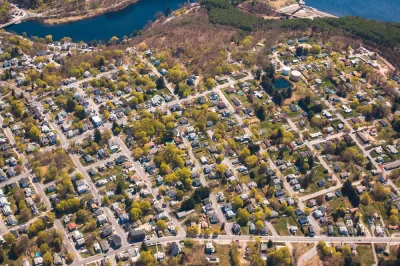
The Greater Boston area has zoned very little land for multi-family housing. Even as demand for housing has increased that zoning has been slow to change. "Like many other metros nationwide, Boston’s housing production lags far behind what is needed to keep housing costs reasonable. From 2010 to 2017, Greater Boston added 245,000 new jobs, but only permitted 71,600 new homes," Anthony Flint reports for CityLab.
One issue is the zoning decision-making process in the area, "Unlike much of the rest of the country, Massachusetts does not require communities to update their zoning on a regular basis and make it consistent with local plans," writes Flint. This means zoning changes are often made on an individual project basis, which is slow and can mobilize opposition. Another issue is that housing is often built, according to the Smart Growth Alliance, away from the center of the city.
"Dain’s case studies show that these infill projects are modest in scale and can take up to 15 years to plan and permit. Many more homes are getting built in less-developed areas, such as converted industrial properties, office parks, and other parcels isolated by highways, train tracks, waterways, or other barriers," writes Flint.
FULL STORY: In Massachusetts, a ‘Paper Wall’ of Zoning Is Blocking New Housing

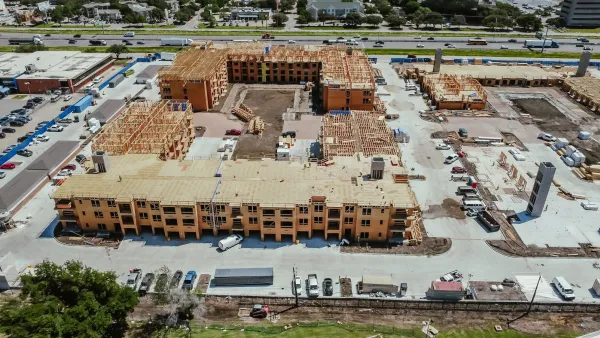
Controversial Texas housing law has 'directly facilitated' over 1,250 new homes
SB 840 allows developers to build multifamily housing by-right on lots zoned for commercial use without applying to a zoning change.
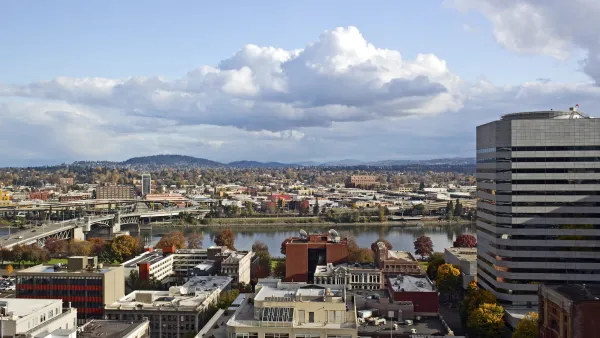
Portland approves expedited permitting for multifamily housing on the Eastside
A city council resolution requires staff to prepare a plan for speeding up rezoning for multifamily projects.

These Las Vegas tiny homes can be assembled in an hour
The city approved a project using modular microhousing units that will rent for roughly $1,000 per month.

The state-sanctioned urbicide of Austin
People don’t kill cities. Freeways do.

US to reduce Colorado River water deliveries to Mexico
A new Colorado Treaty amendment reduces Mexico’s Colorado River water allocation by 250,000 acre feet.

New Jersey’s second-largest city bans standalone data centers
Jersey City will continue to allow co-location facilities, such as those meant for research institutions that store their own data.

Amtrak not solely to blame for New Jersey commuter rail's unreliability, report finds
A new study from the Garden State Initiative found that NJ Transit’s budget grew 20% across a 4 year period, but reliability declined significantly over the same period.

EPA erases limits on planet-warming pollution from power plants
Under Monday’s plan, power plants would still have some limits on how much mercury, arsenic and other contaminants they can emit.

Phoenix announces new on-demand transit service, more frequent RAPID buses
Both new services will launch in October, and are part of Phoenix's Project Effective Access Solutions for Easing Congestion.

FREE Course: Walkable City 1: Why Walkability?
After describing his path towards focusing on walkability as the essence of good planning, Jeff Speck marches through his five principal reasons for making more walkable places.
Reinventing Malls: Planning Alchemy—Turning Gray Fields Into Gold
The course focuses on the opportunities and imperatives that shape reinvention of mall sites.

Eagle County Government
Harvard University Graduate School of Design
Nashville Planning Department
The Architects Foundation
University of Cincinnati Online
The Pocatello Development Authority
The Urban Renewal Agency of the City of Pocatello
Journal of the American Planning Association