The Dallas-area transit agency is partnering with other agencies to study driverless buses and their role in the future of transit systems.


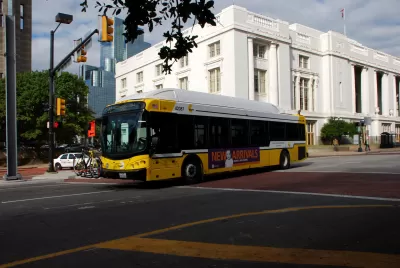
Dallas Area Rapid Transit is part of the Automated Bus Consortium, a group of transit agencies exploring the future of automated driverless buses, reports Melissa Repko.
"For the first 12 months, the consortium plans to study the feasibility of autonomous buses. It plans to buy an initial fleet of 75 to 100 full-sized, automated buses, which it will test in 2021 or 2022 on routes chosen by the transportation agencies," writes Repko.
DART, along with transit agencies across the country, is contending with ridership decreases. With much of the agency's costs related to labor, DART officials see autonomous buses as a way to lower operations costs. The consortium approach will allow the agencies to work together to test the vehicles and lower purchase costs.
Read the full story: DART hired Uber to drive around riders. Now, it's considering driverless buses

Dallas DOT Brings New Mobility Vision to the Region
The agency’s director wants to change the city’s transportation priorities and provide more mobility options to residents.
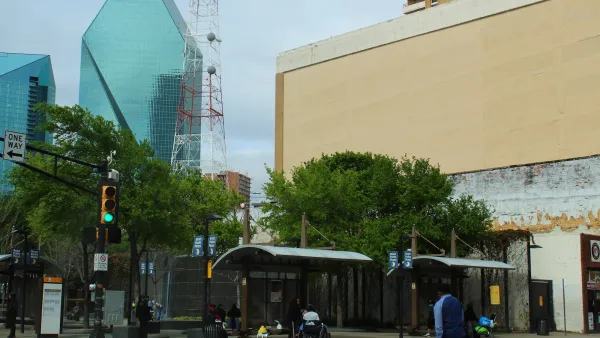
Dallas transit to invest up to $71.5M in upgraded bus shelters
The new shelters will feature solar-powered lighting and materials designed to protect riders from extreme weather.
Dallas Sacrifices DART Majority Control in Bid to Keep Suburbs in Transit System
The city would give up majority control of the regional transit system for the first time in its 40-year history.

Planetizen Federal Action Tracker
A weekly monitor of how Trump’s orders and actions are impacting planners and planning in America.

California plans to bury El Niño’s downpour
If the state plays its cards right, it may be able to store a billion acre-feet of El Niño’s water in aquifers.

Desperate measures: Advocates weigh draining Lake Powell to fill Colorado River
Draining the reservoir could reduce evaporation losses by a couple hundred thousand acre-feet.

California city breaks ground on transit connector
The project includes three mobility hubs and a pedestrian bridge.

After public outcry, Massachusetts city releases housing development tracker
Cambridge’s tracker currently shows 250 housing projects in various stages of development.

40 years after approval, Chicago breaks ground on new park
The park honors Jean Baptiste Point du Sable, the city’s first permanent non-native settler.

FREE Course: Walkable City 1: Why Walkability?
After describing his path towards focusing on walkability as the essence of good planning, Jeff Speck marches through his five principal reasons for making more walkable places.
Reinventing Malls: Planning Alchemy—Turning Gray Fields Into Gold
The course focuses on the opportunities and imperatives that shape reinvention of mall sites.

City of Rosemead
Rutgers University, Edward J. Bloustein School of Planning and Public Policy
One Hundred Miles
Hunter College, City University of New York (CUNY)
The Architects Foundation
University of Cincinnati Online
City of Cambridge
Montrose County
The Pocatello Development Authority