Two big pieces of the Denveright planning process, the Comprehensive Plan 2040 and Blueprint Denver, won approval from the Denver City Council earlier this week.


The Denver City Council approved two key elements of the Denveright long-range plan, which charts the growth of the city until 2040, on Monday this week.
Andrew Kenney reports on the plans enacted by the City Council votes, the Comprehensive Plan 2040 and Blueprint Denver. Some of the big ideas included in the two elements include new priorities for "missing middle" housing, even potentially in some single-family neighborhoods; adaptive reuse of historic buildings; more transparent public processes; new design review processes; transit oriented development; and new alternative transportation projects.
"The plans also set density and design expectations for various neighborhoods, including through a growth-strategy map [pdf] in the Blueprint document [pdf], according to Kenney.
Next steps of realizing the vision laid out in the two documents will require area plans for specific neighborhoods, expected to cover the city over the course of the next decade.
Read the full story: Denver has a new plan for the year 2040. Here’s how the vote finally happened.

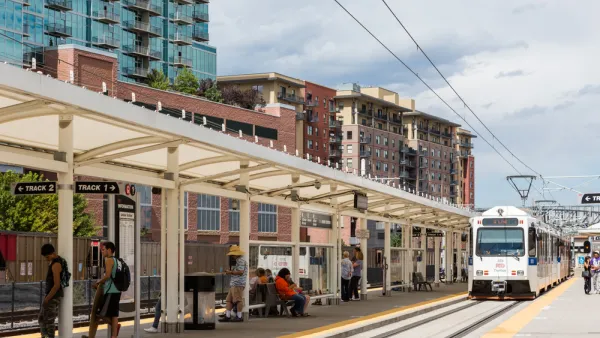
What Denver's Big 2040 Comprehensive Plan Means for 2019
Important distinctions about the difference between a comprehensive plan and zoning code changes, as well as details of the form-based influences of the new Denveright 2040 plan are reported here.

Planners Across America: Brad Buchanan Shepherds Denver's Explosive Growth
In this interview for the "Planners Across America" series, Denver Planning Director Brad Buchanan details Denver's efforts to reactivate the urban core with strong planning, transit investments, and new residential and commercial developments.
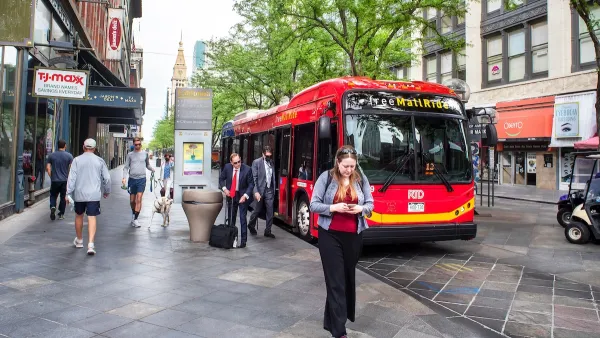
One of Denver’s busiest corridors to gain BRT
The project will span 18 miles and contain 74 bus rapid transit stations.

Planetizen Federal Action Tracker
A weekly monitor of how Trump’s orders and actions are impacting planners and planning in America.

California plans to bury El Niño’s downpour
If the state plays its cards right, it may be able to store a billion acre-feet of El Niño’s water in aquifers.

Chicago breaks ground on $3 billion megadevelopment
The new neighborhood, titled Foundry Park, will one day host 3,700 residences.

Satanic Place Names
From streams and lakes to valleys and canyons, I mapped more than 1,000 places named after the Devil.

California High-Speed Rail Authority CEO resigns after $600,000 scandal
Under Ian Choudri, the authority used taxpayer dollars to fund first class flights and trips to nightclubs.

Want to study the Missouri River? Soon, you may need unanimous approval from 10 states
Legislation would require 10 governors’ permission to study or build projects moving water outside the basin.

FREE Course: Walkable City 1: Why Walkability?
After describing his path towards focusing on walkability as the essence of good planning, Jeff Speck marches through his five principal reasons for making more walkable places.
Reinventing Malls: Planning Alchemy—Turning Gray Fields Into Gold
The course focuses on the opportunities and imperatives that shape reinvention of mall sites.

City of Rosemead
Rutgers University, Edward J. Bloustein School of Planning and Public Policy
One Hundred Miles
Hunter College, City University of New York (CUNY)
The Architects Foundation
University of Cincinnati Online
City of Cambridge
Montrose County
The Pocatello Development Authority