Housing starts and permits are slowing nationwide. The current pace of construction would have been considered a trough in pre-recession economic cycles.


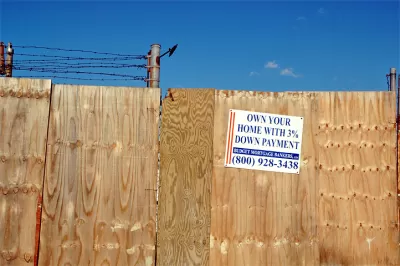
Andrea Riquier reports on housing data released by the U.S. Department of Commerce this week. The data show housing starts slowing for the nation as a whole, falling short of expectations and reaching lows not seen since the early days of the Trump administration.
Housing starts were at a 1.14 million seasonally adjusted annual rate in March, the Commerce Department said Friday, 0.3% lower compared to February.
It missed the MarketWatch consensus of a 1.225 million seasonally adjusted annual rate and was the lowest since May 2017.
Permits fell 1.7% to a rate of 1.27 million. Economists expected a 1.3 million rate on permits.
In addition to sharing the new data, Riquier also writes about how the slow housing construction industry fits into the big picture of an economy that includes constrained supply, memories of the last recession, a tight labor market, expensive materials, and complex regulatory environments.
Read the full story: Housing starts lurch to a near 2-year low

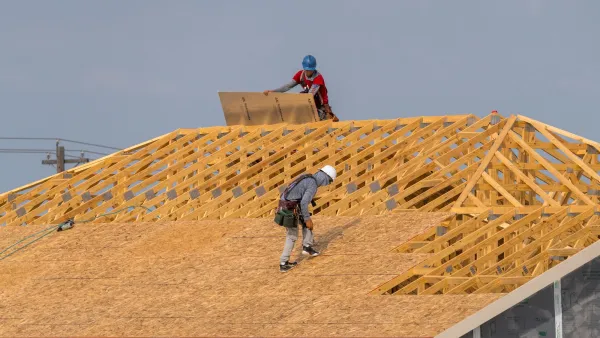
South Texas Home Builders Say “There’s no Labor” After ICE Raids
Construction is slowing as immigration detentions have a chilling effect on the labor market.

New Housing Construction Drops 41 Percent in San Francisco
Building permits aren't the same thing as new buildings, as San Francisco proved once again in 2018.
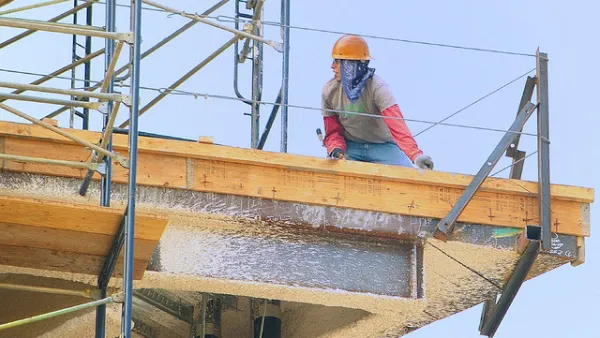
Construction Worker Shortage Blamed for Housing Supply Woes
Zoning and red tape gets a bad wrap in arguments that blame the housing crisis on a lack of housing supply. Another narrative credits a shortage of construction workers on the lack of housing supply in the country.

Planetizen Federal Action Tracker
A weekly monitor of how Trump’s orders and actions are impacting planners and planning in America.

California plans to bury El Niño’s downpour
If the state plays its cards right, it may be able to store a billion acre-feet of El Niño’s water in aquifers.

Chicago breaks ground on $3 billion megadevelopment
The new neighborhood, titled Foundry Park, will one day host 3,700 residences.

California High-Speed Rail Authority CEO resigns after $600,000 scandal
Under Ian Choudri, the authority used taxpayer dollars to fund first class flights and trips to nightclubs.

Want to study the Missouri River? Soon, you may need unanimous approval from 10 states
Legislation would require 10 governors’ permission to study or build projects moving water outside the basin.

Desperate measures: Advocates weigh draining Lake Powell to fill Colorado River
Draining the reservoir could reduce evaporation losses by a couple hundred thousand acre-feet.

FREE Course: Walkable City 1: Why Walkability?
After describing his path towards focusing on walkability as the essence of good planning, Jeff Speck marches through his five principal reasons for making more walkable places.
Reinventing Malls: Planning Alchemy—Turning Gray Fields Into Gold
The course focuses on the opportunities and imperatives that shape reinvention of mall sites.

City of Rosemead
Rutgers University, Edward J. Bloustein School of Planning and Public Policy
One Hundred Miles
Hunter College, City University of New York (CUNY)
The Architects Foundation
University of Cincinnati Online
City of Cambridge
Montrose County
The Pocatello Development Authority