Chicago's new building code is hailed as a major achievement for the city, labor unions, and the construction and development industries in the city.


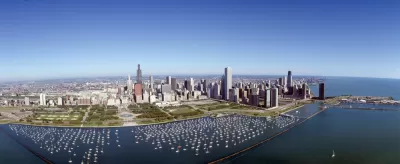
The Chicago City Council adopted a new building code this week, reports Steven Vance. "The comprehensive update allows for more flexible building systems and utilizes the evolved model codes that the rest of the country is designing to."
Mayor Rahm Emanuel commented on the city's new building code after it won approval, touting the new code's potential to save time and money.
"Twice, Emanuel said that this big news wouldn't be significant outside Council Chambers, but we disagree," writes Vance. "This tremendous effort, led by Commissioner Judy Frydland and Deputy Commissioner Grant Ullrich, is a groundbreaking development in the field of architecture and real estate that will support Chicago to better compete on the international stage."
"The new code will be optional starting December 1, 2019, and phased in through July 2020 – currently the plan is to start enforcing it August 1, 2020, but is subject to change."
Ben Winck provided additional coverage of the new building code before the approval. "The new code paves the way for use of cost-efficient construction materials and technologies, according to a press release. The combination of a more efficient permitting process with new flexibility in construction materials will lower building costs for 'single-family homes, affordable housing units, two- and three-flat buildings' and other projects."
Read the full story: TODAY CITY COUNCIL APPROVED COMPREHENSIVE CHICAGO BUILDING CODE UPDATES

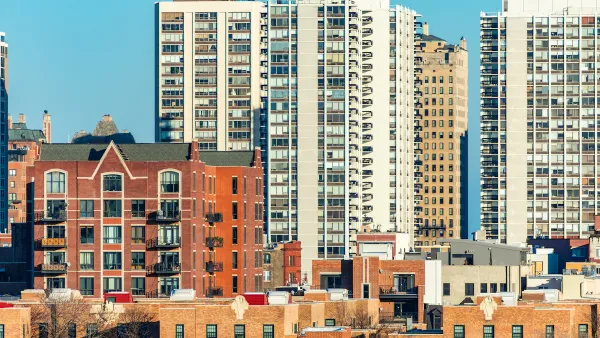
Chicago Looks to Boulder Landlord Registry as a Model for Tenant Protections
Unlike the Colorado city, where code violations in rental housing are quickly identified and fixed, Chicago lacks a robust system of inspection and enforcement.

Editorial Board Calls for Tax Increment Financing Reform in Chicago
The Chicago Tribune says the city of Chicago can't be trusted with tax increment financing (TIF), so it's time for a do-over.
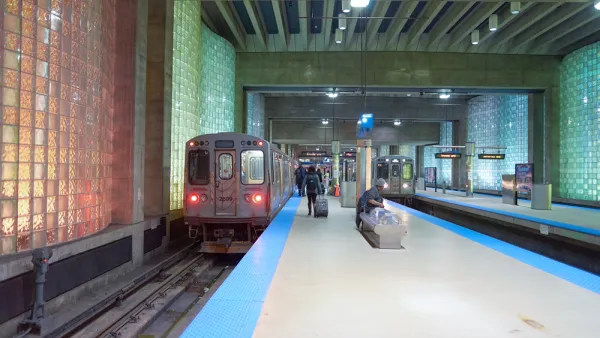
O'Hare Tunnel, Proposed by Elon Musk, Looks Dead on Arrival in Chicago's New Political Regime
Advocates are relieved Elon Musk's proposal to build a new subterranean connection to O'Hare is dead, but still disappointed at the wasted brainpower and public funding devoted to the idea.

Planetizen Federal Action Tracker
A weekly monitor of how Trump’s orders and actions are impacting planners and planning in America.

Amtrak, CN end decades-long dispute with eight-year agreement
The new operating agreement establishes an updated framework for the companies to work together, including processes to resolve disputes.

Judges permit Denver to divert 77,000 acre feet from the Colorado River for reservoir expansion
Overuse and climate change have caused the Colorado River’s water levels to plummet.

NYC DOT wants faster, more permanent street upgrades
The city is examining ways to build more concrete infrastructure without getting entangled in 'decades-long' projects.

'Something we’ve never seen before:' rising utility rates could strain city finances nationwide
Data centers, climate change and other factors have caused utility rates in the United States to increase by 38% since 2020.

Trump to overrule local leaders, lease millions of acres of America’s Pacific Island territories’ seafloors to mining companies
International law says that the Indigenous people of America’s territories have a right to prior and informed consent regarding projects that impact their countries.

FREE Course: Walkable City 1: Why Walkability?
After describing his path towards focusing on walkability as the essence of good planning, Jeff Speck marches through his five principal reasons for making more walkable places.
Reinventing Malls: Planning Alchemy—Turning Gray Fields Into Gold
The course focuses on the opportunities and imperatives that shape reinvention of mall sites.

Harvard University Graduate School of Design
KFH Group Inc.
Greater Baltimore Committee
The Architects Foundation
University of Cincinnati Online
The Pocatello Development Authority
The Urban Renewal Agency of the City of Pocatello