After years of planning and development, two Green Zones in Minneapolis are attracting desired investments and paving the way for more success.


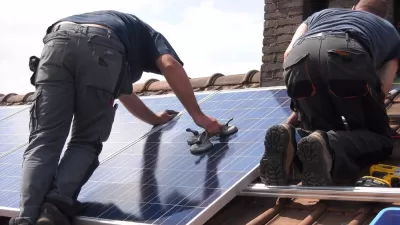
"Minneapolis is starting to see an influx of solar installations in economically disadvantaged neighborhoods, an early result of a new program to target investment in those areas without displacing existing residents and businesses," reports Frank Jossi.
"The city’s 'green zones' program — years in the making and now finally taking shape — targets two areas of the city for special incentives intended to spur solar and energy efficiency projects, along with other priorities focused on healthy food and water," adds Jossi.
The two areas in the city designated as Green Zones are North Minneapolis between Interstate 94 and the Mississippi River and the Phillips and Cedar-Riverside neighborhoods of South Minneapolis, according to Jossi. The article includes a lot more detail on the genesis and mechanisms of the city's Green Zone Initiative. Planetizen also discussed the city's Green Zones Initiative in summer 2018, when the city designated the two zones.
FULL STORY: In Minneapolis, low-income neighborhoods see influx of clean energy investment

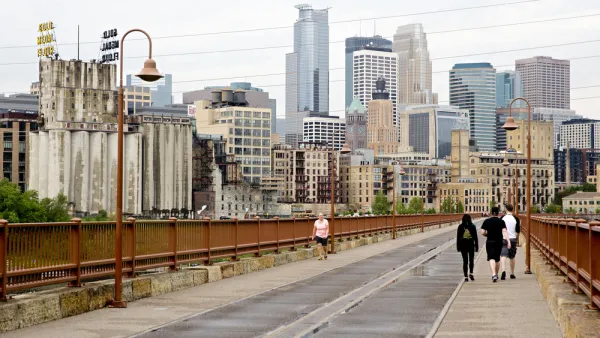
Minneapolis Looking to Rehabilitate Green Zones
Areas of the city historically overburdened with air pollution and brownfield sites will be targeted with local food programs and policies to create and bolster green spaces.

Swapping your gas car for an EV is greener than keeping it, research shows
An EV repays the 'carbon debt' caused by building it after 4,400 miles.
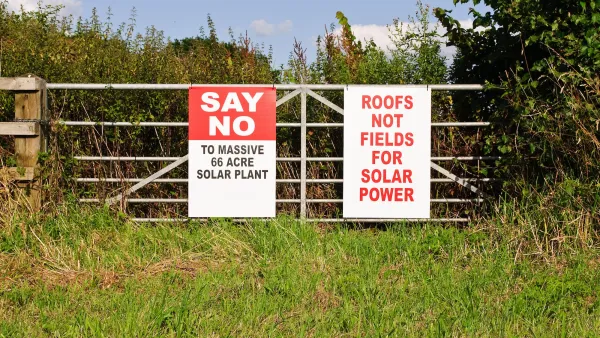
Misinformation and 'AI slop' are hamstringing rural solar development
False claims about the potential drawbacks of solar farms are prompting some communities to reject potentially lucrative energy projects.

The state-sanctioned urbicide of Austin
People don’t kill cities. Freeways do.

US to reduce Colorado River water deliveries to Mexico
A new Colorado Treaty amendment reduces Mexico’s Colorado River water allocation by 250,000 acre feet.

New Jersey’s second-largest city bans standalone data centers
Jersey City will continue to allow co-location facilities, such as those meant for research institutions that store their own data.

Amtrak not solely to blame for New Jersey commuter rail's unreliability, report finds
A new study from the Garden State Initiative found that NJ Transit’s budget grew 20% across a 4 year period, but reliability declined significantly over the same period.

EPA erases limits on planet-warming pollution from power plants
Under Monday’s plan, power plants would still have some limits on how much mercury, arsenic and other contaminants they can emit.

Phoenix announces new on-demand transit service, more frequent RAPID buses
Both new services will launch in October, and are part of Phoenix's Project Effective Access Solutions for Easing Congestion.

FREE Course: Walkable City 1: Why Walkability?
After describing his path towards focusing on walkability as the essence of good planning, Jeff Speck marches through his five principal reasons for making more walkable places.
Reinventing Malls: Planning Alchemy—Turning Gray Fields Into Gold
The course focuses on the opportunities and imperatives that shape reinvention of mall sites.

Eagle County Government
Harvard University Graduate School of Design
Nashville Planning Department
The Architects Foundation
University of Cincinnati Online
The Pocatello Development Authority
The Urban Renewal Agency of the City of Pocatello
Journal of the American Planning Association