Augmented reality shows what the forest would look like with a full complement of biodiversity.


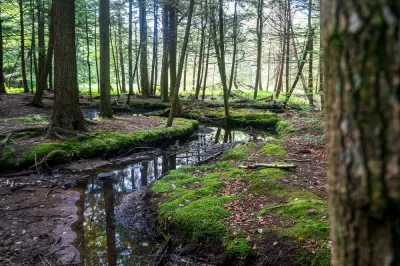
"A collaboration of science and new media experts has introduced a new tool for the Carnegie Museum of Natural History to educate people about the state of nature and inspire them as well," according to an article by Jill Daly.
"The tool is an app for smartphones and tablets, called AR Perpetual Garden, that gives even armchair nature lovers a way to compare two scenarios: the woodlands blooming with native wildflowers and the same scene stripped of botanical diversity because of too many deer," explains Daly.
The collaborative team behind the app includes experts from Carnegie’s Powdermill Nature Reserve, the University of Central Florida's The Harrington Lab and the program MultiMedia Technology of the Salzburg University of Applied Sciences in Vienna.
More details on how the app works are found in the source article.
Read the full story: New Carnegie Museum app shows threat to wildflower diversity in the woods
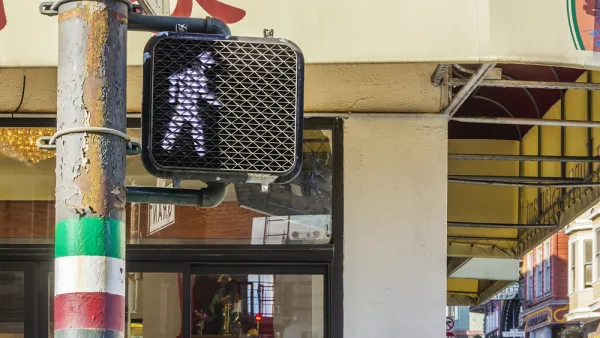
Walking Directions, Assisted by Augmented Reality
Augmented reality could boost safety for pedestrians, or it could add another layer of distraction between people and the real world.
Augmented Reality and Public Art: A New Era Begins Today
People in six global cities will have a chance to sample an ambitious new augmented reality program launched by Apple today.
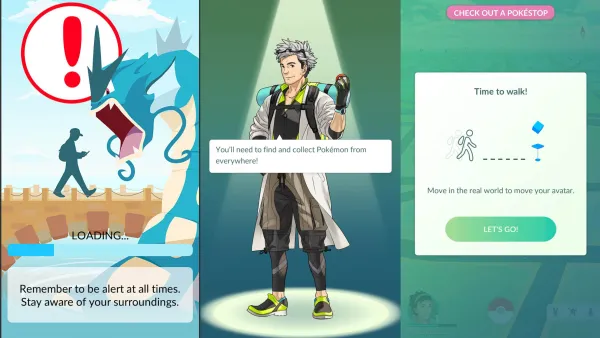
Academic Studies Find Plenty to Like About Pokémon Go
Nearly a year after Pokémon Go and its legion of devout fans hit the streets, researchers are starting to see societal benefits in augmented reality.

Planetizen Federal Action Tracker
A weekly monitor of how Trump’s orders and actions are impacting planners and planning in America.

Washington state to charge fee to drivers with fuel-efficient cars
Revenue from the fee will go towards supporting the state’s highways.

Study reveals best places in the U.S. for cycling, walking
New research from Streetlight Data examines bicycle and pedestrian miles per capita in the 100 largest U.S. cities by population.

Mamdani unveils his ‘most ambitious bus lane project’ so far
The city has added two new bus lanes, which it expects to speed up tens of thousands of bus riders’ commutes.

New Jersey and New York suggest $10.3 billion budget for transit
Some of the budget is dedicated to replacing Manhattan's Midtown Bus Terminal.

States split over EPA’s proposal to drop greenhouse gas rules for power plants
The proposed rule drew over 165K comments, including from officials, health and environmental groups, and private citizens.

FREE Course: Walkable City 1: Why Walkability?
After describing his path towards focusing on walkability as the essence of good planning, Jeff Speck marches through his five principal reasons for making more walkable places.
Reinventing Malls: Planning Alchemy—Turning Gray Fields Into Gold
The course focuses on the opportunities and imperatives that shape reinvention of mall sites.

City of Charlotte
City of Rosemead
Rutgers University, Edward J. Bloustein School of Planning and Public Policy
University of Michigan School for Environment and Sustainability (SEAS)
Hunter College, City University of New York (CUNY)
The Architects Foundation
University District Partnership
City of Cambridge
The Pocatello Development Authority