Converting all the public transit buses in California would save reduce carbon emissions in the state by 1 million metric tons by 2040.


"[T]he the California Air Resources Board ordered transit agencies to make their fleets entirely emission-free within two decades," reports Peter Fimrite.
"The new rules prohibit the purchase of any new gas- or diesel-powered public transit buses by 2029 and require all buses to be emission-free by 2040," adds Fimrite. "It is the first policy in the country to require electrification of a state’s entire public transit fleet."
The policy is designed to phase-in new electric buses as older buses exit service. No word in the article about how the state will help local and regional transit agencies pay for the new electric buses to help meet the state mandate, although the state authorized the largest investment in electric charging infrastructure in U.S. history in June 2018.
The article puts the new policy mandate in context of California's larger effort to reduce its carbon emissions to 1990 levels by 2020 as well as the state's battles with the Trump administration over the state's progressive environmental policies.
FULL STORY: California bus agencies ordered to make fleets emission-free


Driving Equity and Clean Air: California Invests in Greener School Transportation
California has awarded $500 million to fund 1,000 zero-emission school buses and chargers for educational agencies as part of its effort to reduce pollution, improve student health, and accelerate the transition to clean transportation.
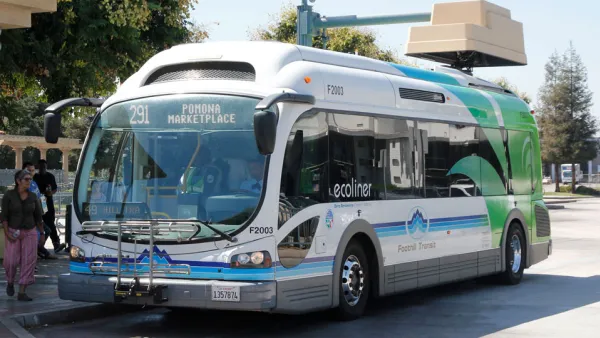
California to Invest $1 Billion in Electric Trucks, Buses, Charging Infrastructure
The investment comes not from the state legislature but from two regulatory bodies, the Air Resources Board and the Public Utilities Commission, authorizing the expenditure of VW settlement funds and utility ratepayer funds, respectively.
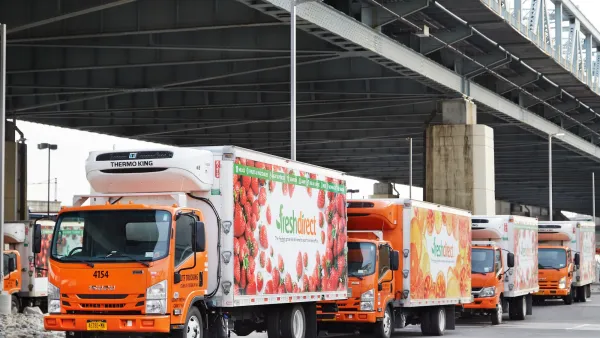
NYC Congestion Pricing Revenue Will Fund up to 1,000 Hybrid Refrigerated Trucks
Traffic to the Hunts Point Produce Market causes increased rates of asthma in surrounding neighborhoods.

Planetizen Federal Action Tracker
A weekly monitor of how Trump’s orders and actions are impacting planners and planning in America.

The state-sanctioned urbicide of Austin
People don’t kill cities. Freeways do.

US to reduce Colorado River water deliveries to Mexico
A new Colorado Treaty amendment reduces Mexico’s Colorado River water allocation by 250,000 acre feet.

Baltimore to break ground on $50 million Transit Priority Project
The project will bring faster bus trips, safer streets and better bike connections to Baltimore.

Airbnb launches $250 million 'last-dollar financing' housing accelerator, makes first investment in Austin
The company will put $6.4 million towards affordable housing development in Texas’ capital.

Guerilla urbanists are building DIY bus stop benches in Chicago
A before-and-after of one of the bus stops with a new bench. The new benches are not officially sanctioned or permitted, but the residents who placed them hope they will be the start of a network of DIY benches across the city.

FREE Course: Walkable City 1: Why Walkability?
After describing his path towards focusing on walkability as the essence of good planning, Jeff Speck marches through his five principal reasons for making more walkable places.
Reinventing Malls: Planning Alchemy—Turning Gray Fields Into Gold
The course focuses on the opportunities and imperatives that shape reinvention of mall sites.

.jpg)
Eagle County Government
Harvard University Graduate School of Design
Nashville Planning Department
The Architects Foundation
University of Cincinnati Online
The Pocatello Development Authority
The Urban Renewal Agency of the City of Pocatello
Journal of the American Planning Association