Advocates from Transit Alliance Miami attempt to spend 24 hours on Miami-Dade County buses.


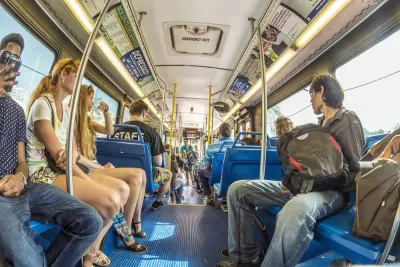
Douglas Hanks reports on how it went when two 20-something transit advocates, Azhar Chougle and Richard Hankins, tried to ride the buses of Miami-Dade County for 24 hours straight.
"The nonprofit is trying to champion modest improvements for the county’s bus system at a time when elected leaders are focusing on far pricier expansion projects, including a new rail line in North Dade," according to Hanks.
"The group’s latest bid to draw attention to the $228 million-a-year bus system was Friday’s marathon, a criss-cross of the county’s 96 bus routes that included brief ride-alongs with a few politicians," explains Hanks.
"Along with the exposure, the Transit Alliance’s bus marathon seeks to build the case for a redesign of the entire system to eliminate poorly used routes and beef up popular ones," adds Hanks. Transit Alliance Miami is underway with a $500,000 Better Bus project, with $250,000 in funding aiding the cause.
The rip saw high and lows, with Hanks documenting those and the other anecdotes from conversation with transit riders along the way in the 24-hour experiment.
FULL STORY: ‘We’re stranded.’ The plan was 24 hours on Miami-Dade buses. Walking also required.


Miami to Launch America's First Fully Electric Bus Rapid Transit Line
The project, led by Miami-Dade County, will link Dadeland South to Florida City via a 20-mile dedicated lane.
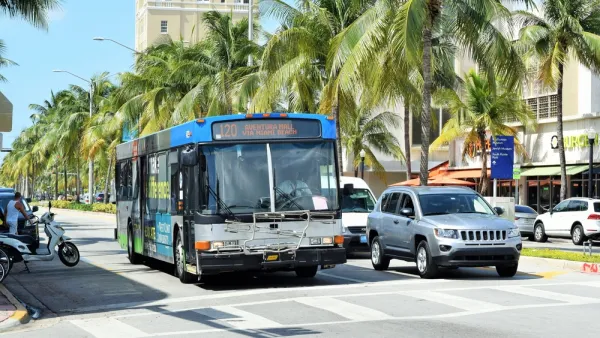
Miami-Dade Considering Bus Service Cuts as Ridership Drops
Transit planners at the county of Miami-Dade in Florida are asking permission to reroute and discontinue bus routes from the county bus system.
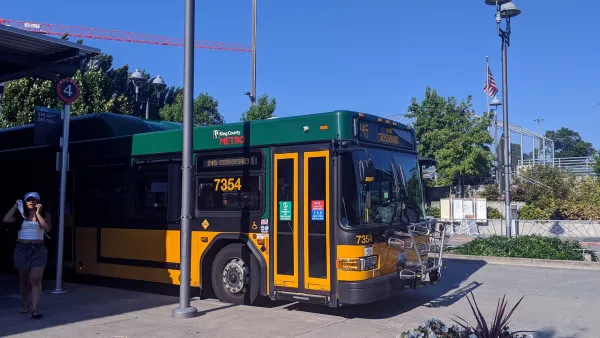
King County Metro adds 3,000 weekly bus trips, more connections to rail
King County Metro and Sound Transit are both making major adjustments to their bus networks to improve light rail connectivity across the region.

Planetizen Federal Action Tracker
A weekly monitor of how Trump’s orders and actions are impacting planners and planning in America.

The state-sanctioned urbicide of Austin
People don’t kill cities. Freeways do.

US to reduce Colorado River water deliveries to Mexico
A new Colorado Treaty amendment reduces Mexico’s Colorado River water allocation by 250,000 acre feet.

Brightline West’s future may rely on $6 billion federal loan
The company has until Nov. 2 to make a $400 million equity investment into its proposed high-speed rail line.

LA Metro’s ultimatum: no extra buses for LA28 if federal funding isn’t imminently secured
If Metro does not provide additional buses, LA28 organizers will have to find a new way to manage Olympic traffic. LA28’s budget does not include a line item for transit.

Colorado’s Largest Data Center Could Rise Next to Homes — Without a Public Hearing
The proposed campus would consume 11 times the power of Denver International Airport; as it has across the country, opposition mounts.

FREE Course: Walkable City 1: Why Walkability?
After describing his path towards focusing on walkability as the essence of good planning, Jeff Speck marches through his five principal reasons for making more walkable places.
Reinventing Malls: Planning Alchemy—Turning Gray Fields Into Gold
The course focuses on the opportunities and imperatives that shape reinvention of mall sites.

Eagle County Government
Harvard University Graduate School of Design
Nashville Planning Department
The Architects Foundation
University of Cincinnati Online
The Pocatello Development Authority
The Urban Renewal Agency of the City of Pocatello
Journal of the American Planning Association