Metropolitan areas with many options for places to eat offers many quality of life benefits to residents.


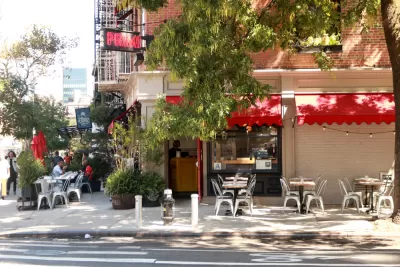
Joe Cortright explains the importance of restaurants to the quality of life and experience of U.S. cities.
One of the hallmarks of a great city is a smorgasbord of great places to eat. Cities offer a wide variety of choices of what, where, and how to eat, everything from grabbing a dollar taco to seven courses of artisanally curated locally raised products (not to mention pedigreed chickens). The “food scene” is an important component of the urban experience.
With those hallmarks in mind, Cortright shares an index of restaurants per capita as one indicator of where dining choice is greatest, assembled with data on the number of restaurants per capita in each of the nation’s largest metropolitan areas from the County Business Patterns data compiled by the US Census Bureau for 2012.
"The top six metropolitan areas on this indicator are San Francisco, New York, Providence, Boston, Seattle and Portland," writes Cortright. "Each of these cities has twenty or more restaurants per 10,000 population."
FULL STORY: Consuming the city: Ranking restaurants per capita


Only one US city makes the Happy City Index top 50
The list is topped by Copenhagen, Helsinki, and Geneva.
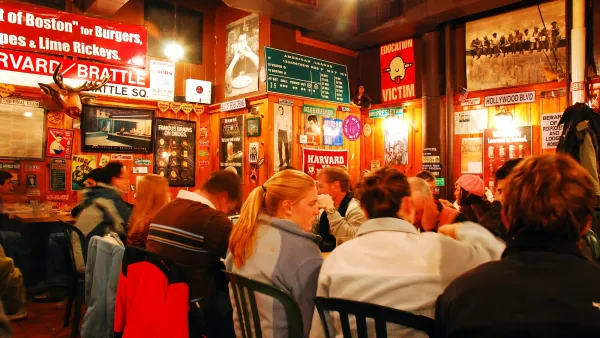
The Restaurant Industry’s ‘Missing Middle’
Locally owned restaurants affordable to middle-income families are disappearing or being forced to raise prices as costs grow.
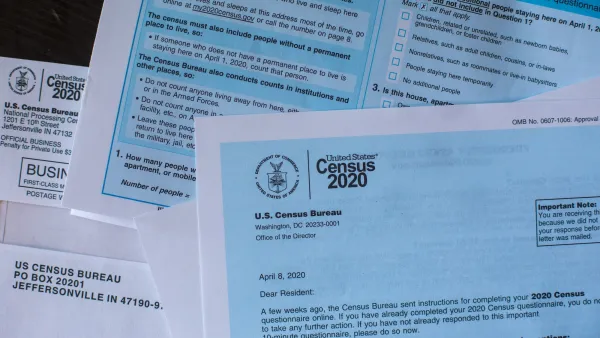
Republicans are Pushing to Make the American Community Survey Voluntary. History Shows That’s a Death Sentence for Data.
A voluntary survey will make demographic data “less accurate, less available, and less useful” — and for some rural communities, “a total blackout.”

Planetizen Federal Action Tracker
A weekly monitor of how Trump’s orders and actions are impacting planners and planning in America.

The state-sanctioned urbicide of Austin
People don’t kill cities. Freeways do.

US to reduce Colorado River water deliveries to Mexico
A new Colorado Treaty amendment reduces Mexico’s Colorado River water allocation by 250,000 acre feet.

5 New England states march closer to 800 megawatt wind energy project
Securing federal approval for the project may be complicated under the Trump administration, which has historically been hostile towards domestic wind power.

Baltimore to break ground on $50 million Transit Priority Project
The project will bring faster bus trips, safer streets and better bike connections to Baltimore.

Airbnb launches $250 million 'last-dollar financing' housing accelerator, makes first investment in Austin
The company will put $6.4 million towards affordable housing development in Texas’ capital.

FREE Course: Walkable City 1: Why Walkability?
After describing his path towards focusing on walkability as the essence of good planning, Jeff Speck marches through his five principal reasons for making more walkable places.
Reinventing Malls: Planning Alchemy—Turning Gray Fields Into Gold
The course focuses on the opportunities and imperatives that shape reinvention of mall sites.

Eagle County Government
Harvard University Graduate School of Design
Nashville Planning Department
The Architects Foundation
University of Cincinnati Online
The Pocatello Development Authority
The Urban Renewal Agency of the City of Pocatello
Journal of the American Planning Association