Renton, a suburb of Seattle dealing with skyrocketing housing prices like many of the communities in the region, is allowing new density in residential neighborhoods in the form of backyard cottages.


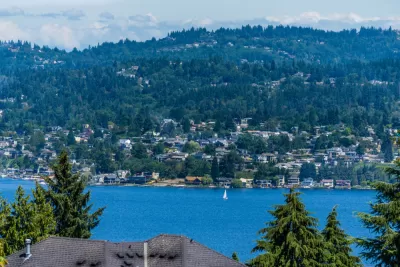
Josh Cohen reports on the example of Renton, Washington, which recently slashed permitting fees in the hopes of spurring new developments of accessory dwelling units (ADUs).
Cohen's coverage notes efforts in Portland, Vancouver, California, and Seattle to loosen restrictions on ADUs before turning the attention on suburbs faced with the same challenges of an abundance of single-family zoning and a dearth of affordable housing options.
Faced with its own need for middle-income or “workforce” housing, the Renton City Council voted in October 2017 to cut ADU permit fees in half. Based on the modest success of the program so far — over the past year there were five applications for new ADU permits versus five total between 2010 and 2017 — the city council voted in mid-November to extend the fee cuts [pdf] until the end of 2020.
Cohen adds more details about the changes:
The council resolution cuts construction permit and impact fees in half for all new ADUs. Doing so brings the permitting costs from about $22,000 per backyard cottage to $11,000. To encourage subdivision developers to include ADUs in their projects, the resolution waives all permit and impact fees for every third ADU built in a subdivision with 10 or more houses.
The article includes more details about the market and political contexts in the city of Renton, and reports some of the initial reactions to the fee reductions.
FULL STORY: Facing high housing prices, Renton pushes backyard cottages

What do the Gilmore Girls, Happy Days, and Full House have in common? ADUs.
American sitcoms are full of garage apartments, attic rooms, and pool houses. Why aren't our cities?
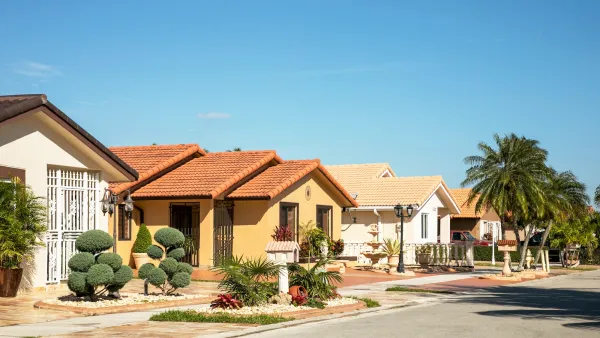
Florida Senate Advances Law Allowing ADUs in All Residential Zones
The law would legalize ‘granny flats’ by-right in single-family zoned neighborhoods.

Maine Forces Cities to Allow at Least 2 ADUs on Residential Lots
A new state law bars local jurisdictions from restricting ADUs in residential areas.

Planetizen Federal Action Tracker
A weekly monitor of how Trump’s orders and actions are impacting planners and planning in America.

The state-sanctioned urbicide of Austin
People don’t kill cities. Freeways do.

US to reduce Colorado River water deliveries to Mexico
A new Colorado Treaty amendment reduces Mexico’s Colorado River water allocation by 250,000 acre feet.

5 New England states march closer to 800 megawatt wind energy project
Securing federal approval for the project may be complicated under the Trump administration, which has historically been hostile towards domestic wind power.

Baltimore to break ground on $50 million Transit Priority Project
The project will bring faster bus trips, safer streets and better bike connections to Baltimore.

Airbnb launches $250 million 'last-dollar financing' housing accelerator, makes first investment in Austin
The company will put $6.4 million towards affordable housing development in Texas’ capital.

FREE Course: Walkable City 1: Why Walkability?
After describing his path towards focusing on walkability as the essence of good planning, Jeff Speck marches through his five principal reasons for making more walkable places.
Reinventing Malls: Planning Alchemy—Turning Gray Fields Into Gold
The course focuses on the opportunities and imperatives that shape reinvention of mall sites.

Eagle County Government
Harvard University Graduate School of Design
Nashville Planning Department
The Architects Foundation
University of Cincinnati Online
The Pocatello Development Authority
The Urban Renewal Agency of the City of Pocatello
Journal of the American Planning Association