Digging into the city of Everett's recent overhaul of its zoning and development regulations in Downtown and adjacent neighborhoods.


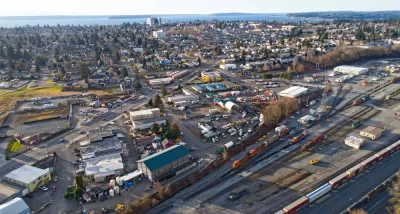
Stephen Fesler provides in-depth analysis of the new downtown plan adopted by the city of Everett, Washington, in September 2018.
According to Fesler, the adopted plan is pretty similar to the draft plan circulating during the summer, when the plan was reaching the finish line on the "Metro Everett" plan process that launched in 2016. Fesler breaks down the final product into separate categories of analysis, like zoning changes, development regulation changes, and new State Environmental Policy Act (SEPA) exemptions.
On the topic of zoning changes, Fesler reports that the plan "[consolidated] existing zones into three categories: Urban Mixed (UM), Urban Light Industrial (ULI), and Urban Residential (UR)" while layering minimum and maximum building heights, orientation and design in relation to street classification, drive-through restrictions, and off-street parking requirements by parking zone.
There is much, much more detail, including many pages from the actual code, included in the article.
Read the full story: Everett Adopts Rezones Topping Out at 25 Stories

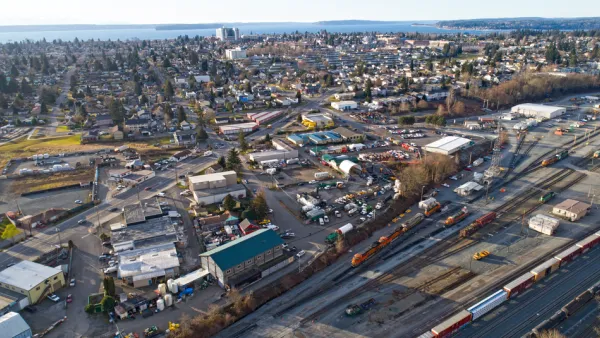
Everett's New Downtown Plan Ready for Scrutiny
A public hearing offers a chance to analyze the zoning changes proposed by the "Metro Everett" downtown plan.
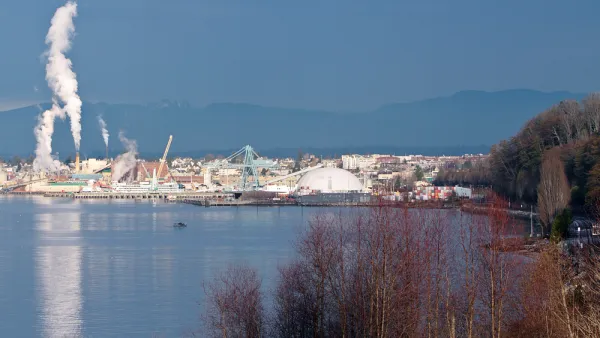
A New Downtown Master Plan for Everett, Washington
The city of 108,000 is preparing for major growth in the next 20 years.
Citywide Zoning Reform Approved in Everett
Few cities are accomplishing such a swift and sweeping overhaul of its land use regulations as Everett, Washington, which just wrapped up its second major planning initiative in as many years on its way to launching a third.

Planetizen Federal Action Tracker
A weekly monitor of how Trump’s orders and actions are impacting planners and planning in America.

California plans to bury El Niño’s downpour
If the state plays its cards right, it may be able to store a billion acre-feet of El Niño’s water in aquifers.

Chicago breaks ground on $3 billion megadevelopment
The new neighborhood, titled Foundry Park, will one day host 3,700 residences.

California High-Speed Rail Authority CEO resigns after $600,000 scandal
Under Ian Choudri, the authority used taxpayer dollars to fund first class flights and trips to nightclubs.

Want to study the Missouri River? Soon, you may need unanimous approval from 10 states
Legislation would require 10 governors’ permission to study or build projects moving water outside the basin.

Desperate measures: Advocates weigh draining Lake Powell to fill Colorado River
Draining the reservoir could reduce evaporation losses by a couple hundred thousand acre-feet.

FREE Course: Walkable City 1: Why Walkability?
After describing his path towards focusing on walkability as the essence of good planning, Jeff Speck marches through his five principal reasons for making more walkable places.
Reinventing Malls: Planning Alchemy—Turning Gray Fields Into Gold
The course focuses on the opportunities and imperatives that shape reinvention of mall sites.

City of Rosemead
Rutgers University, Edward J. Bloustein School of Planning and Public Policy
One Hundred Miles
Hunter College, City University of New York (CUNY)
The Architects Foundation
University of Cincinnati Online
City of Cambridge
Montrose County
The Pocatello Development Authority