Few cities are accomplishing such a swift and sweeping overhaul of its land use regulations as Everett, Washington, which just wrapped up its second major planning initiative in as many years on its way to launching a third.


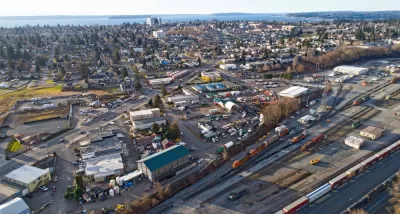
The city council of Everett, Washington approved the "Rethink Zoning" ordinance in November, ushering in a suit of zoning changes designed to simplify the land use code and encourage urban infill development under one Unified Development Code.
Stephen Fesler reports on the zoning changes and previews the next big reform effort already underway in the city—the "Rethink Housing Action Plan Process," which would pave the way for additional affordable housing development in the city.
"This all comes on the heels of Metro Everett, which led to significant downtown zoning changes adopted in late 2018," according to Fesler. "That zoning process incorporated many form-based zoning principles into the land use code and permitted more highrise development in the city center, topping out at 25 stories."
Chief among the changes included in Rethink Zoning, according to Fesler:
The number of zoning districts was trimmed from 25 to 15. Overlay zones were also reduced from 11 to just five. Single-family zones were the only zoning classifications to escape changes for now, which include Suburban Residential (R-S), Single Family Detached Low Density (R-1), Single Family Detached Medium Density (R-2), and Single Family Detached Medium Density (R2-A) zones, though an earlier concept had envisioned trimming single-family zones down to two with more flexibility.
For the Rethink Housing Action Plan, Fesler reports that the city is estimating the need for an additional 9,267 housing units in the next 15 years to support low-income residents making less than 50 percent of the area media income. "Another 3,529 housing units will need to be created that serve people in rent-restricted housing and market-rate rental housing bands below 80% AMI. Beyond that, Everett thinks that 9,981 housing units will be needed for people with higher incomes looking for homeownership and market-rate rental housing," according to Fesler.
In launching the Rethink Housing Action Plan, Everett Mayor Cassie Franklin listed three initiatives to be included in the process, one regarding public engagement, another to prepare for transit oriented development, and a third to provide supportive services to the city's unhoused residents.
As is always the case with Fesler's reportage, a lot more detail in included in the source article.
FULL STORY: Everett Reforms Citywide Zoning, Embarks on Affordable Housing Plan

What Actually Got Built Under Eric Adams’ ‘Pro-Housing’ Administration
The outgoing mayor claims credit for hundreds of thousands of new homes. The truth is more complicated.

San Francisco Mayor’s ‘Family Zoning’ Plan Faces Pushback, Displacement Concerns
Newly proposed legislation aims to protect long-term tenants from displacement caused by Mayor Lurie’s proposed zoning reform plan, which would allow for more housing construction in parts of the city.
‘Montana Miracle:’ The State Actually Succeeding at Housing Reform
A series of ambitious zoning reforms is having a significant impact on the state’s housing supply.

The state-sanctioned urbicide of Austin
People don’t kill cities. Freeways do.

US to reduce Colorado River water deliveries to Mexico
A new Colorado Treaty amendment reduces Mexico’s Colorado River water allocation by 250,000 acre feet.

New Jersey’s second-largest city bans standalone data centers
Jersey City will continue to allow co-location facilities, such as those meant for research institutions that store their own data.

Amtrak not solely to blame for New Jersey commuter rail's unreliability, report finds
A new study from the Garden State Initiative found that NJ Transit’s budget grew 20% across a 4 year period, but reliability declined significantly over the same period.

EPA erases limits on planet-warming pollution from power plants
Under Monday’s plan, power plants would still have some limits on how much mercury, arsenic and other contaminants they can emit.

Phoenix announces new on-demand transit service, more frequent RAPID buses
Both new services will launch in October, and are part of Phoenix's Project Effective Access Solutions for Easing Congestion.

FREE Course: Walkable City 1: Why Walkability?
After describing his path towards focusing on walkability as the essence of good planning, Jeff Speck marches through his five principal reasons for making more walkable places.
Reinventing Malls: Planning Alchemy—Turning Gray Fields Into Gold
The course focuses on the opportunities and imperatives that shape reinvention of mall sites.

Eagle County Government
Harvard University Graduate School of Design
Nashville Planning Department
The Architects Foundation
University of Cincinnati Online
The Pocatello Development Authority
The Urban Renewal Agency of the City of Pocatello
Journal of the American Planning Association