The city didn’t have tall buildings until the 1980s. Then its skyline took off.


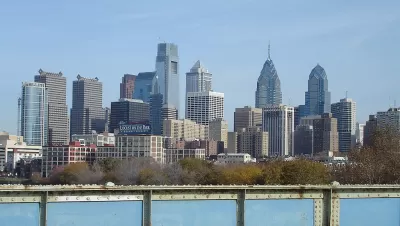
Julia Terruso explores the evolution of the Philadelphia skyline, beginning with the 196-foot Christ Church. “The church, which dates to 1744, was the tallest structure in North America for 56 years. It is still considered one of the finest Georgian buildings in America,” she notes.
City Hall was completed in 1901, and it was the tallest building in Philadelphia, at 548 feet, until One Liberty Place went up in 1987. “The building, blue glass and steel, with a top that resembled the Chrysler Building in New York City, would rise almost twice the height of City Hall and put Philadelphia on course for a building boom in the early 1990s,” says Terruso.
Former chief city planner Barbara Kaplan says Philadelphia transformed from a city with no skyline to one with a dozen skyscrapers in a short period of time. This development growth also happened later than in most other cities.
The tallest building in the city currently is the 974-foot Comcast Center, which was completed in 2008. But next year, the Comcast Technology Center will take that title. At 1,121 feet, it will be the ninth tallest building in the country.
“The Comcast Technology Center is 147 feet taller than its neighbor, due mostly to its narrow spire of three long rectangles, the middle one the highest. Some Philadelphians have said it resembles a middle finger,” reports Terruso.
FULL STORY: Philadelphia’s skyline rising: From a colonial church spire to glassy blue Comcast 2

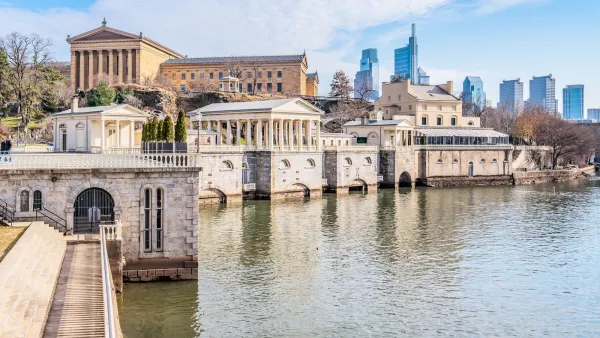
Pennsylvania’s Historic Sites are Under Threat From Rising Waters
The state has one of the nation’s highest concentrations of registered historic sites — and some face destruction from flooding.
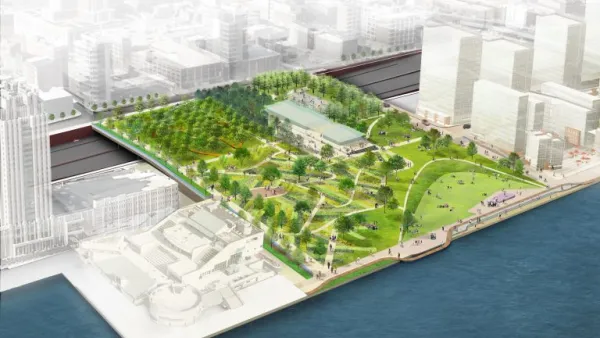
Philadelphia's Waterfront Cap Park Enters Final Design Phase
The $225 million Park at Penn's Landing is expected to compete transform the city of Philadelphia's relationship with its waterfront.
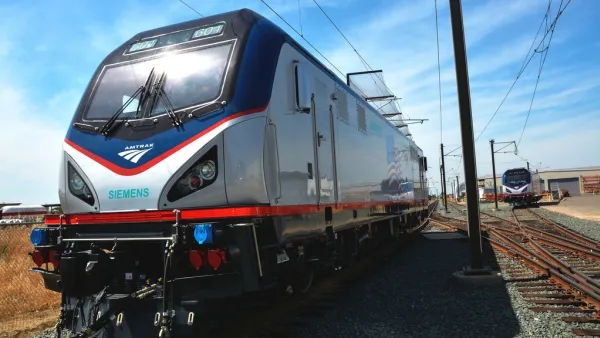
Increasing Passenger Rail Service from Pittsburgh Would Be Costly, Studies Show
Transportation advocates are calling for expanded rail service to the east, but studies indicate the needed infrastructure improvements would be pricey.

Planetizen Federal Action Tracker
A weekly monitor of how Trump’s orders and actions are impacting planners and planning in America.

The state-sanctioned urbicide of Austin
People don’t kill cities. Freeways do.

US to reduce Colorado River water deliveries to Mexico
A new Colorado Treaty amendment reduces Mexico’s Colorado River water allocation by 250,000 acre feet.

5 New England states march closer to 800 megawatt wind energy project
Securing federal approval for the project may be complicated under the Trump administration, which has historically been hostile towards domestic wind power.

Baltimore to break ground on $50 million Transit Priority Project
The project will bring faster bus trips, safer streets and better bike connections to Baltimore.

Airbnb launches $250 million 'last-dollar financing' housing accelerator, makes first investment in Austin
The company will put $6.4 million towards affordable housing development in Texas’ capital.

FREE Course: Walkable City 1: Why Walkability?
After describing his path towards focusing on walkability as the essence of good planning, Jeff Speck marches through his five principal reasons for making more walkable places.
Reinventing Malls: Planning Alchemy—Turning Gray Fields Into Gold
The course focuses on the opportunities and imperatives that shape reinvention of mall sites.


Eagle County Government
Harvard University Graduate School of Design
Nashville Planning Department
The Architects Foundation
University of Cincinnati Online
The Pocatello Development Authority
The Urban Renewal Agency of the City of Pocatello
Journal of the American Planning Association