New York City Transportation Commissioner Polly Trottenberg compared the project to replace a section of the Brooklyn-Queens Expressway in Brooklyn heights as New York's "Big Dig."


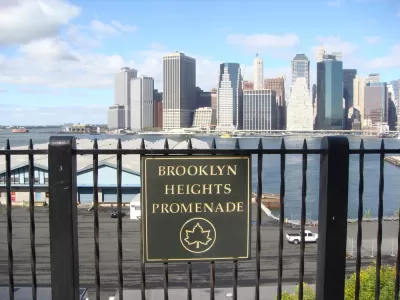
"On Thursday afternoon, the New York City Department of Transportation presented two plans for replacing the crumbling, 1.5-mile section of the Brooklyn-Queens Expressway that passes through Brooklyn Heights and DUMBO and supports the beloved Brooklyn Promenade," reports Dana Rubinstein.
"Option one, the 'innovative' choice that city officials clearly prefer, would take six years (instead of eight-plus) and result in less appalling traffic nightmares. During construction, however, officials would build a six-lane highway adjacent to the Brooklyn Promenade," according to Rubinstein.
According to Rubinstein, "option two, the 'traditional approach,' will cost more, take longer, result in fewer long-term community benefits and require the permanent erection of a roadway directly above Furman Street. It is also likely to result in significantly more traffic, with many more trucks spilling over onto local streets."
Rubinstein provides more details on the construction measures each option entails, and notes an increasing price tag for the project—from an initial estimate of $1.7 billion in 2016, to today's $3 billion.
The day after the announcement of the proposed alternatives, the story took a somewhat surprising turn. MTA Chairman Joe Lhota, whose agency is faced with a protracted shut down of a key subway link between Brooklyn and Manhattan in addition to numerous other infrastructure and service challenges, took to Twitter to voice displeasure with the possibility that the BQE might be shut down for six years. Here's the tweet Lhota has since deleted:
— Amy Spitalnick (@amyspitalnick) September 21, 2018
Dana Rubinstein wrote another article examining Lhota's statement. The lede is as snarky as it gets: "MTA Chairman Joe Lhota, whose subway system continues to founder, has finally encountered a piece of news terrible enough to turn him into an activist."
FULL STORY: De Blasio administration outlines 'Big Dig' scenario for Brooklyn Heights

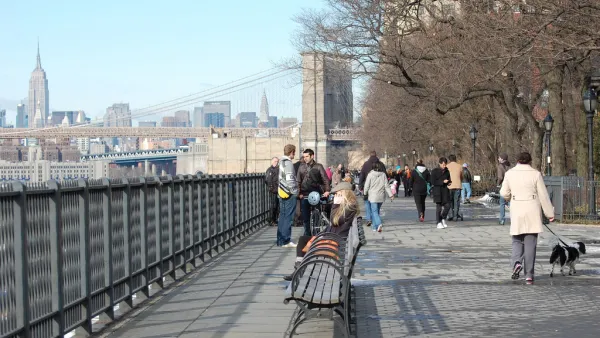
Fate of Brooklyn Heights Promenade Tethered to BQE Repair
The Brooklyn Heights Promenade will be closed as the Brooklyn-Queens Expressway below it is replaced. A Brownstoner column celebrates the esplanade's 68th birthday on Oct. 7, noting its troubled past and connection to Robert Moses.
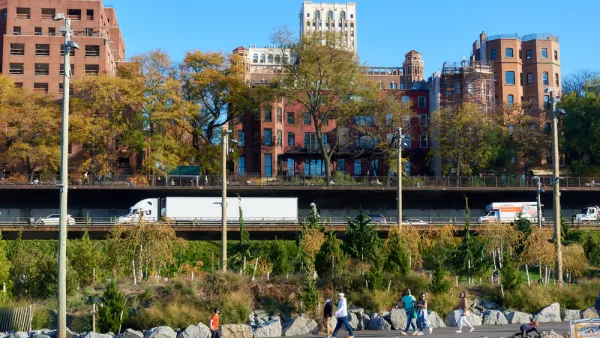
Expressway Expansion Could Threaten Brooklyn Bridge Park
Supporters of the waterfront park worry NYCDOT’s plan to potentially widen the Brooklyn-Queens Expressway could reduce green space in “one of the most expensive urban parks ever built.”
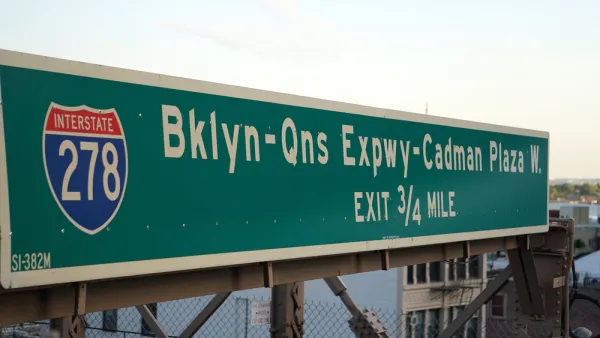
A $1.7 Billion Highway Project Looms in Brooklyn
The Brooklyn-Queens Expressway (BQE) is built atop of crumbling series of bridges. The city is expected to go in high gear on construction on Brooklyn's only interstate highway by the beginning of the next decade.

Planetizen Federal Action Tracker
A weekly monitor of how Trump’s orders and actions are impacting planners and planning in America.

The state-sanctioned urbicide of Austin
People don’t kill cities. Freeways do.

US to reduce Colorado River water deliveries to Mexico
A new Colorado Treaty amendment reduces Mexico’s Colorado River water allocation by 250,000 acre feet.

5 New England states march closer to 800 megawatt wind energy project
Securing federal approval for the project may be complicated under the Trump administration, which has historically been hostile towards domestic wind power.

Baltimore to break ground on $50 million Transit Priority Project
The project will bring faster bus trips, safer streets and better bike connections to Baltimore.

Airbnb launches $250 million 'last-dollar financing' housing accelerator, makes first investment in Austin
The company will put $6.4 million towards affordable housing development in Texas’ capital.

FREE Course: Walkable City 1: Why Walkability?
After describing his path towards focusing on walkability as the essence of good planning, Jeff Speck marches through his five principal reasons for making more walkable places.
Reinventing Malls: Planning Alchemy—Turning Gray Fields Into Gold
The course focuses on the opportunities and imperatives that shape reinvention of mall sites.

Eagle County Government
Harvard University Graduate School of Design
Nashville Planning Department
The Architects Foundation
University of Cincinnati Online
The Pocatello Development Authority
The Urban Renewal Agency of the City of Pocatello
Journal of the American Planning Association