Expect more of the same in 2018 and 2019.


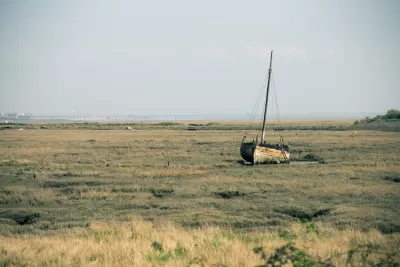
"The frequency of coastal flooding from high tides has doubled in the US in just 30 years," reports Oliver Milman, sharing data from the National Oceanic and Atmospheric Administration (NOAA). Moreover, 2017 set the record of flooding days in coastal area: "there was an average of six flooding days per area across 98 coastal areas monitored by the National Oceanic and Atmospheric Administration."
The coastal flooding doing all this damage is known as "sunny day flooding," explains Milman. "[T]hese events swamp streets and homes with water simply from the incoming tide, without the aid of a storm."
"Noaa said that in 2017 areas across the US north-east and Gulf of Mexico were worst hit, with Boston, Massachusetts, and Atlantic City, New Jersey, both experiencing 22 days of flooding, while Galveston, in Texas, was soaked on 18 different days."
NOAA also warns that coastal sunny day flooding is likely to continue to increase in 2018 and 2019.
Read the full story: Flooding from high tides has doubled in the US in just 30 years

Sea Level Rise Will Not Be Uniform
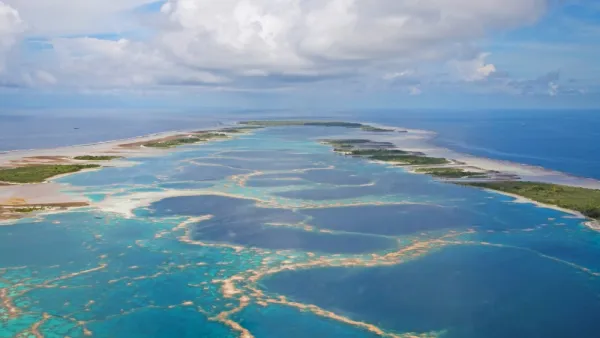
As the climate warms, the world's glaciers and ice sheets are melting, but sea level increase will be greater in some places due to the earth's rotation and gravity, according to a newly released study by the NASA Jet Propulsion Laboratory.
Homeland Security Advisor Recognizes Effects of Climate Change, Ignores Causes
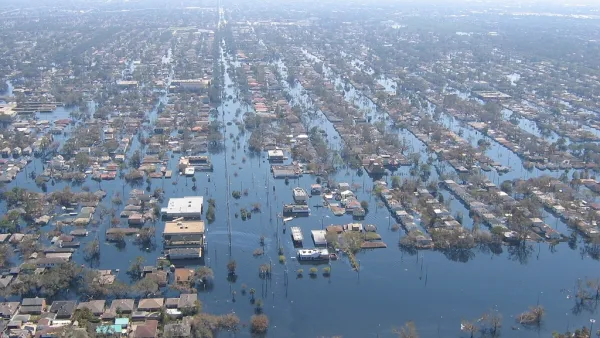
In response to a question linking Hurricanes Irma and Harvey to climate change, White House Homeland Security Advisor Tom Bossert appeared to recognize the need to adapt. He qualified his statement regarding the "cause" of said climate change.
Miami's Looming Climate Change Disaster
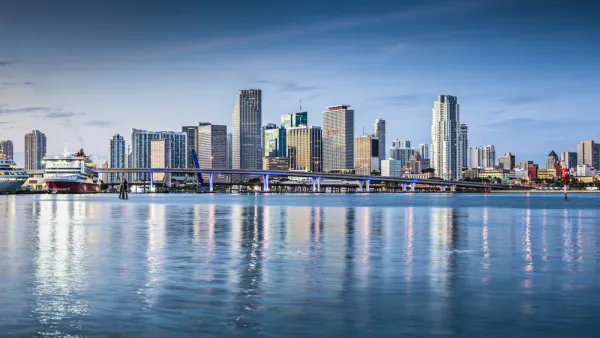
Many experts believe that a property crash, as a result of Hurricanes or sea level rise, on the coast of South Florida is inevitable. But that hasn't deterred the suppliers or the consumers in the Miami real estate market.

Planetizen Federal Action Tracker
A weekly monitor of how Trump’s orders and actions are impacting planners and planning in America.

The state-sanctioned urbicide of Austin
People don’t kill cities. Freeways do.

US to reduce Colorado River water deliveries to Mexico
A new Colorado Treaty amendment reduces Mexico’s Colorado River water allocation by 250,000 acre feet.

Nation's most wind-powered state turns to coal as data centers increase energy demand
For the first time in decades, Iowa has increased its generation of coal power.

NYC cools commuters with city's first rain garden above a bus stop
New York City officials say the plants in the rain garden can absorb 16 gallons of rainwater during heavy storms.

Brightline West’s future may rely on $6 billion federal loan
The company has until Nov. 2 to make a $400 million equity investment into its proposed high-speed rail line.

FREE Course: Walkable City 1: Why Walkability?
After describing his path towards focusing on walkability as the essence of good planning, Jeff Speck marches through his five principal reasons for making more walkable places.
Reinventing Malls: Planning Alchemy—Turning Gray Fields Into Gold
The course focuses on the opportunities and imperatives that shape reinvention of mall sites.

Greater Baltimore Committee
Eagle County Government
Harvard University Graduate School of Design
The Architects Foundation
University of Cincinnati Online
The Pocatello Development Authority
The Urban Renewal Agency of the City of Pocatello
Journal of the American Planning Association