But it's still not enough to produce a net reduction in emissions from energy production.


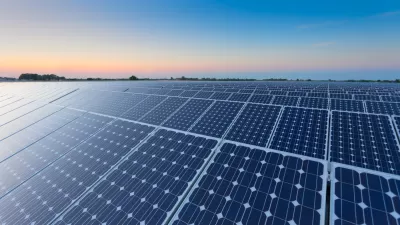
"In 2017, the world deployed an ever-expanding amount of solar and wind power, setting a new record for renewable-power capacity added to the grid," according to an article by Akshat Rathi. The money invested in renewable installations was more than twice the sum spent on nuclear and fossil-fuel power, as well.
Those claims are found in the annual Global Status Report published by renewables policy group REN21, which Rathi covers in detail. There's a catch, however. The expanded renewable energy market hasn't been enough to reduce emissions. "World demand for energy increased by 2.1% last year, and low-carbon sources could not keep pace. As a result, the word’s energy-related carbon emissions rose by 1.7%, the first rise in four years."
Read the full story: The world set a new record for renewable power in 2017, but emissions are still rising

Report: U.S. Renewable Energy Production Rising Sharply
The proportion of energy produced by renewable sources in the United States has almost quadrupled in the last decade.

Washington Tribes Oppose Wind Project
Tribal communities claim that a major wind energy project threatens sensitive cultural and environmental resources.
California’s Shift to Renewables: Successes and Challenges
The state aims to run on 100 percent renewable energy by 2045.

Planetizen Federal Action Tracker
A weekly monitor of how Trump’s orders and actions are impacting planners and planning in America.

California plans to bury El Niño’s downpour
If the state plays its cards right, it may be able to store a billion acre-feet of El Niño’s water in aquifers.

Desperate measures: Advocates weigh draining Lake Powell to fill Colorado River
Draining the reservoir could reduce evaporation losses by a couple hundred thousand acre-feet.

In Texas, data centers are swallowing promised parkland
Residents who moved to Taylor, Texas for a rural community now have to contend with three data centers in their backyard.

How a Chicago-sized wind farm beat the odds and powered on
The project spanned five presidential administrations and a standoff with a U.S. military base.

MTA gives itself 30 days to transform pit into basketball court
The site has been under construction since 2022; the city originally estimated it would finish the court in 2024.

FREE Course: Walkable City 1: Why Walkability?
After describing his path towards focusing on walkability as the essence of good planning, Jeff Speck marches through his five principal reasons for making more walkable places.
Reinventing Malls: Planning Alchemy—Turning Gray Fields Into Gold
The course focuses on the opportunities and imperatives that shape reinvention of mall sites.

City of Rosemead
Rutgers University, Edward J. Bloustein School of Planning and Public Policy
One Hundred Miles
Hunter College, City University of New York (CUNY)
The Architects Foundation
University of Cincinnati Online
City of Cambridge
Montrose County
The Pocatello Development Authority