Oregon is the latest state to join the nascent federal program, which is designed to stimulate investment in distressed areas.


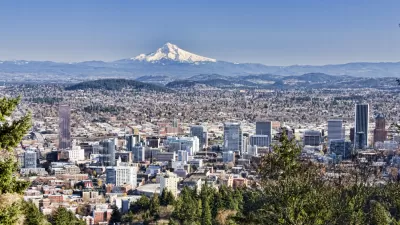
Oregon has designated dozens of areas around the state as Opportunity Zones, where investors can receive federal tax breaks for funding real-estate projects or new businesses.
The Opportunity Zone program, created by the 2017 tax reform bill, aims to facilitate private investment in areas with high poverty rates. States could nominate a quarter of their eligible census tracts; in Oregon, that worked out to 86 of 342 qualifying low-income areas.
Thirty-one of the new zones are in the Portland area, including "some of Portland's highest-rent neighborhoods," according to reporter John Tierney. Downtown Portland, for example, has a poverty rate of 48 percent despite its high-value real estate. Gresham, Clackamas, and each of the state's nine federally-recognized tribes also received designations. View a map of Oregon's eligible and designated zones on KGW8.
Oregon is one of a handful of states to take up the program, and the potential impacts of the program are still being debated.
Read the full story: Oregon picks prime Portland real estate for ‘Opportunity Zone’ program

New Scrutiny for the Federal 'Opportunity Zones' Program
Opportunity Zones—a new federal program that flew under the radar of the GOP tax reform bill signed at the end of 2017—has been moving along and attracting new attention from media outlets.
Mapping Potential 'Opportunity Zones'
The GOP tax reform bill enabled a potentially powerful new funding mechanism for struggling communities.
Ohio Announces 320 'Opportunity Zones'
The new Opportunity Zones program is one to watch as states around the country throw their hats in the ring.

Planetizen Federal Action Tracker
A weekly monitor of how Trump’s orders and actions are impacting planners and planning in America.

California plans to bury El Niño’s downpour
If the state plays its cards right, it may be able to store a billion acre-feet of El Niño’s water in aquifers.

Chicago breaks ground on $3 billion megadevelopment
The new neighborhood, titled Foundry Park, will one day host 3,700 residences.

Satanic place names
From streams and lakes to valleys and canyons, I mapped more than 1,000 places named after the Devil.

California High-Speed Rail Authority CEO resigns after $600,000 scandal
Under Ian Choudri, the authority used taxpayer dollars to fund first class flights and trips to nightclubs.

Want to study the Missouri River? Soon, you may need unanimous approval from 10 states
Legislation would require 10 governors’ permission to study or build projects moving water outside the basin.

FREE Course: Walkable City 1: Why Walkability?
After describing his path towards focusing on walkability as the essence of good planning, Jeff Speck marches through his five principal reasons for making more walkable places.
Reinventing Malls: Planning Alchemy—Turning Gray Fields Into Gold
The course focuses on the opportunities and imperatives that shape reinvention of mall sites.

City of Rosemead
Rutgers University, Edward J. Bloustein School of Planning and Public Policy
One Hundred Miles
Hunter College, City University of New York (CUNY)
The Architects Foundation
University of Cincinnati Online
City of Cambridge
Montrose County
The Pocatello Development Authority