The new Opportunity Zones program is one to watch as states around the country throw their hats in the ring.


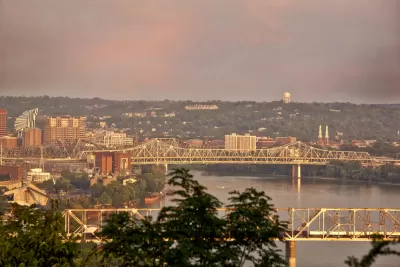
Ohio Governor John Kasich has announced several opportunity zones in the state—the designation makes those parts of the states eligible for a new federal program aimed at increasing investment in low-income and under-served neighborhoods.
The Opportunity Zones program creates Qualified Investment Funds, which generates funding by attracting investors in return for deferred taxes. On the other side of the equation, low-income rural and urban communities are looking at the possibility of a potentially large pot of money to invest into their communities.
One of the big questions when the 2017 GOP tax reform bill created the new program was what kinds of Census tracts would be eligible for program. A few governors, tasked with designating eligible opportunity zones, have now started to reveal their thinking on the program. After Texas announced their opportunity zones in February, Governor Kasich followed with Ohio's list.
Nick Swartsell reports on Governor Kasich's announcement of 320 eligible Census tracts around the state, focusing on the nominated census tracts in the city of Cincinnati. "Kasich's administration's local recommendations for the program encompass Census tracts in Avondale, Bond Hill, Camp Washington, Corryville, South Cumminsville, Evanston, North and South Fairmount, Madisonville, parts of the Price Hill neighborhoods, Northside, Queensgate and the West End," according to Swartsell.
FULL STORY: Ohio names 'Opportunity Zones'

Texas Designates 628 Opportunity Zones
The state of Texas gives an early indication of the potential scale of the new Opportunity Zones program—an emerging program that will be rolling out across the country in the coming days and weeks.

Oregon's 86 Opportunity Zones Include 'High Rent' Districts in Portland
Oregon is the latest state to join the nascent federal program, which is designed to stimulate investment in distressed areas.
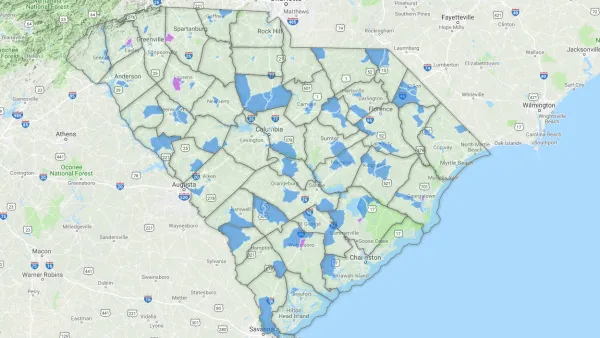
New Scrutiny for the Federal 'Opportunity Zones' Program
Opportunity Zones—a new federal program that flew under the radar of the GOP tax reform bill signed at the end of 2017—has been moving along and attracting new attention from media outlets.

The state-sanctioned urbicide of Austin
People don’t kill cities. Freeways do.

US to reduce Colorado River water deliveries to Mexico
A new Colorado Treaty amendment reduces Mexico’s Colorado River water allocation by 250,000 acre feet.

New Jersey’s second-largest city bans standalone data centers
Jersey City will continue to allow co-location facilities, such as those meant for research institutions that store their own data.

Amtrak not solely to blame for New Jersey commuter rail's unreliability, report finds
A new study from the Garden State Initiative found that NJ Transit’s budget grew 20% across a 4 year period, but reliability declined significantly over the same period.

EPA erases limits on planet-warming pollution from power plants
Under Monday’s plan, power plants would still have some limits on how much mercury, arsenic and other contaminants they can emit.

Phoenix announces new on-demand transit service, more frequent RAPID buses
Both new services will launch in October, and are part of Phoenix's Project Effective Access Solutions for Easing Congestion.

FREE Course: Walkable City 1: Why Walkability?
After describing his path towards focusing on walkability as the essence of good planning, Jeff Speck marches through his five principal reasons for making more walkable places.
Reinventing Malls: Planning Alchemy—Turning Gray Fields Into Gold
The course focuses on the opportunities and imperatives that shape reinvention of mall sites.

Eagle County Government
Harvard University Graduate School of Design
Nashville Planning Department
The Architects Foundation
University of Cincinnati Online
The Pocatello Development Authority
The Urban Renewal Agency of the City of Pocatello
Journal of the American Planning Association