The debate about the Small Business Jobs Survival Act continues in New York City.


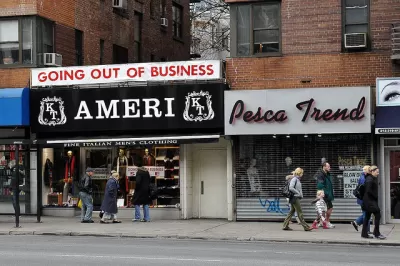
An opinion piece by Stuart M. Saft argues on behalf of condominiums and co-ops in in opposition to the Small Business Jobs Survival Act, currently under consideration by the New York City Council.
The bill, according to Saft, would "prevent co-operative apartment buildings from managing the commercial spaces within their premises and undermine the financial stability that these retail storefronts and offices contribute to their residential communities."
According to Saft, there are 1,500 co-operative apartments in the city with ground floor commercial space, and all 100,000 households would be negatively affected by the legislation.
Saft explains that although the bill is "ostensibly mean to install small retailers, its impact would be to thwart thousands of residential buildings’ ability to maintain control over the occupants of their retail space."
The Small Business Jobs Survival Act has strong support from City Council President Corey Johnson, according to an article by Harry Bubbins from January of this year.
Read the full story: Commercial rent-control bill threatens 100,000 households


NYC's Plan to add 9500+ Housing Units to Midtown
The city council approved a rezoning plan that will allow high-density mixed-use development in a formerly manufacturing-only district.

NYC Zoning Reform: Where Will It Have an Impact?
The zoning reform package dubbed ‘City of Yes’ will likely yield uneven results, with many of the lowest-density neighborhoods exempted from new regulations.
‘City of Yes’ Zoning Changes Take Shape in New York
The signature zoning and planning effort of the Adams administration took a step forward recently, with changes meant to clear red tape for businesses in New York City.

Planetizen Federal Action Tracker
A weekly monitor of how Trump’s orders and actions are impacting planners and planning in America.

California plans to bury El Niño’s downpour
If the state plays its cards right, it may be able to store a billion acre-feet of El Niño’s water in aquifers.

Desperate measures: Advocates weigh draining Lake Powell to fill Colorado River
Draining the reservoir could reduce evaporation losses by a couple hundred thousand acre-feet.

In Texas, data centers are swallowing promised parkland
Residents who moved to Taylor, Texas for a rural community now have to contend with three data centers in their backyard.

How a Chicago-sized wind farm beat the odds and powered on
The project spanned five presidential administrations and a standoff with a U.S. military base.

MTA gives itself 30 days to transform pit into basketball court
The site has been under construction since 2022; the city originally estimated it would finish the court in 2024.

FREE Course: Walkable City 1: Why Walkability?
After describing his path towards focusing on walkability as the essence of good planning, Jeff Speck marches through his five principal reasons for making more walkable places.
Reinventing Malls: Planning Alchemy—Turning Gray Fields Into Gold
The course focuses on the opportunities and imperatives that shape reinvention of mall sites.

City of Rosemead
Rutgers University, Edward J. Bloustein School of Planning and Public Policy
One Hundred Miles
Hunter College, City University of New York (CUNY)
The Architects Foundation
University of Cincinnati Online
City of Cambridge
Montrose County
The Pocatello Development Authority