Transportation tax funding has suddenly been diverted to a park project in Atlanta, and a few voices want to know why. The project still gained approval, however.


"Atlanta City Council voted to spend some $20.4 million on about three acres of Midtown land that’s part of a planned expansion of Piedmont Park and the Atlanta Botanical Garden," reports Maggie Lee.
The vote might seem like a small matter—only three acres of parkland—but the approval faced an outsized debate at City Council. Concerns about the size of the investment for such a small park were raised, as were concerns about equity (a frequent concern with urban revitalization investments in Atlanta), and concern about the origin of $10 million in the funding. Lee explains that final matter:
Only Councilwoman Natalyn Archibong voted against. She said yes, she supports expansion. But it’s a two-part question.
“I’m having some angst over the use of $10 million from the TSPLOST pot,” she said, referring to a voter-approved transportation sales tax.
She said she understands the expansion will have bike, pedestrian and BeltLine access, but she had not seen it on TSPLOST project lists. She said it’s not something she presented to her voters as the purpose of the tax.
For more background on the Piedmont Park and the Atlanta Botanical Garden project, see coverage by Lee from April 2017, when former Mayor Kasim Reed announced the plan for the project. A hat tip also goes to Darin Givens for raising the issue of the TSPLOST funding for the project.
Read the full story: Atlanta City Council OKs $20.4 million for part of Piedmont Park expansion

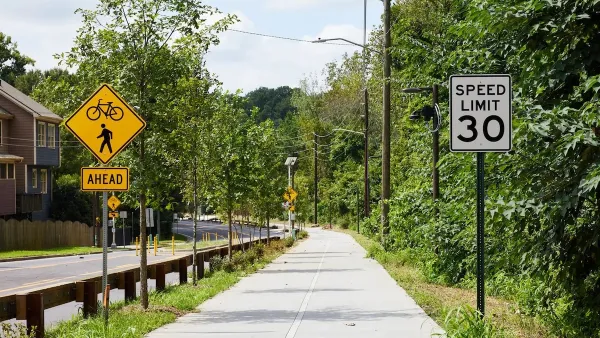
Atlanta Beltline Expands Westside Trail and Redevelops Rail Corridor
The Beltline is expanding the Westside Trail with new sections, including the Kudzu Trail, while also redeveloping abandoned rail corridors, with completion expected between 2025 and 2027.
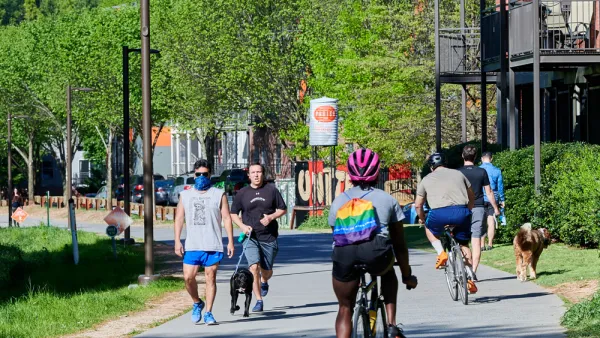
How To Prevent ‘Green Gentrification’: Lessons from the BeltLine
For one author, the key is focusing on affordable housing from the start.
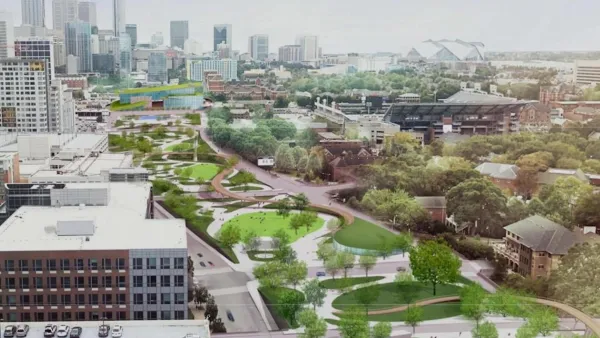
Atlanta Receives $3.2 Million for Freeway Cap Plan
The federal funding will help move forward planning for an ambitious proposal to cap a downtown Atlanta freeway with a 25-acre park.

Planetizen Federal Action Tracker
A weekly monitor of how Trump’s orders and actions are impacting planners and planning in America.

The state-sanctioned urbicide of Austin
People don’t kill cities. Freeways do.

Colorado’s Largest Data Center Could Rise Next to Homes — Without a Public Hearing
The proposed campus would consume 11 times the power of Denver International Airport; as it has across the country, opposition mounts.

Nation's most wind-powered state turns to coal as data centers increase energy demand
For the first time in decades, Iowa has increased its generation of coal power.

NYC cools commuters with city's first rain garden above a bus stop
New York City officials say the plants in the rain garden can absorb 16 gallons of rainwater during heavy storms.

Brightline West’s future may rely on $6 billion federal loan
The company has until Nov. 2 to make a $400 million equity investment into its proposed high-speed rail line.

FREE Course: Walkable City 1: Why Walkability?
After describing his path towards focusing on walkability as the essence of good planning, Jeff Speck marches through his five principal reasons for making more walkable places.
Reinventing Malls: Planning Alchemy—Turning Gray Fields Into Gold
The course focuses on the opportunities and imperatives that shape reinvention of mall sites.

Greater Baltimore Committee
Eagle County Government
Harvard University Graduate School of Design
The Architects Foundation
University of Cincinnati Online
The Pocatello Development Authority
The Urban Renewal Agency of the City of Pocatello
Journal of the American Planning Association