An opinion piece points out the inequities of growth in contemporary Philadelphia.



An opinion article by Paul R. Levy, written for the Philadelphia Inquirer, calls attention to the dichotomy of growth in Philadelphia—it's a story that will sound familiar in many other cities around the country.
On one hand, "Philadelphia is enjoying its longest economic expansion of the last 50 years, adding 55,100 jobs since 2010, growing in all but one year since 2005." Record jobs have been added around the city, with jobs and investment centered around Center City, but with help from University City, the Navy Yard, and Temple's campuses, according to Levy.
On the other hand, Philadelphia has a 25.7 poverty rate, which places it among the highest rates for large cities in the United States. "The downtown story is about millennials and empty-nesters moving in, families having children," writes Levy. "But in many other neighborhoods, working and middle-class families still leave for the suburbs."
A Downtown-centric revival will sound familiar in Detroit and Cleveland, for instance, where rising job growth and development investment tides have not yet lifted all boats. As levy admits, it's also the story of Dickens’ Tale of Two Cities. In Philadelphia, writes Levy, "[the] story is not a tale of two cities; it’s a tale of one city not growing fast enough to address problems we’ve inherited, when we can count less on higher levels of government for help."
Read the full story: Sure, Philly is growing. But not fast enough | Opinion
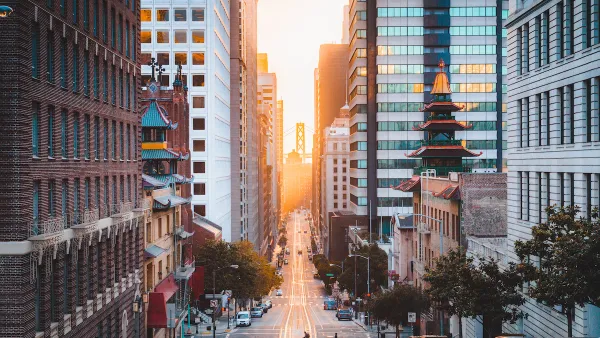
Is Inequality Destroying American Cities?
A recent video claimed that high income inequality is the “Thing That Will Destroy Our Cities.” Is this true?
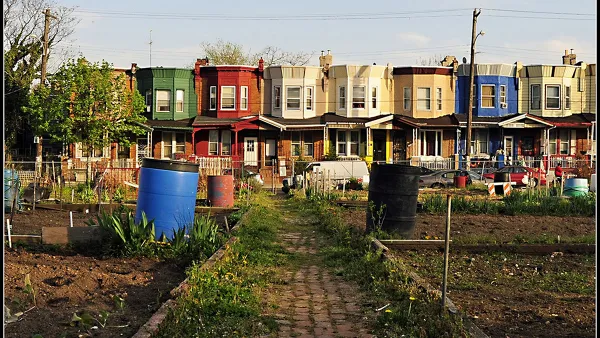
Not All Affordable Housing Shortages Are Alike
The city of Philadelphia shows that not all affordability crises are created with the same mix of supply and demand.
A Chronicle of Inequality—Starting with Memphis and Houston
Places Journal has launched a series titled "The Inequality Chronicles." Expect high-quality longform articles.

Planetizen Federal Action Tracker
A weekly monitor of how Trump’s orders and actions are impacting planners and planning in America.

California plans to bury El Niño’s downpour
If the state plays its cards right, it may be able to store a billion acre-feet of El Niño’s water in aquifers.

Desperate measures: Advocates weigh draining Lake Powell to fill Colorado River
Draining the reservoir could reduce evaporation losses by a couple hundred thousand acre-feet.

Mamdani’s pied-à-terre tax survives legal challenge
A panel of judges found that the plaintiffs failed to demonstrate injury as a result of New York City's implementation of the tax.

Eastern Nebraska is running out of electricity
Data centers and electrification are straining eastern Nebraska’s grid, throttling economic development.

Seattle passes record-breaking transit services expansion
Proposition 1 will double the city’s transit tax to add 95,000 more bus trips and preserve 180,000 bus trips annually.

FREE Course: Walkable City 1: Why Walkability?
After describing his path towards focusing on walkability as the essence of good planning, Jeff Speck marches through his five principal reasons for making more walkable places.
Reinventing Malls: Planning Alchemy—Turning Gray Fields Into Gold
The course focuses on the opportunities and imperatives that shape reinvention of mall sites.

City of Rosemead
Rutgers University, Edward J. Bloustein School of Planning and Public Policy
One Hundred Miles
University of Michigan School for Environment and Sustainability (SEAS)
Hunter College, City University of New York (CUNY)
The Architects Foundation
City of Cambridge
Montrose County
The Pocatello Development Authority