Industry experts say that the Trump Administration has slowed and will continue to slow the expansion of U.S. solar, but expect solar to grow nevertheless.


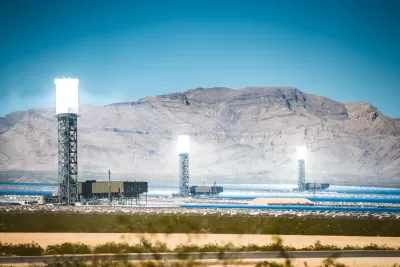
In terms of installations, 2017 was the second-best year on record for the U.S. solar industry. "Utilities, individuals and businesses installed 10.6 billion watts of solar photovoltaic capacity during Trump’s first year in office, according to the analysis by GTM Research and the Solar Energy Industries Association (SEIA)," Chris Mooney writes for the Washington Post.
This is not to say Trump, who has championed coal (solar's direct competitor), has not slowed solar's expansion. "The Trump administration has proposed slashing funding for solar energy programs — including the Energy Department division that houses the SunShot initiative, which aims to drive down solar’s cost — and the recently imposed import tariffs are expected to lead to fewer installations by increasing the cost of panels," Mooney reports. Still, experts project solar to continue to grow in 2018.
Read the full story: Even under pro-coal President Trump, U.S. solar is doing pretty well

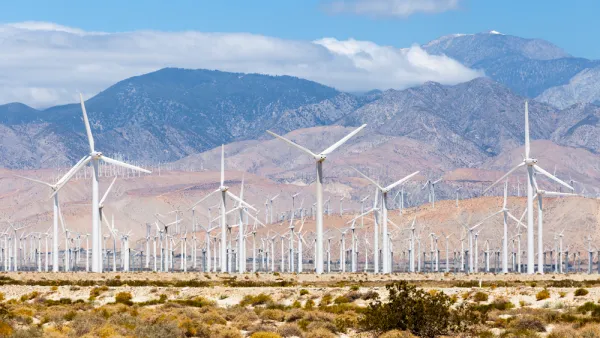
New Renewable Energy Has Yet to Displace Dirty Energy
Falling costs for renewable energy may lead some to believe that coal and other mainstays have been replaced, but they haven't. Adoption of renewables is not yet outpacing growth in demand for energy.
For Stability and Sustainability, the World Needs Microgrids
Solar and wind power are cheaper than ever, but they remain variable. To make the best use of renewable resources, the electrical grid needs to network more small free-standing power sources together.
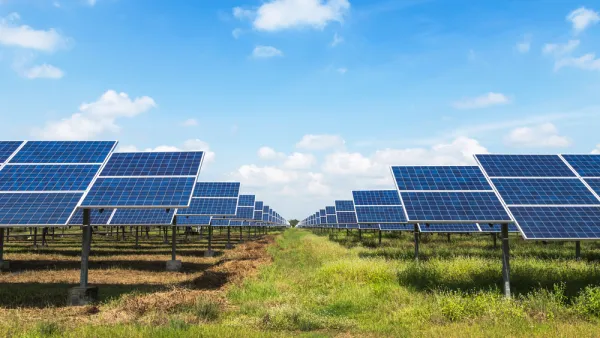
Local Opposition Threatens to Cripple Solar Expansion
A bevy of real and unfounded claims against solar farms is feeding a growing opposition movement in rural areas.

Planetizen Federal Action Tracker
A weekly monitor of how Trump’s orders and actions are impacting planners and planning in America.

The state-sanctioned urbicide of Austin
People don’t kill cities. Freeways do.

US to reduce Colorado River water deliveries to Mexico
A new Colorado Treaty amendment reduces Mexico’s Colorado River water allocation by 250,000 acre feet.

Nation's most wind-powered state turns to coal as data centers increase energy demand
For the first time in decades, Iowa has increased its generation of coal power.

NYC cools commuters with city's first rain garden above a bus stop
New York City officials say the plants in the rain garden can absorb 16 gallons of rainwater during heavy storms.

Brightline West’s future may rely on $6 billion federal loan
The company has until Nov. 2 to make a $400 million equity investment into its proposed high-speed rail line.

FREE Course: Walkable City 1: Why Walkability?
After describing his path towards focusing on walkability as the essence of good planning, Jeff Speck marches through his five principal reasons for making more walkable places.
Reinventing Malls: Planning Alchemy—Turning Gray Fields Into Gold
The course focuses on the opportunities and imperatives that shape reinvention of mall sites.

Greater Baltimore Committee
Eagle County Government
Harvard University Graduate School of Design
The Architects Foundation
University of Cincinnati Online
The Pocatello Development Authority
The Urban Renewal Agency of the City of Pocatello
Journal of the American Planning Association