A proposal for a Major League Soccer (MLS) stadium in Cincinnati's West End is raising displacement concerns among residents.


Cincinnati FC, a soccer team that does not yet play in the MLS, is shopping stadium plans around the city. One stadium, plan for the West End neighborhood, would replace the existing Stargel Stadium adjacent to Robert A. Taft Information Technology High School. Residents have concerns, though.
"The major fear is that the stadium will bring new, wealthier residents who will drive up rent and home prices leading to developers and property owners driving out current residents," reports Chris Wetterich.
The team's backer are still considering three alternative locations for the stadium—the one in West End along with locations in Oakley and Newport. The city must also still be granted a franchise.
Soccer is a perhaps surprising force in the stadium-based economic development realm (surprising to anyone obsessed with American football, anyways). Austin is also currently angling for an MLS team, and failed stadium plans ravaged soccer fans in St. Louis and Detroit in 2017.
Read the full story: Fearing displacement, residents continue to be skeptical of West End FC Cincinnati stadium

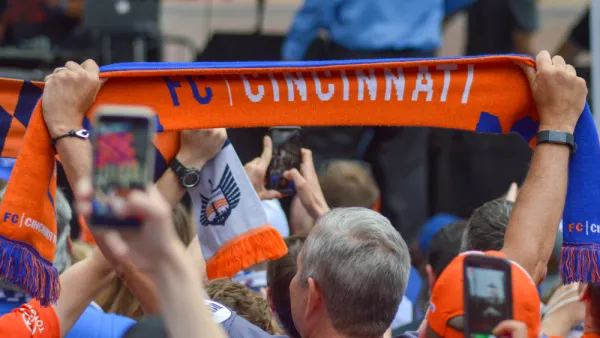
Soccer Stadium Plans Amended Over Concerns About Displacement in Cincinnati
Planning Commissioners in Cincinnati talked a lot about the severed trust between the city, residents, and the Major League Soccer team FC Cincinnati at a hearing last week.
Plans Released for New $200 Million MLS Stadium in Cincinnati
The Major League Soccer Team FC Cincinnati is planning on building a stadium, along with attached mixed-use development, in the West End neighborhood of its hometown.
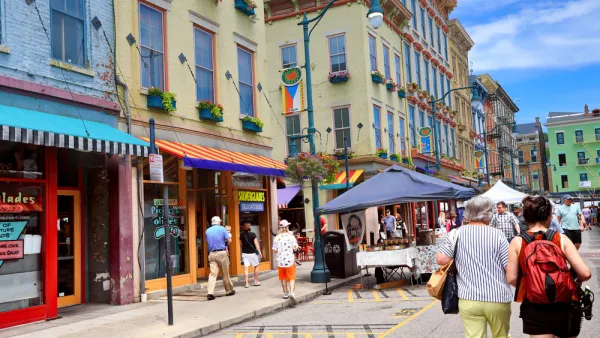
Black Residents Leaving Cincinnati's Fast Growing Urban Area
The housing market in the neighborhood of Over-the-Rhine is a 'segregation machine.'

Planetizen Federal Action Tracker
A weekly monitor of how Trump’s orders and actions are impacting planners and planning in America.

California plans to bury El Niño’s downpour
If the state plays its cards right, it may be able to store a billion acre-feet of El Niño’s water in aquifers.

Chicago breaks ground on $3 billion megadevelopment
The new neighborhood, titled Foundry Park, will one day host 3,700 residences.

Move over, LA: St. Louis gears up for Olympics, invests millions in downtown redevelopment
The Missouri city will host the 2028 Olympic soccer group stage and knockout matches.

Satanic place names
From streams and lakes to valleys and canyons, I mapped more than 1,000 places named after the Devil.

California High-Speed Rail Authority CEO resigns after $600,000 scandal
Under Ian Choudri, the authority used taxpayer dollars to fund first class flights and trips to nightclubs.

FREE Course: Walkable City 1: Why Walkability?
After describing his path towards focusing on walkability as the essence of good planning, Jeff Speck marches through his five principal reasons for making more walkable places.
Reinventing Malls: Planning Alchemy—Turning Gray Fields Into Gold
The course focuses on the opportunities and imperatives that shape reinvention of mall sites.

City of Rosemead
Rutgers University, Edward J. Bloustein School of Planning and Public Policy
One Hundred Miles
Hunter College, City University of New York (CUNY)
The Architects Foundation
University of Cincinnati Online
City of Cambridge
Montrose County
The Pocatello Development Authority