After two years of operations, funded with $300,000, the city of Oak Park is ending its Divvy bikeshare operation.


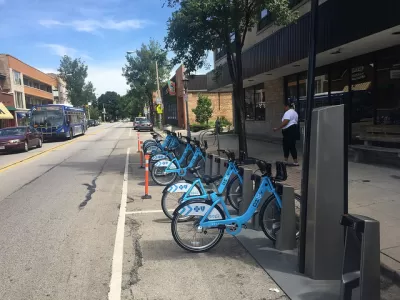
Jeff McMahon reports that the city of Oak Park, Illinois has decided to end its relationship with the bikeshare system Divvy, which mostly operates in the city of Chicago.
According to McMahon, Divvy failed due to rising anti-tax sentiment and low ridership. Some of the damning statistics included a report finding that taxpayers spent $17.48 for every ride taken on Divvy, an average of .25 rides per day for each of the 130 bikes located in the city, and low membership subscriptions. Divvy came to the suburban community of Oak Park as a result of a state grant.
McMahon provides more details of Divvy's abbreviated history in Oak Park, as well as the political debate that led to the system's demise.
FULL STORY: For Whom the Bike Bell Tolls: Oak Park Kills Its Divvy Program

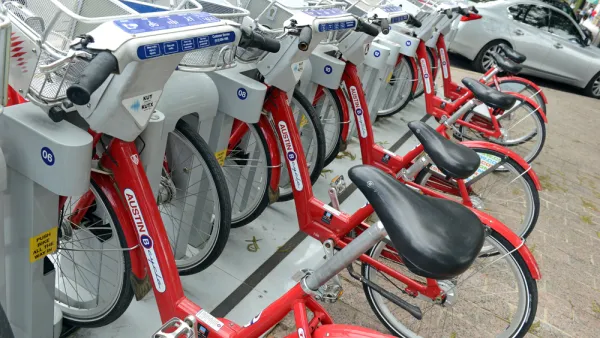
Transit, Bikeshare Integration Planned in Austin
Under a plan scheduled for implementation later this year, a transit pass will mean access to the city's bikeshare system.
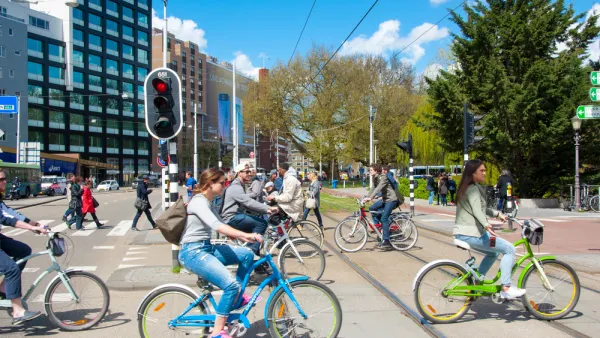
Comparing the Progress of Cities in Providing Alternatives to the Car Commute
A new online tool allows cities to measure progress in providing access to alternative forms of transportation.

Chicago's Next Bikeshare Investment to Focus on Underserved Neighborhoods
Chicago is focusing its bikeshare installation in locations with what writer John Greenfield calls a "dearth of Divvy."

The state-sanctioned urbicide of Austin
People don’t kill cities. Freeways do.

US to reduce Colorado River water deliveries to Mexico
A new Colorado Treaty amendment reduces Mexico’s Colorado River water allocation by 250,000 acre feet.

New Jersey’s second-largest city bans standalone data centers
Jersey City will continue to allow co-location facilities, such as those meant for research institutions that store their own data.

Amtrak not solely to blame for New Jersey commuter rail's unreliability, report finds
A new study from the Garden State Initiative found that NJ Transit’s budget grew 20% across a 4 year period, but reliability declined significantly over the same period.

EPA erases limits on planet-warming pollution from power plants
Under Monday’s plan, power plants would still have some limits on how much mercury, arsenic and other contaminants they can emit.

Phoenix announces new on-demand transit service, more frequent RAPID buses
Both new services will launch in October, and are part of Phoenix's Project Effective Access Solutions for Easing Congestion.

FREE Course: Walkable City 1: Why Walkability?
After describing his path towards focusing on walkability as the essence of good planning, Jeff Speck marches through his five principal reasons for making more walkable places.
Reinventing Malls: Planning Alchemy—Turning Gray Fields Into Gold
The course focuses on the opportunities and imperatives that shape reinvention of mall sites.

Eagle County Government
Harvard University Graduate School of Design
Nashville Planning Department
The Architects Foundation
University of Cincinnati Online
The Pocatello Development Authority
The Urban Renewal Agency of the City of Pocatello
Journal of the American Planning Association