Joseph Berrios, Cook County assessor, is believed to have defrauded home-owners in majority minority neighborhoods. Now Berrios faces a lawsuit.


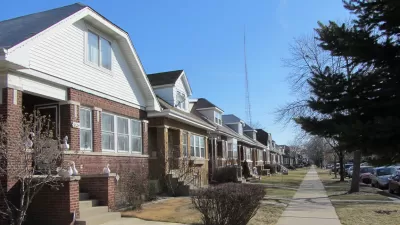
The Cook County Assessor's Office was discovered to have unfairly benefited rich property owners at the expense of the middle class and the poor. Now Joseph Berrios is facing a lawsuit related to these assessments. "The lawsuit, filed in Cook County Circuit Court, contends the county's "residential property tax scheme is neither accurate nor uniform" and is 'perpetuating institutional racism' by shifting the tax burden from wealthier, majority-white neighborhoods to poorer, minority neighborhoods," Jason Grotto and Hal Dardick report for the Chicago Tribune.
The lawsuit contends that the department, which Berrios oversaw, violated the civil rights act. "Specifically, the lawsuit alleges that county assessments overvalue low-priced homes while undervaluing high-priced ones," Grotto and Dardick report, a process which disproportionately victimized poor Black and Latino homeowners.
Read the full story: Lawsuit targets Berrios over biased residential assessments in Cook County


Chicago Planning Department Rejects 'Overparked' Six Corners Proposal
In a decision that is still impossible in most of the country, Chicago's Department of Planning and Development is requiring housing and reduced surface parking to approve a retail project.

Progressive Property Tax Proposal Dies in Less Than 24 Hours
Susana Mendoza, a Chicago mayoral candidate, reconsidered her plan for a graduated property tax after receiving pushback.

Illinois gets Federal Grant to Reduce Railroad Delays on Chicago's South Side
The Federal government has awarded Illinois $132 million for new infrastructure around 75th street and 71st streets.

Planetizen Federal Action Tracker
A weekly monitor of how Trump’s orders and actions are impacting planners and planning in America.

California plans to bury El Niño’s downpour
If the state plays its cards right, it may be able to store a billion acre-feet of El Niño’s water in aquifers.

Desperate measures: Advocates weigh draining Lake Powell to fill Colorado River
Draining the reservoir could reduce evaporation losses by a couple hundred thousand acre-feet.

In Texas, data centers are swallowing promised parkland
Residents who moved to Taylor, Texas for a rural community now have to contend with three data centers in their backyard.

How a Chicago-sized wind farm beat the odds and powered on
The project spanned five presidential administrations and a standoff with a U.S. military base.

MTA gives itself 30 days to transform pit into basketball court
The site has been under construction since 2022; the city originally estimated it would finish the court in 2024.

FREE Course: Walkable City 1: Why Walkability?
After describing his path towards focusing on walkability as the essence of good planning, Jeff Speck marches through his five principal reasons for making more walkable places.
Reinventing Malls: Planning Alchemy—Turning Gray Fields Into Gold
The course focuses on the opportunities and imperatives that shape reinvention of mall sites.

City of Rosemead
Rutgers University, Edward J. Bloustein School of Planning and Public Policy
One Hundred Miles
Hunter College, City University of New York (CUNY)
The Architects Foundation
University of Cincinnati Online
City of Cambridge
Montrose County
The Pocatello Development Authority