Early or late, a train that leaves "not on time" is unacceptable in Japan.


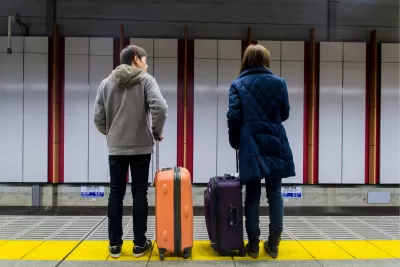
"Living up to Japan’s reputation for being precise as well as contrite, a train company in Tokyo delivered a formal apology on Tuesday because one of its trains left a station just 20 seconds early," report Motoko Rich and Makiko Inque.
The Metropolitan Intercity Railway Company "posted an apology on its website Tuesday for 'the severe inconvenience imposed upon our customers,'" adds the article. The offending train: the No. 5255 Tsukuba Express train leaving Minami-Nagareyama station in Chiba. The train left at 9:44:20 am, instead of the scheduled departure time of 9:44:40 am.
Rich and Inque don't miss the opportunity to survey the response of transit users in other countries, where less precise systems operate. Twitter was very generous in revealing the envy of transit users. SFGate and BBC News also got in on the fun, reporting the news and finding plenty of social media commentary to wash it down.
Read the full story: Japanese Train Leaves 20 Seconds Early. Cue the Abject Apologies.

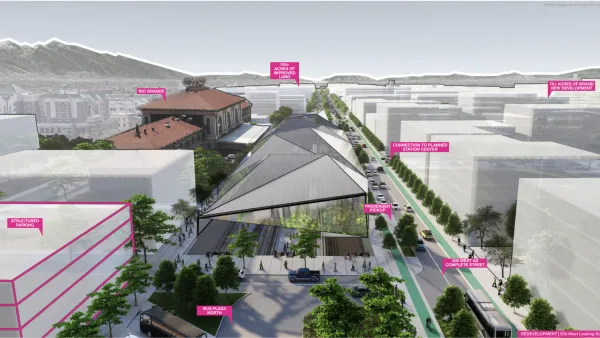
A Citizen-Led Plan Would Revamp Salt Lake’s Transit and Freeway Mix
The Rio Grande Plan would restore rail service to the Rio Grande Depot and reconnect a community divided by a freeway in Salt Lake City.
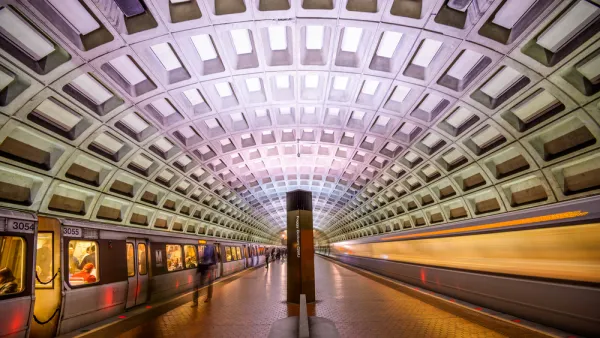
Showdown Over Late Night Hours on D.C. Metro
The general manager of D.C. Metro wants to extend limited late night rail service, in place for two years, into 2019 and beyond. Metro board members have had enough.
Sunday Fun: Take a Google Earth Flyover Tour of Tokyo's Yamanote Line
A key ring route in Tokyo's massive collection of rail lines, the JR Yamanote Line is a public transit aficionado's wildest dream. Reece Martin offers a guided tour of the line, available from the comfort of any YouTube-enabled screen.

Planetizen Federal Action Tracker
A weekly monitor of how Trump’s orders and actions are impacting planners and planning in America.

Amtrak, CN end decades-long dispute with eight-year agreement
The new operating agreement establishes an updated framework for the companies to work together, including processes to resolve disputes.

Judges permit Denver to divert 77,000 acre feet from the Colorado River for reservoir expansion
Overuse and climate change have caused the Colorado River’s water levels to plummet.

NYC DOT wants faster, more permanent street upgrades
The city is examining ways to build more concrete infrastructure without getting entangled in 'decades-long' projects.

'Something we’ve never seen before:' rising utility rates could strain city finances nationwide
Data centers, climate change and other factors have caused utility rates in the United States to increase by 38% since 2020.

Trump to overrule local leaders, lease millions of acres of America’s Pacific Island territories’ seafloors to mining companies
International law says that the Indigenous people of America’s territories have a right to prior and informed consent regarding projects that impact their countries.

FREE Course: Walkable City 1: Why Walkability?
After describing his path towards focusing on walkability as the essence of good planning, Jeff Speck marches through his five principal reasons for making more walkable places.
Reinventing Malls: Planning Alchemy—Turning Gray Fields Into Gold
The course focuses on the opportunities and imperatives that shape reinvention of mall sites.

Harvard University Graduate School of Design
KFH Group Inc.
Greater Baltimore Committee
The Architects Foundation
University of Cincinnati Online
The Pocatello Development Authority
The Urban Renewal Agency of the City of Pocatello