Anchorage's People Mover bus system is the latest in a string of U.S. bus systems to reroute onto a high frequency grid.


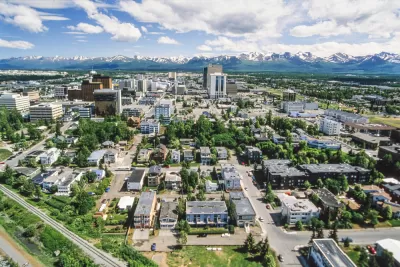
"Shorter wait times and fewer neighborhood stops are some of the big changes Anchorage bus riders can expect Monday as a long-awaited overhaul of the People Mover system takes effect," reports Devin Kelly.
"The result is a less circuitous system aimed at making it easier to catch a bus in the city's most populated areas and along major roads," adds Kelly "Many routes have been transformed into a straight shot between two points instead of winding through neighborhood streets." The article includes a map of the new system.
Anchorage planners have been working on the changes to the bus system for over a year (see Kelly's previous coverage of the planning effort).
Jarret Walker + Associates served as consultants on the project, and Walker took to the Human Transit blog to explain more details of the bus system redesign. For instance, Walker explains that the new system will gain four frequent lines where there were previously none.
Read the full story: Big changes in Anchorage’s bus system take effect Monday
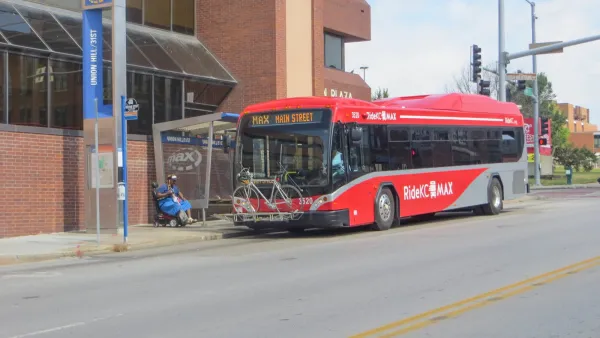
Draft RideKC Bus System Redesign Announced
The RideKC bus system is being redesigned on a high frequency grid.
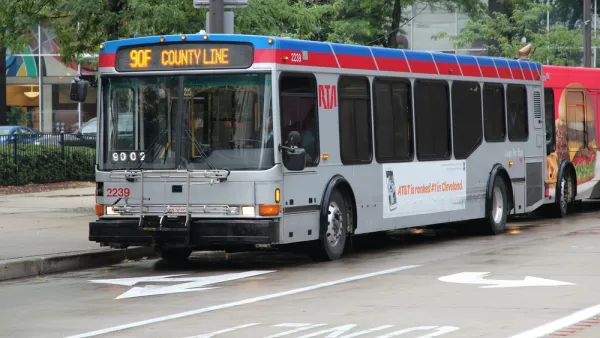
Bus System Redesign Coming to the Cleveland Region
The Greater Cleveland Regional Transit Authority (RTA) revealed a draft system redesign this week.
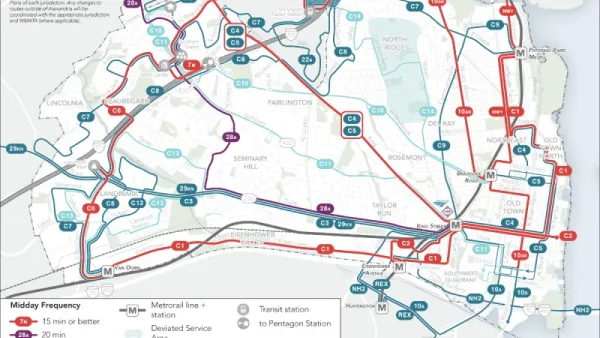
'Ridership' or 'Coverage' Concepts Considered for Alexandria Bus Network Concept
The city of Alexandria, Virginia is asking the public to weigh in on a fundamental question of bus transit planning: ridership or coverage?

Planetizen Federal Action Tracker
A weekly monitor of how Trump’s orders and actions are impacting planners and planning in America.

California plans to bury El Niño’s downpour
If the state plays its cards right, it may be able to store a billion acre-feet of El Niño’s water in aquifers.

Desperate measures: Advocates weigh draining Lake Powell to fill Colorado River
Draining the reservoir could reduce evaporation losses by a couple hundred thousand acre-feet.

Los Angeles just elected an urban planner as its mayor
Transportation analysts are optimistic that Raman will be more aggressive in addressing transit issues than Bass.

Mamdani’s pied-à-terre tax survives legal challenge
A panel of judges found that the plaintiffs failed to demonstrate injury as a result of New York City's implementation of the tax.

Eastern Nebraska is running out of electricity
Data centers and electrification are straining eastern Nebraska’s grid, throttling economic development.

FREE Course: Walkable City 1: Why Walkability?
After describing his path towards focusing on walkability as the essence of good planning, Jeff Speck marches through his five principal reasons for making more walkable places.
Reinventing Malls: Planning Alchemy—Turning Gray Fields Into Gold
The course focuses on the opportunities and imperatives that shape reinvention of mall sites.

City of Rosemead
Rutgers University, Edward J. Bloustein School of Planning and Public Policy
One Hundred Miles
University of Michigan School for Environment and Sustainability (SEAS)
Hunter College, City University of New York (CUNY)
The Architects Foundation
City of Cambridge
Montrose County
The Pocatello Development Authority