Urban design efforts in New Orleans run 'headlong into the politics of race, class, and power'. Will the new New Orleans be a smaller, wealthier, and less diverse place?


"...But the dreamy PowerPoint presentation by the Urban Planning Committee of Mayor Ray Nagin's Bring New Orleans Back Commission ended in a cold splash of harsh reality. Despite Nagin's plea that the meeting be held in a "spirit of peace," police eventually had to handle the line of furious residents gathered at the microphone. Amid cries that the plan was too academic or did too little to help people trying to return, Harvey Bender, a 44-year-old resident of the Lower Ninth Ward, pointed a finger at committee Chairman Joe Canizaro, a prominent local developer. "I hate you, Mr. Canizaro, because you've been in the background scheming to get our land,"he said. "I'm going to die on my land."
In the City That Care Forgot, the plan for a grander future has run headlong into the politics of race, class, and power, which, as in most places, translates to money. Resistance to the commission's plan, even outright defiance, still exists, but that may be the least of its problems. There's been good news, to be sure, some of it just last week. But the Bring New Orleans Back blueprint faces a host of daunting questions--questions about flood protection, about controlling scattershot redevelopment, and about Washington's willingness to foot the bill to bring back the Big Easy. For now, all that seems certain is that the New Orleans of tomorrow will be smaller in size and population, most likely a whiter, wealthier city, and perhaps more of a tourist theme park than the rich cultural gumbo that made the Big Easy a unique American experience."
FULL STORY: Turf Wars in the Delta

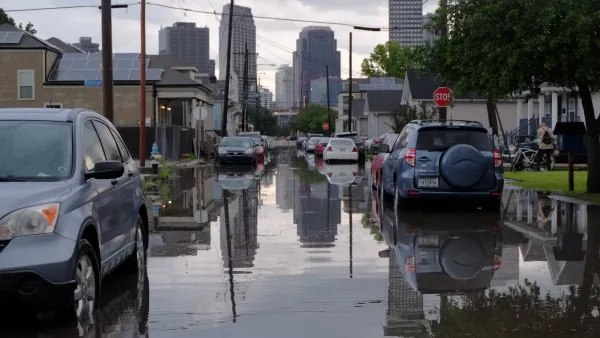
Study: New Orleans sea level rise is at 'point of no return'
Research shows that the city could be surrounded by water by the end of this century.

Amtrak’s Mardi Gras train ‘blows away’ ridership expectations
The line brought back rail service between New Orleans and Mobile, Alabama for the first time since Hurricane Katrina.
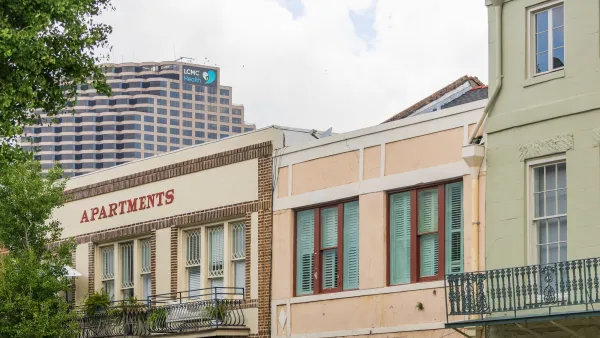
Is New Orleans’ Healthy Homes Ordinance a Hollow Promise?
The Healthy Homes Ordinance is supposed to help fix New Orleans’s deteriorating rental housing stock. But three years in, many “certified habitable” apartments still have leaking roofs, black mold, and dangerous heat. What went wrong?

Planetizen Federal Action Tracker
A weekly monitor of how Trump’s orders and actions are impacting planners and planning in America.

The state-sanctioned urbicide of Austin
People don’t kill cities. Freeways do.

US to reduce Colorado River water deliveries to Mexico
A new Colorado Treaty amendment reduces Mexico’s Colorado River water allocation by 250,000 acre feet.

LA Metro’s ultimatum: no extra buses for LA28 if federal funding isn’t imminently secured
If Metro does not provide additional buses, LA28 organizers will have to find a new way to manage Olympic traffic. LA28’s budget does not include a line item for transit.

Colorado’s Largest Data Center Could Rise Next to Homes — Without a Public Hearing
The proposed campus would consume 11 times the power of Denver International Airport; as it has across the country, opposition mounts.

5 New England states march closer to 800 megawatt wind energy project
Securing federal approval for the project may be complicated under the Trump administration, which has historically been hostile towards domestic wind power.

FREE Course: Walkable City 1: Why Walkability?
After describing his path towards focusing on walkability as the essence of good planning, Jeff Speck marches through his five principal reasons for making more walkable places.
Reinventing Malls: Planning Alchemy—Turning Gray Fields Into Gold
The course focuses on the opportunities and imperatives that shape reinvention of mall sites.

Eagle County Government
Harvard University Graduate School of Design
Nashville Planning Department
The Architects Foundation
University of Cincinnati Online
The Pocatello Development Authority
The Urban Renewal Agency of the City of Pocatello
Journal of the American Planning Association