Land Use
What is the Ideal Catchment Area for TODs?
The half-mile circle has become the standard metric for focusing planning efforts and judging the impacts of transit-oriented development. A new study examines whether the half-mile circle is an effective predictor of TOD success.
'Toxic Tour' Brings Visitors Face-to-Face With L.A.'s Landmarks of Pollution
A 'toxic tour' of Los Angeles raises awareness of the harmful effects the city's industrial infrastructure brings to adjacent, often minority, communities. Stops include a battery recycling plant, rendering plant, oil refinery, and scrap yards.
Competition Aims to Shrink Miami's Public Space Deficit
Seeking to help improve the city's livability and boost its attraction to talented workers, the Miami Foundation has launched an open competition to identify, and ultimately build, neighborhood public spaces.
Rational Fear
Many people believe that cities are dangerous due to exaggerated fears of urban crime. Cities are actually far safer and healthier than suburban and rural locations, and smart growth policies can further enhance their safety and health advantages.
Driverless Cars Steer Us Away From a Carless Future
Discussions over the potential benefits and drawbacks of driverless cars seemingly overlook one important question, says Allison Arieff: "[W]hy continue to design and plan for a car-based society?"
Three Strategies for Refueling Abandoned Gas Stations
Lucas Lindsey explores the rise and fall of gas stations in the U.S. With stations closing across the country, and cities wrestling with how to reclaim them, he looks at some that have found a new life through reuse, redevelopment, or repositioning.
54 Ideas for Fixing D.C.
In advance of next year's mayoral race, the Washington City Paper has reached out to local leaders for their suggestions for how to fix one of the city's intractable problems. See their 28 detailed, and 26 simple, solutions.
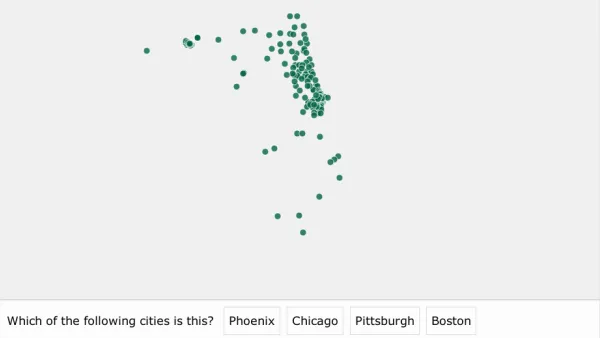
Can You Identify a City Solely by the Location of Its Starbucks?
We've found this week's ultimate time-waster! Slate has developed a map quiz that asks participants to guess which city is being depicted based solely on the geography of its Starbucks locations.
One Major Flaw of Plan Bay Area
According to SF State University geographer, Jason Henderson, the adoption of Plan Bay Area by MTC and ABAG last Thursday was a "watershed moment in regional planning", but it also was a missed opportunity to improve transit to capture more trips.
Lack of Walkability in Suburban Areas Threatens Kids' Safety, Health
A recent fight over school-bus service in Loudoun County, Virginia highlights the ways in which suburban growth patterns hamper walkability and harm the health of children.
Ink Blot or Bird Sh**? Museum Design Tests L.A.’s Urban Psyche
Buried beneath the enthusiasm that’s accompanied the unveiling of Peter Zumthor’s design for the Los Angeles County Museum of Art is one important criteria by which the project should be evaluated: how does it contribute to the urban environment?
Madison Square Garden Told to Find a New Home
The long quest to transform Penn Station got a major boost yesterday when the New York City Council voted to renew Madison Square Garden's lease for just 10 years. The Garden's owners had sought an unlimited extension.
To Remain Competitive, NYC Should Bolster Placemaking, Not Its Skyline
Michael Kimmelman comes out against the plan to rezone a 73-block area around Grand Central Terminal to allow the replacement of "aging commercial buildings with giant new office towers". The city should focus on planning, not zoning, he argues.
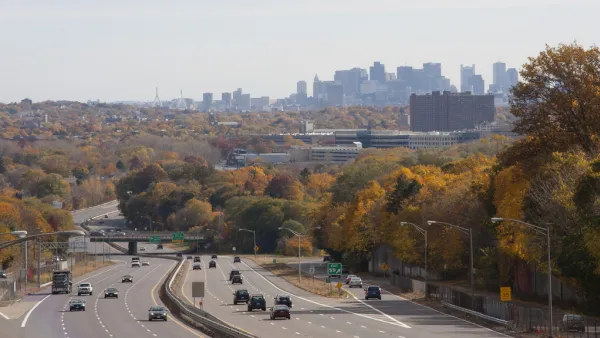
The Outer Limits of Walk Score
Planning professor Doug Kelbaugh lives in one of the few neighborhoods outside Manhattan with a perfect 100 Walk Score. His brother's house in South Carolina has a Walk Score of 1. Kelbaugh reflects on the extremes, and what they mean.
Emotion Supersedes Planning in Rush to Rebuild Jersey Shore
Residents of New Jersey, and particularly its coastal communities, have an emotional connection to the state's seaside towns. But in the rush to rebuild after Hurricane Sandy, Scott Gurian asks if emotion is getting in the way of good planning.
What Would an Elderly-Friendly City Look Like?
London-based Transport for All bemoans the inaccessibility of our urban environs for older residents. In this article, they ask designer Neil Chambers how he would design a city to 'facilitate an active and flexible lifestyle for the elderly.'
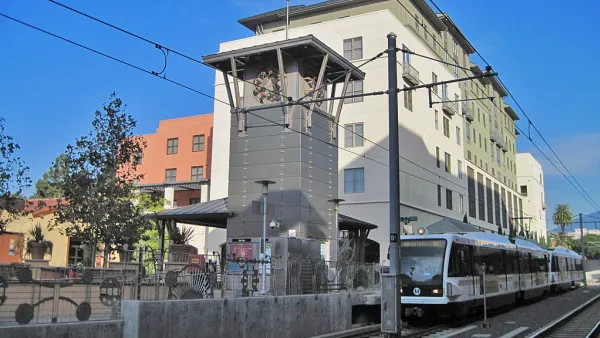
Why the New Urbanist Visionary Who Coined 'TOD' Wants to Retire It
In a wide-ranging interview with Metropolis Magazine, CNU founding member Peter Calthorpe opines on China's planning process, the future of America's suburbs, CA high-speed rail, and why he would retire the term 'transit oriented development'.
With East Riverfront Redevelopment, Builder Bets on Detroit's Future
Just outside of downtown, and a short walk from the Detroit River, developer McCormack Baron Salazar is planning to build a new neighborhood of town houses, apartments, and retail on mostly vacant land - a $60 million bet on the city's future.
How Flexible Parking Requirements Spur Economic Development
A UCLA master's student and Don Shoup found that Santa Monica, CA's flexible parking requirements have led to significant fiscal and urban form benefits. A sample of parcels showed eight-times more sales tax revenue per sq. ft. than a control group.
Can Algorithms Expedite the Activation of Vacant Properties?
With thousands of abandoned homes located in neighborhoods of varying shape and character, Chicago has a massive challenge in returning its vacant properties to active use. Can algorithms help leaders decide on the right solutions?

FREE Course: Walkable City 1: Why Walkability?
After describing his path towards focusing on walkability as the essence of good planning, Jeff Speck marches through his five principal reasons for making more walkable places.
Reinventing Malls: Planning Alchemy—Turning Gray Fields Into Gold
The course focuses on the opportunities and imperatives that shape reinvention of mall sites.

City of Rosemead
Rutgers University, Edward J. Bloustein School of Planning and Public Policy
One Hundred Miles
University of Michigan School for Environment and Sustainability (SEAS)
Hunter College, City University of New York (CUNY)
The Architects Foundation
City of Cambridge
Montrose County
The Pocatello Development Authority









